The Dinorwic slate quarry was, at its height, the second largest slate quarry in Wales, after Penrhyn quarry in nearby Bethesda. The first quarrying activity took place in 1787 when a lease was taken from the land owners, the Assheton-Smiths, but due to the outbreak of war with France, taxes, and high transport costs, this ceased in 1809, when the Assheton-Smith family itself led a partnership that lasted until the quarry was closed in July 1969.
Dinorwic was a slate quarry as opposed to a slate mine; this part of North Wales, the slate vein is at or near to the surface of the mountain, unlike further south in Blaenau Ffestiniog, for example, where the slate vein is deeper inside the mountain. In this method, the slate was quarried in a series of galleries, with the slate then transported down incline railways to the lower levels.
Industrial decline and the difficulty of removing slate, in part due to large amount of tipped wasted slidding into one of the major quarrying sites in 1966, caused the quarry to finally close in 1969.
I don’t think there is any industry that has quite changed the landscape the way that slate quarrying has done, and the quarry can still be walked around today. These pictures are from my last few visits to the quarry.
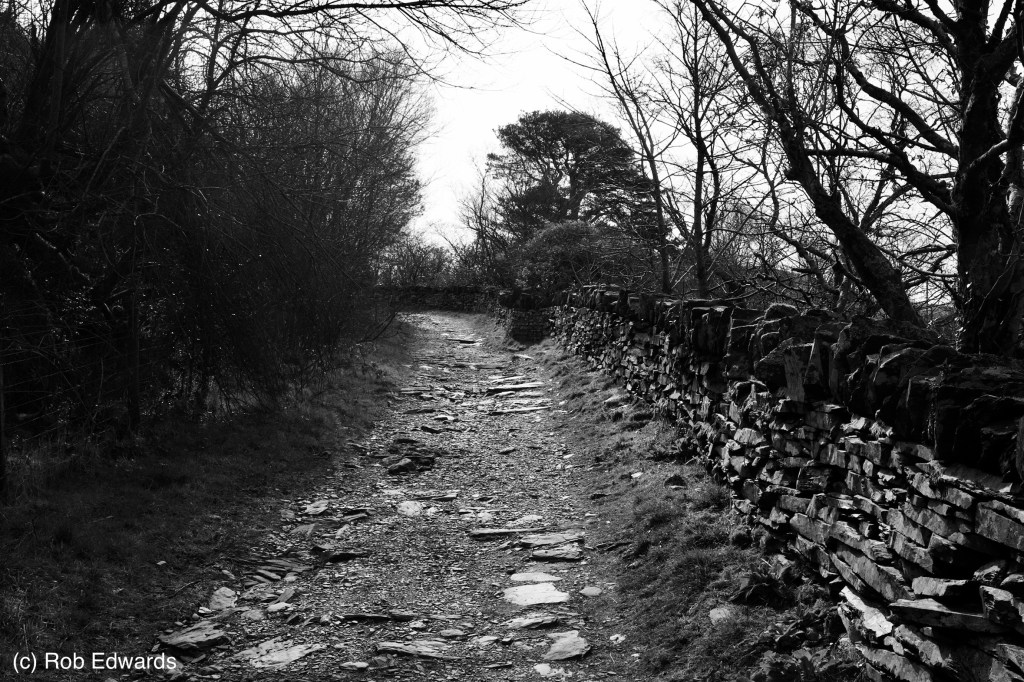
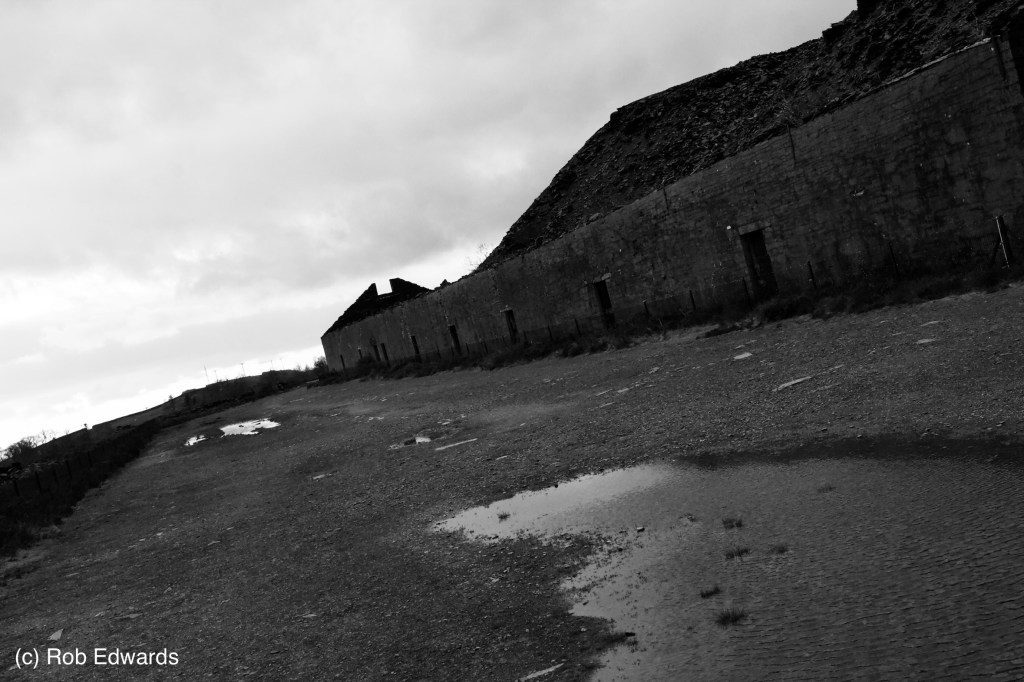
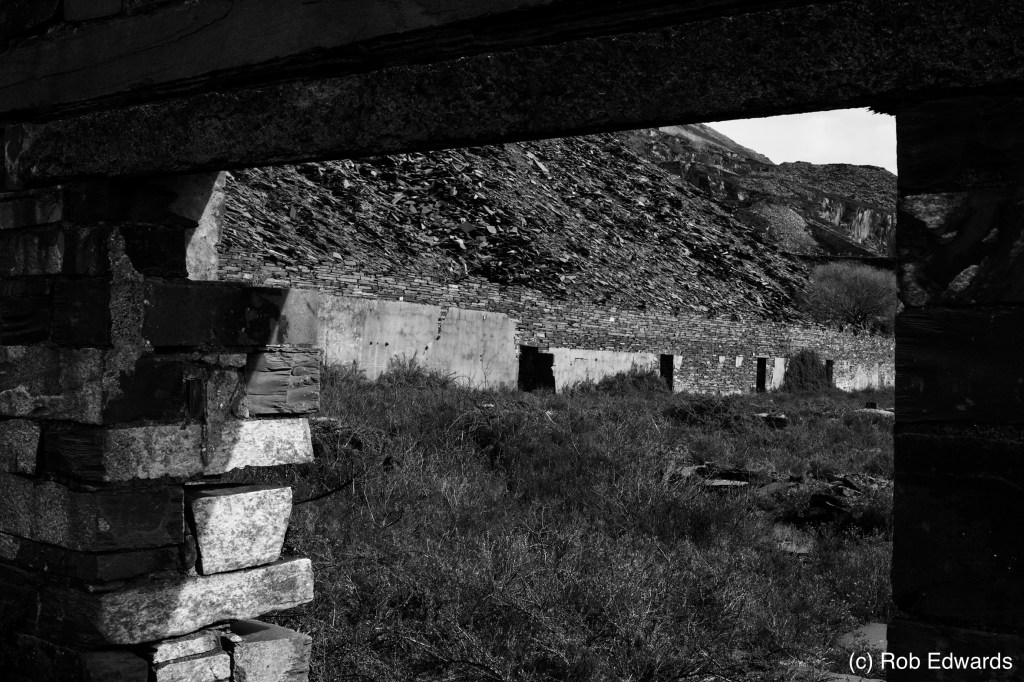
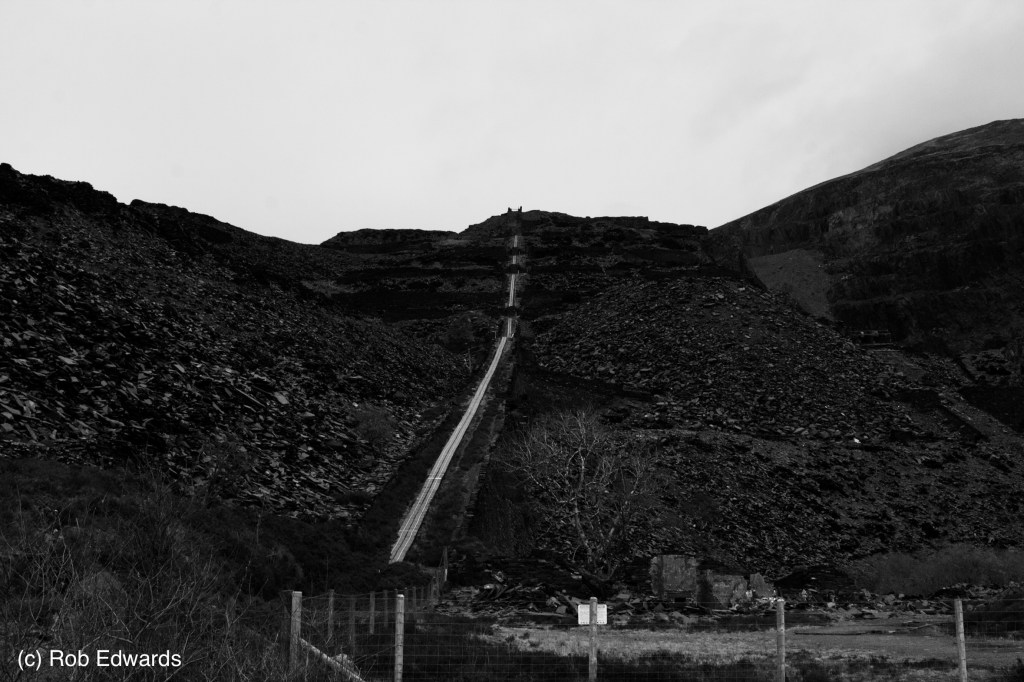
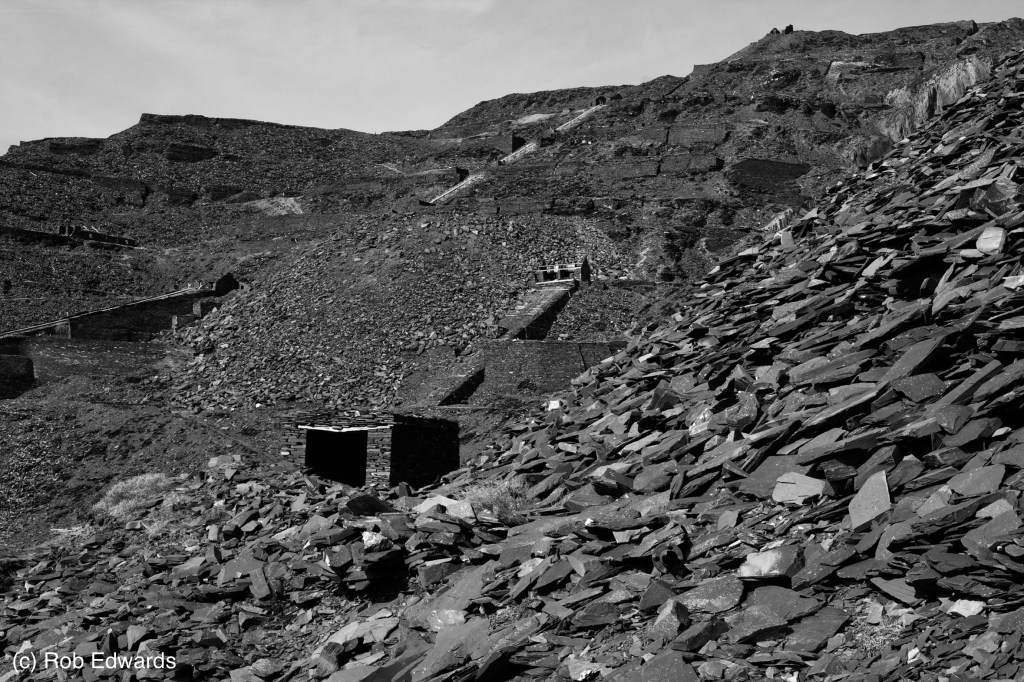
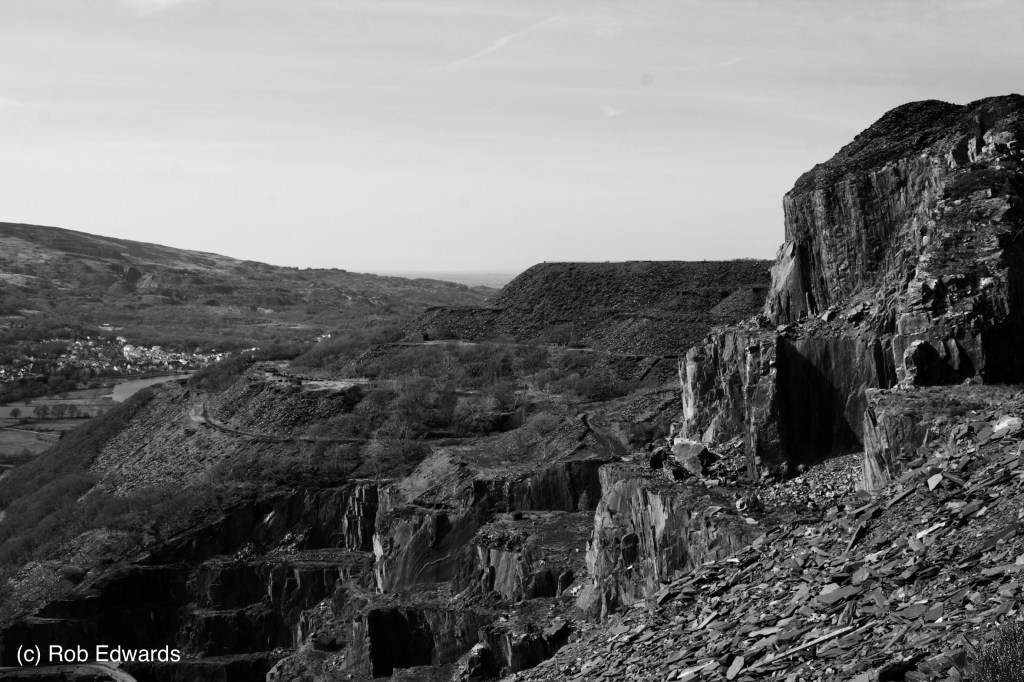
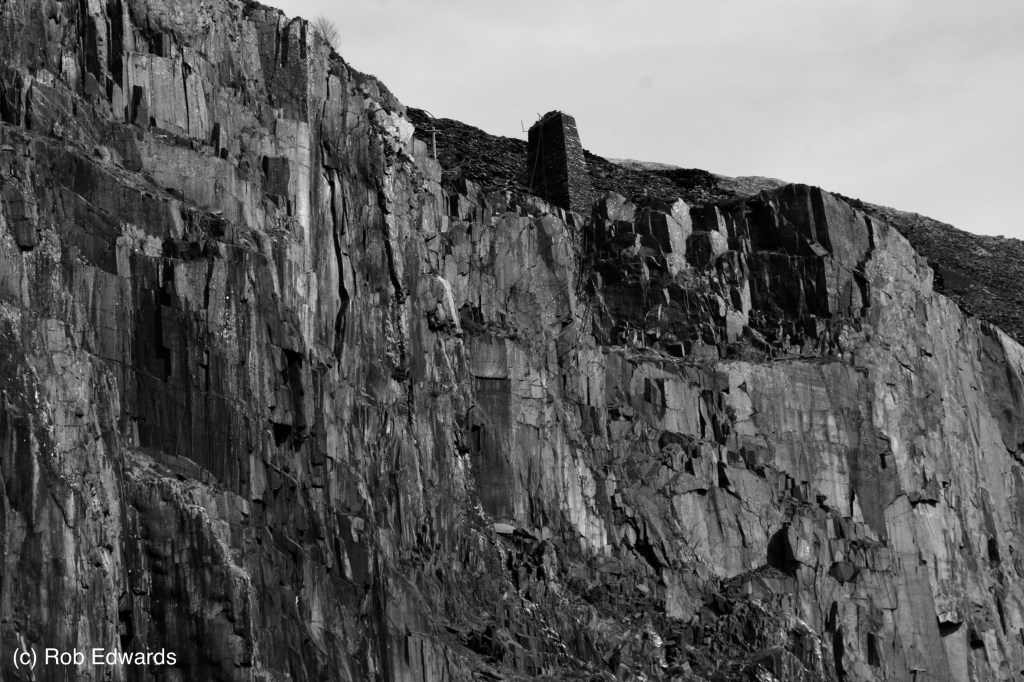
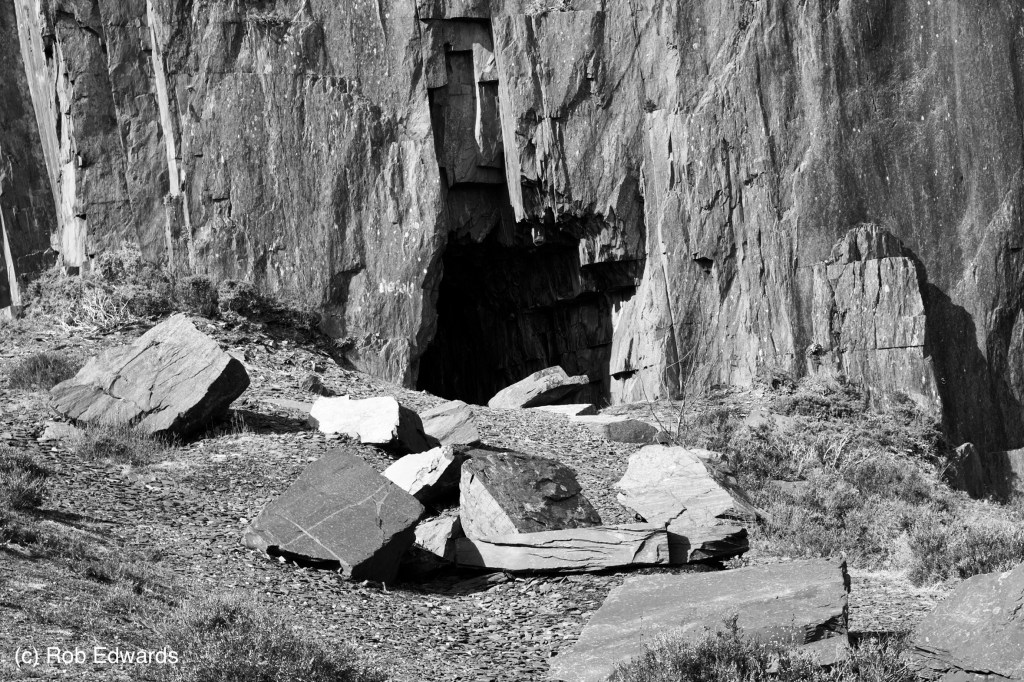
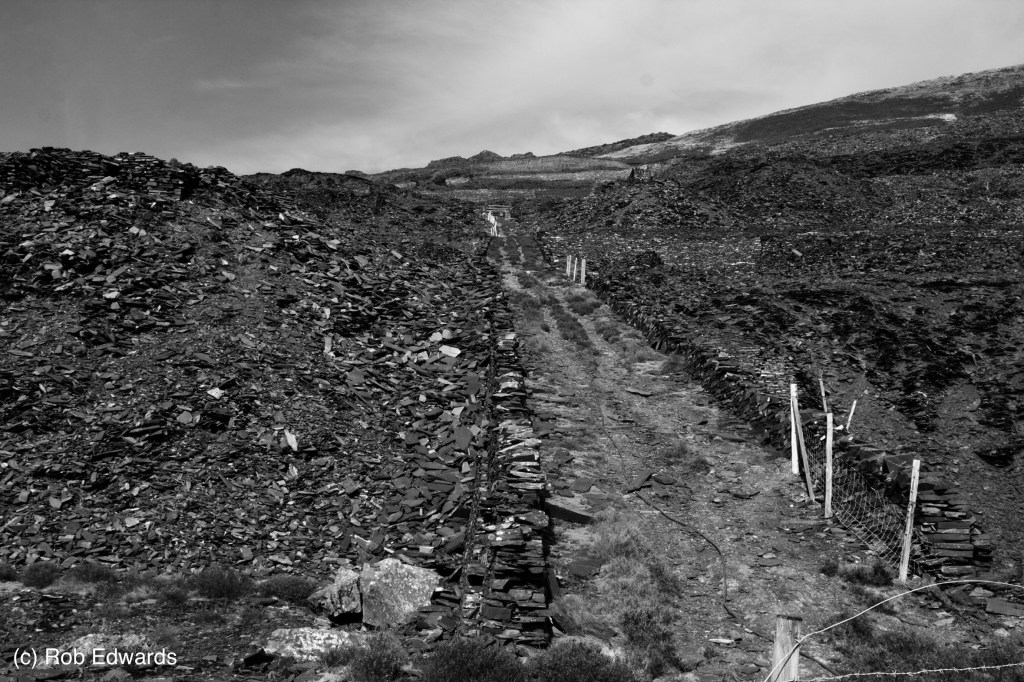
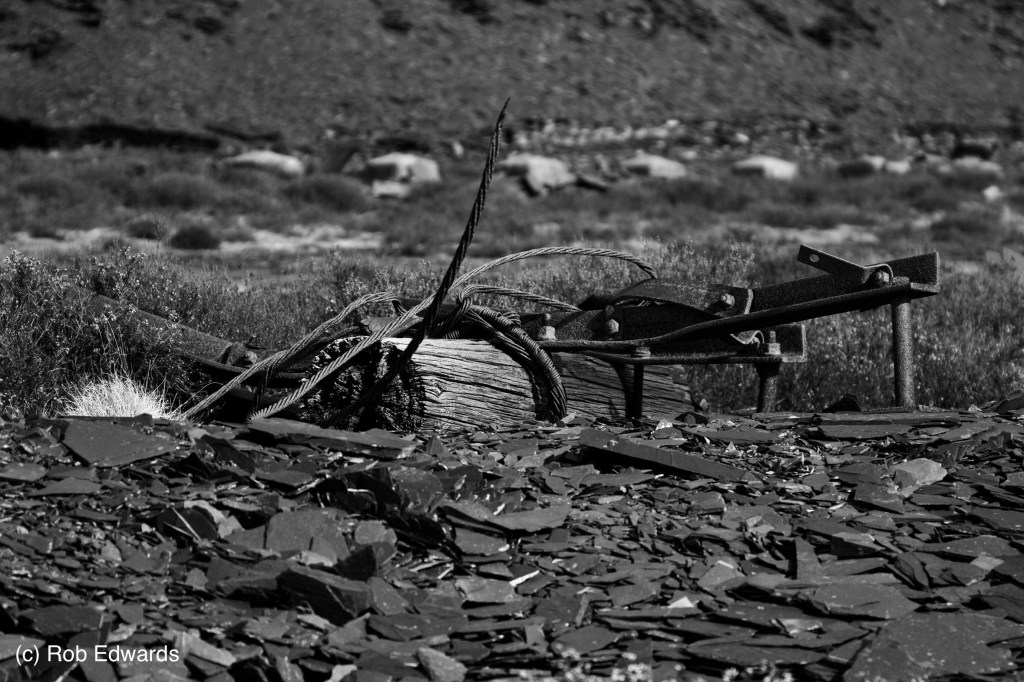
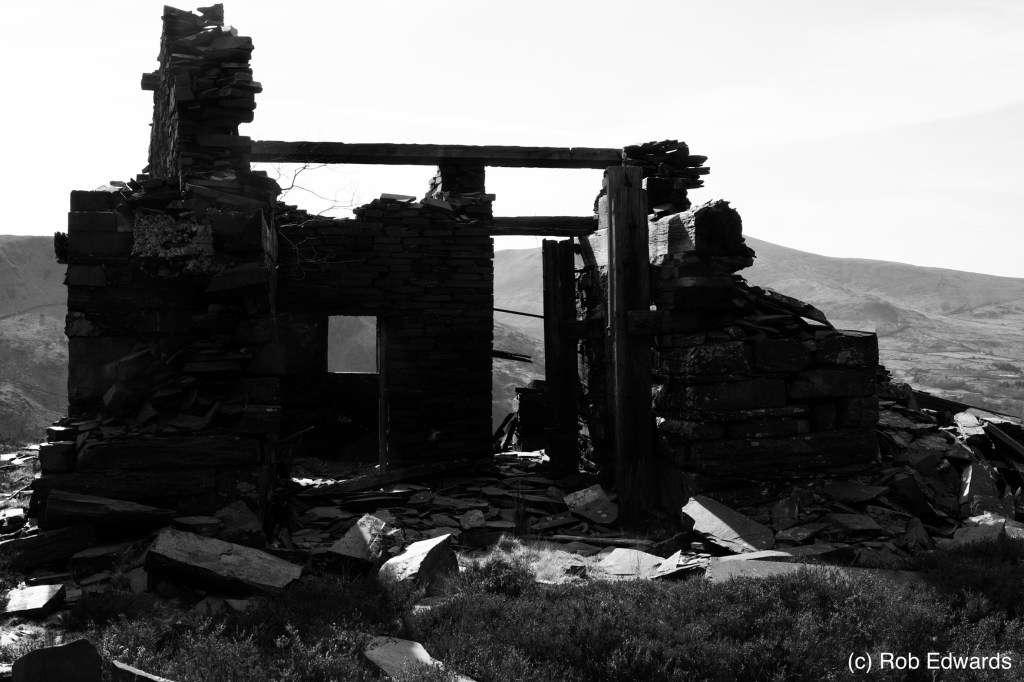
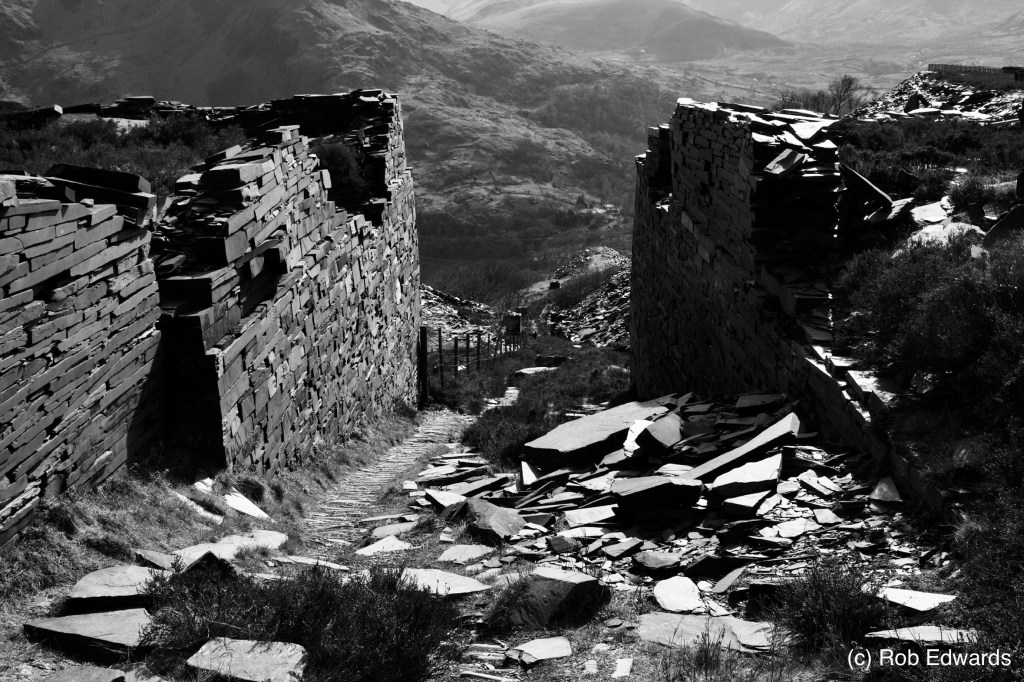
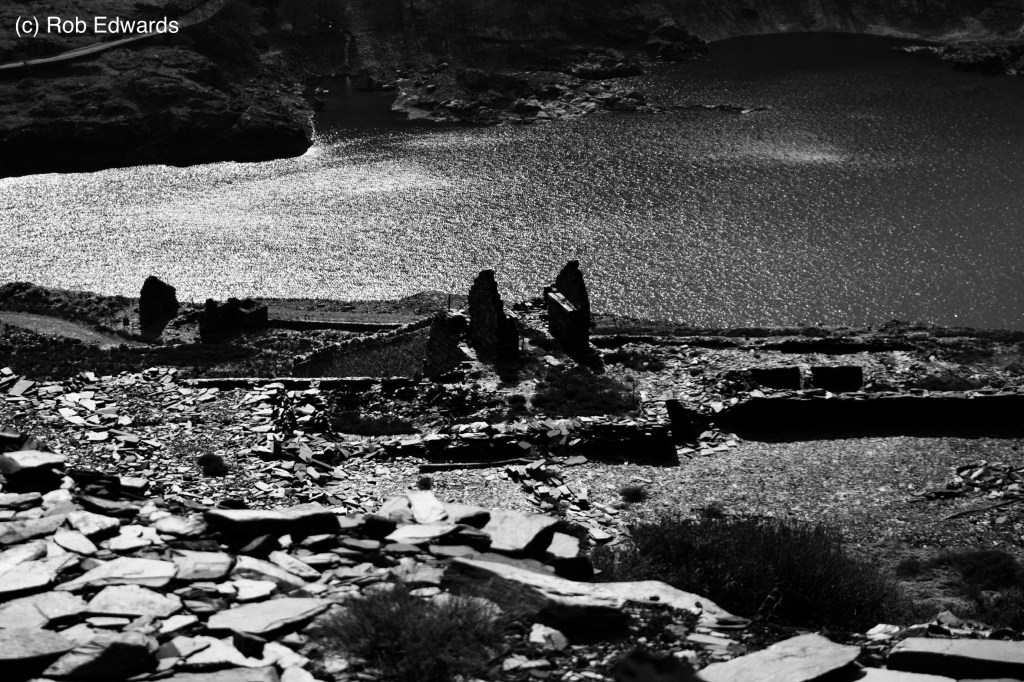
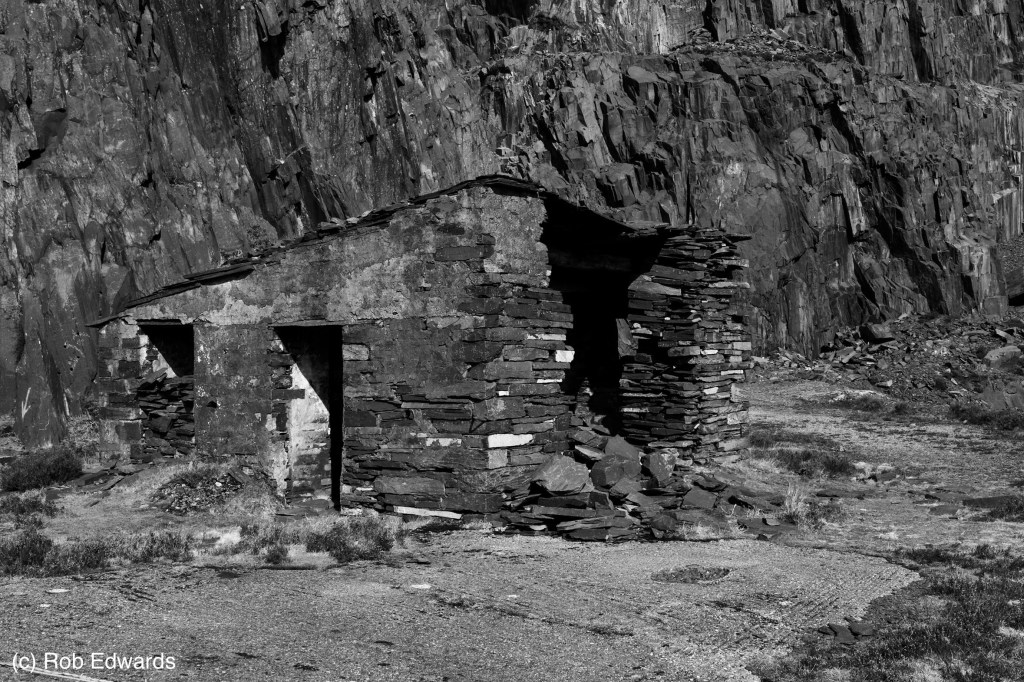
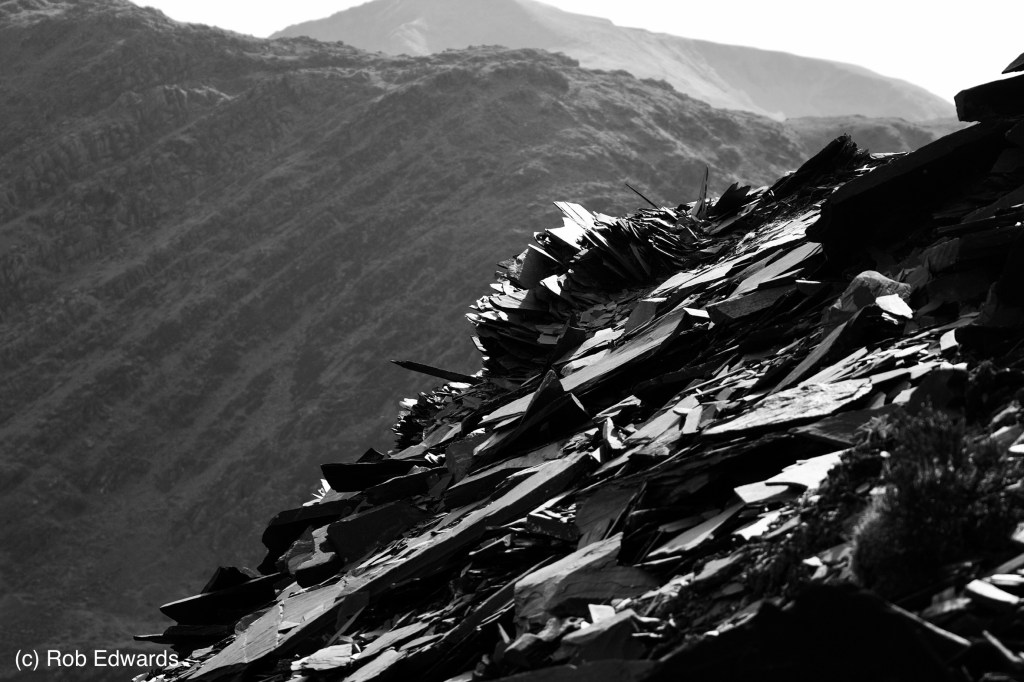
Walking up from the nearest place to park, you walk along the track bed of the old ‘village tramway’, which took slate from the old Garret part of the quarry to the old Dinorwic railway until 1843, when the new Padarn Railway was opened, and then it was used to transport slate from the Allt Ddu and Chwarel Fawr levels to the Mills level of the Garret area for shipment down the incline to the Padarn Railway. At the top of the path is the remains of one of the 14 large slate mills that featured at Dinorwic, where the slates were split and dressed before being shipped down to Gilfach Ddu.You can get a feeling of the shear size of these buildings, and imaging the number of people of working to split and dress slates, all cutting, splitting and dressing hundreds and sometimes thousands of slates in a shift. The wages depend on how many skates they produced in a month from the pieces of rock lowered from the mountain. Just past the slate mill, you are greeted by the the remains of the massive incline railway from the Upper Garret level down to the Mills level. This type of incline the wagons full of skate rock would be lowered on 1 ft 10 3/4 inch gauge tracks as opposed to using the transporters (see below). Further along, there is the remains of a ‘winding house’ complete with wooden drums and a transporter half way up the inclined plain. Walking round the old workings, you get this view. Here you can see the galleries, where the large lumps of slate would be blasted out of the mountain side before being split and dressed. In the background is the village of Llanberis.The slate vein at Dinorwic was nearly vertical, as can be seen from this shot looking at the remains of workings where may tonnes of slate has been removed from the Matilda level. You can see how the slate has been forced away, in neat vertical strips. The rock would be blasted to loosen it, then men climbing the rock face with only a rope for safety and crowbars would prize the loose rock away before it was split and then sent for final cutting and dressing. Not all workings at Dinorwic were ‘outside’, and here we see an entrance to an old tunnel in the Matilda level.Walking around the old Dinorwic quarries, you not only see the massive changes the slate industry made to the landscape, but also that the quarry was virtually abandoned on closure, largely because it was! Look carefully, and you can see the remains of the wire that once was used to haul the transporters up and down the old C4 incline. C4 was the eastern boundary of the quarry workings – to the right of this was where waste slate was mainly dealt with. The remains of of the wooden drums, with the remains of the wire that was once attached.At the top of another incline, there is the remains of this ‘winding house’. The inclines worked on the basis that the the loaded transporter, going down the incline, would haul the empty transporter back up on the opposite track. The track gauge for the inclines with transporters was 5’ 6”.The view down from one of the top of the inclines from the Victoria Level of the quarry. The dangers of working with slate were slightly abated by the fantastic views of Snowdon, as is here.Looking down towards Llyn Peris, you can see the inclines running down to the lakeside at Hafon Owen. From there, slate could be moved along the Padarn-Peris Tramway, worked by steam, towards Gilfach Ddu, and the Padarn Railway to Port Dinorwic.Other buildings also survive, including this old hut, which was a hut to shelter from blasting to get the large lumps of slate away from the mountain. The large waste tips are synonymous with slate working all over north wales; off cuts of slate were thrown away as unusable years ago, and in the background is the lower lopes of Snowdon. One of these waste tips fell into the Garret level in 1966 and caused the final demise of the quarry.
So, this has been a long time coming, a very long time coming, but I finally got my act together and have done another blog post!
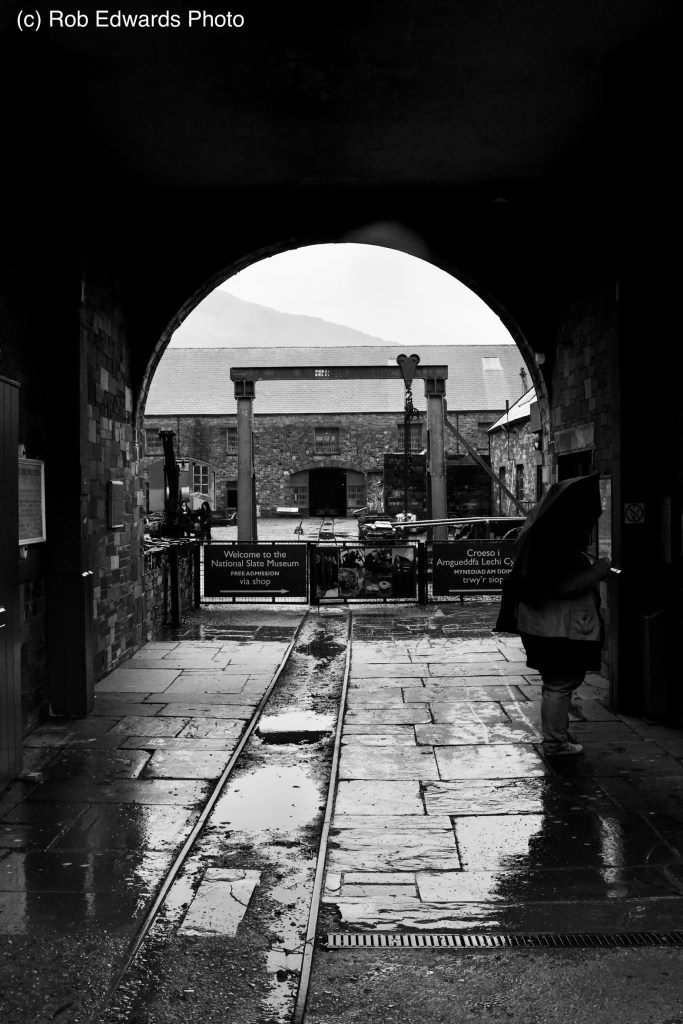
One of my all time favourite museums is the National Slate Museum in Llanberis. The museum has been built in the old quarry workshops of the Dinorwic Quarry, once one of the largest slate quarries in the world, where all manner of parts and equipment for use in the quarry could be made, engines were serviced, and the men would gather for meal breaks.
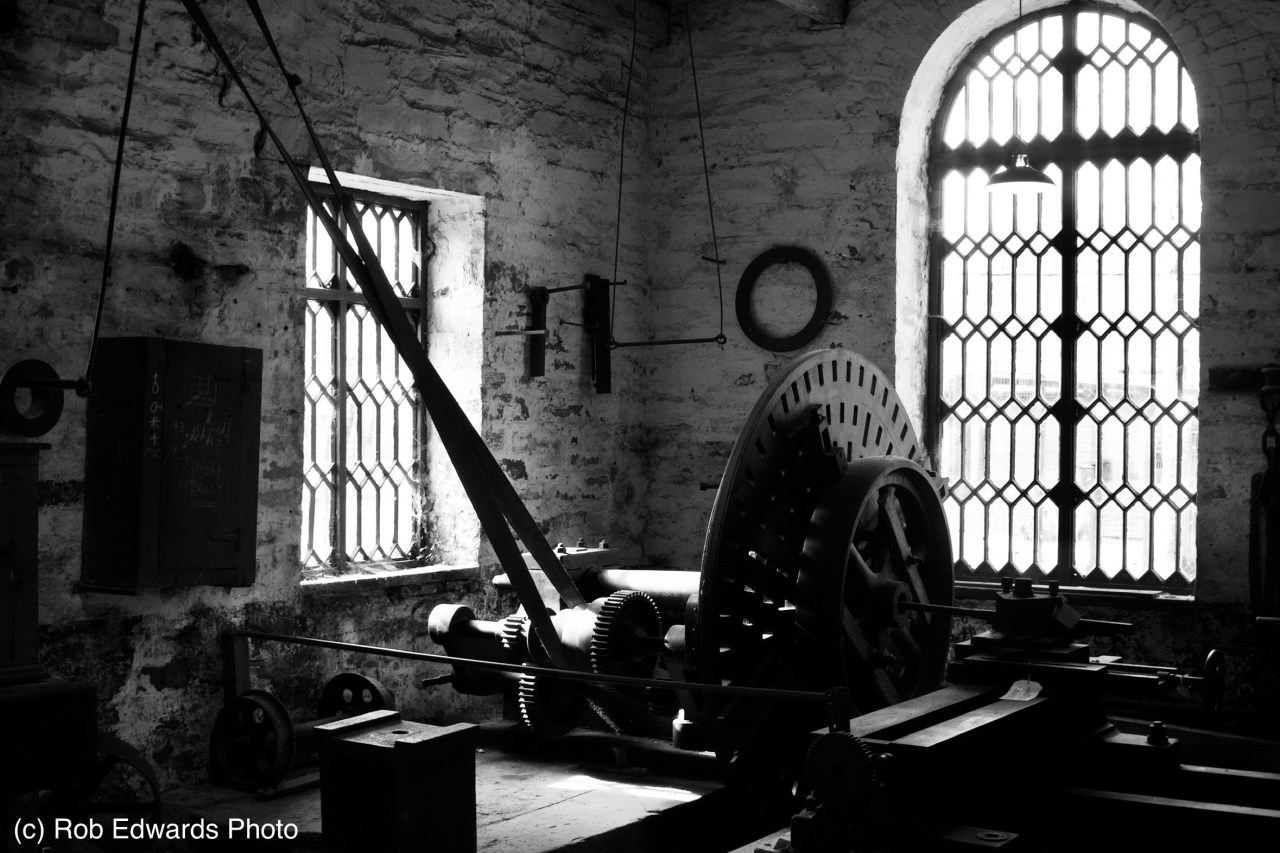
Each slate quarry in North Wales was an independent concern, and therefore required to be able to make or repair any of the machinery used in the quarry, from the engines working the levels in the quarry, to the tools used for the quarrying. Everything could be made or repaired in the workshops, and this required all sorts of machining machines, a foundry and a smithy. In many ways it had too – not only were they independent, but remote from so much else in Wales.
A good chunk of the museum is taken up by the old machinery of the workshop, the foundry, and the smithy, and over many visits over may years, this is my collection of pictures.
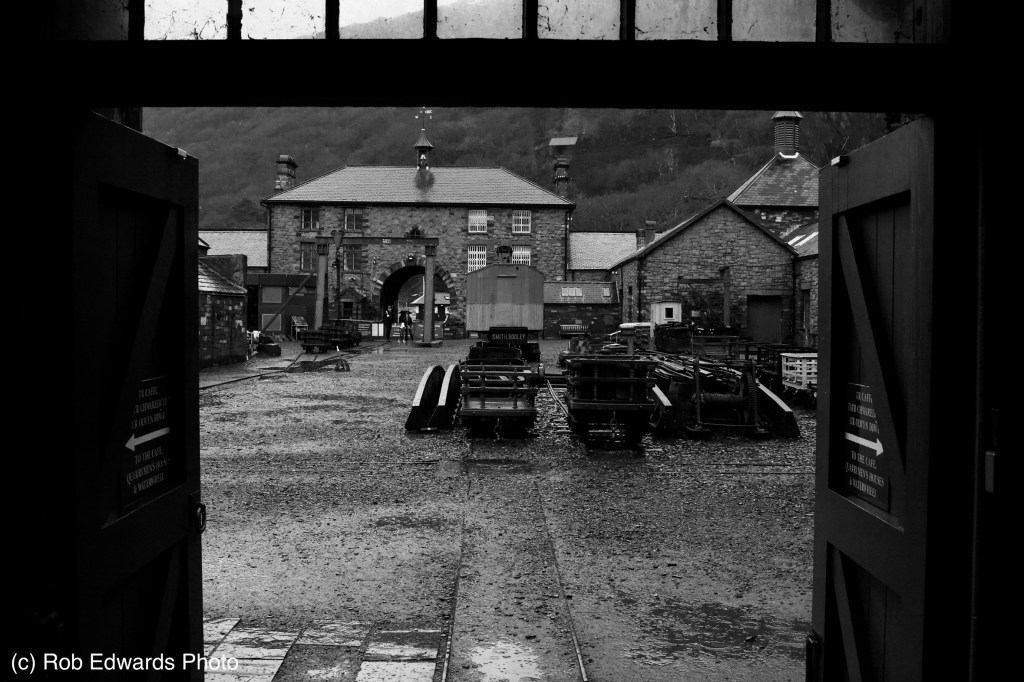
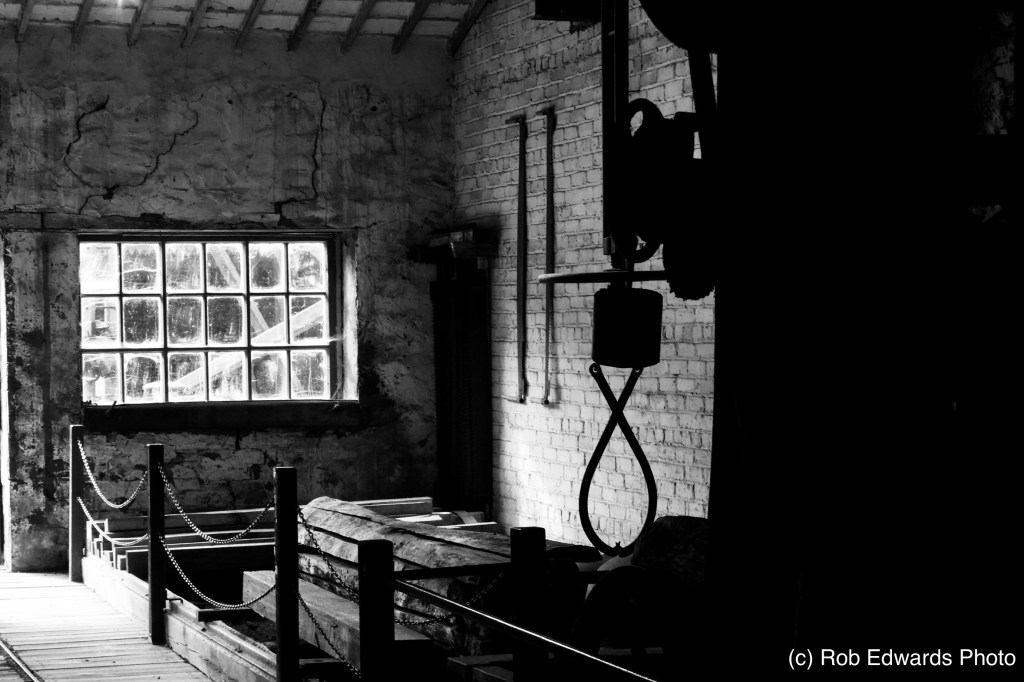
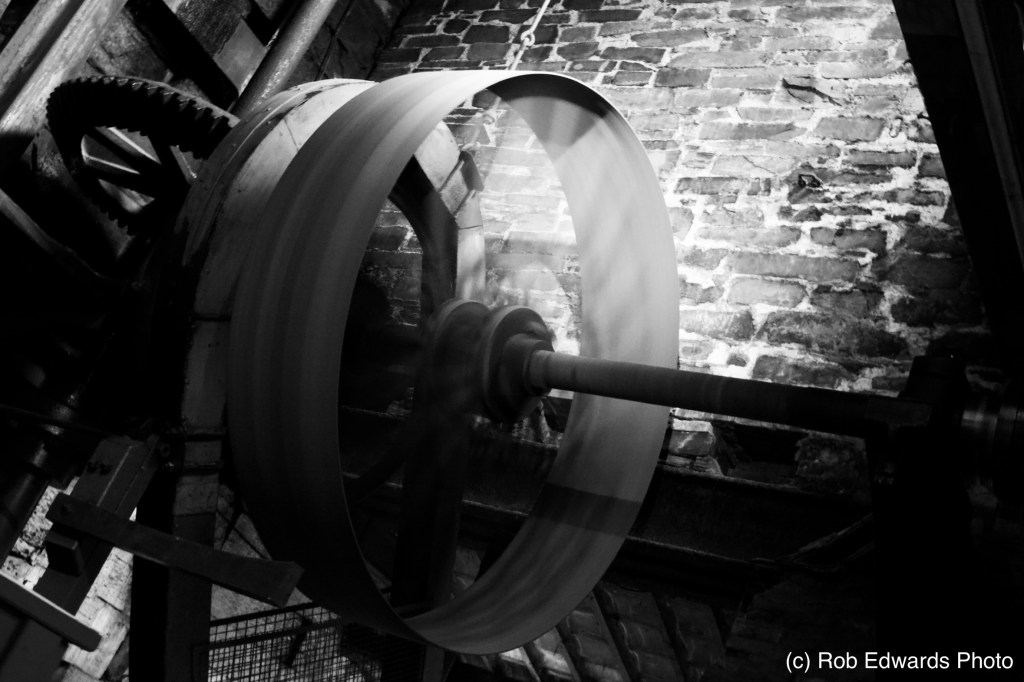
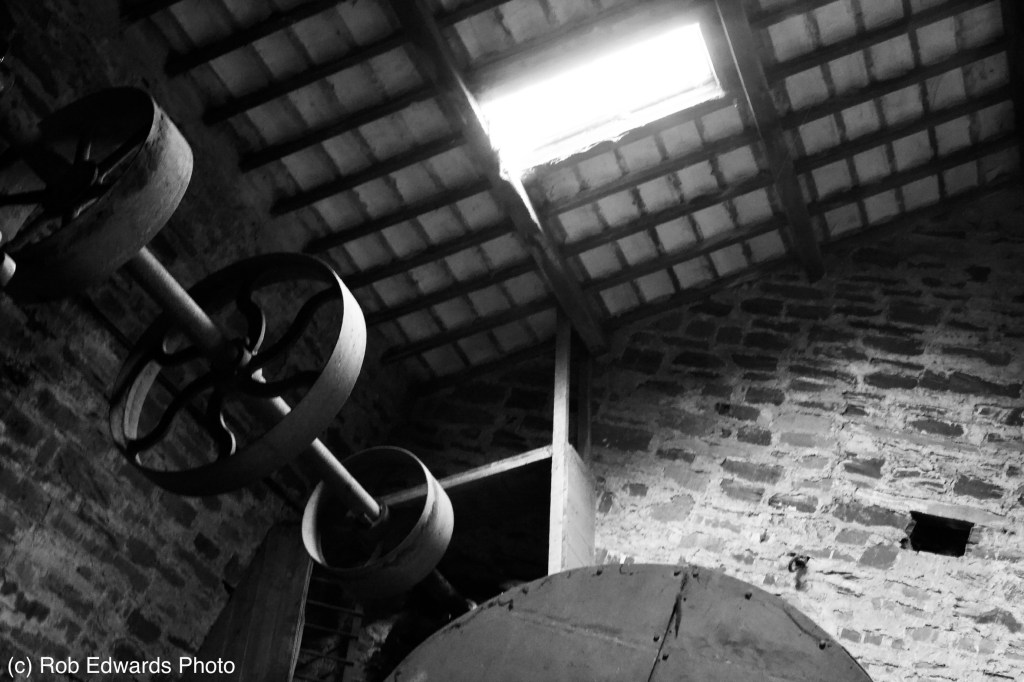
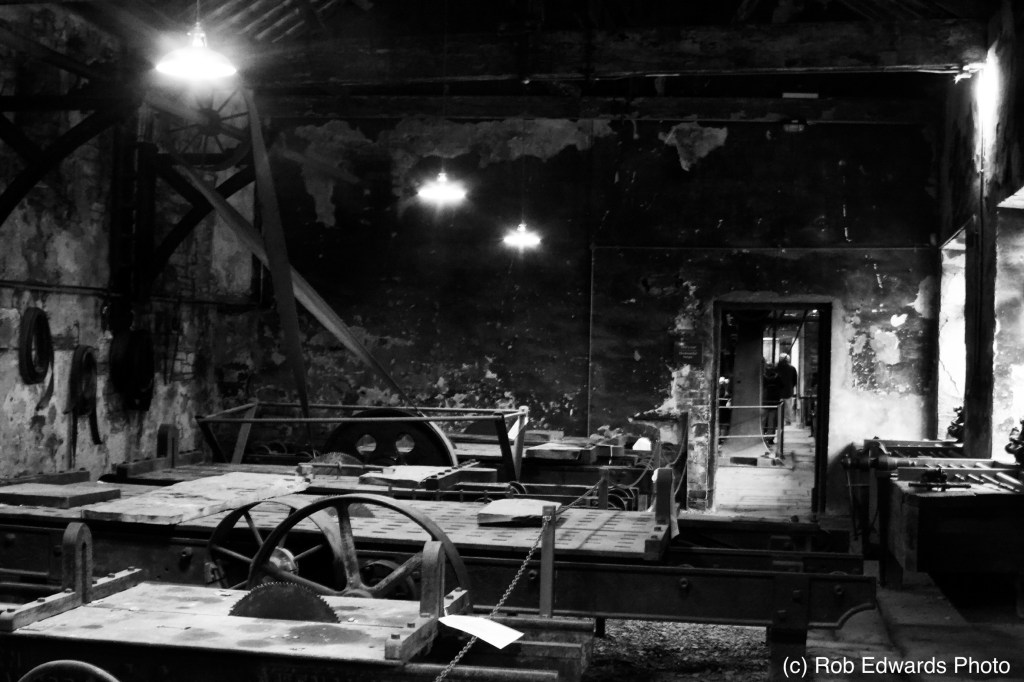
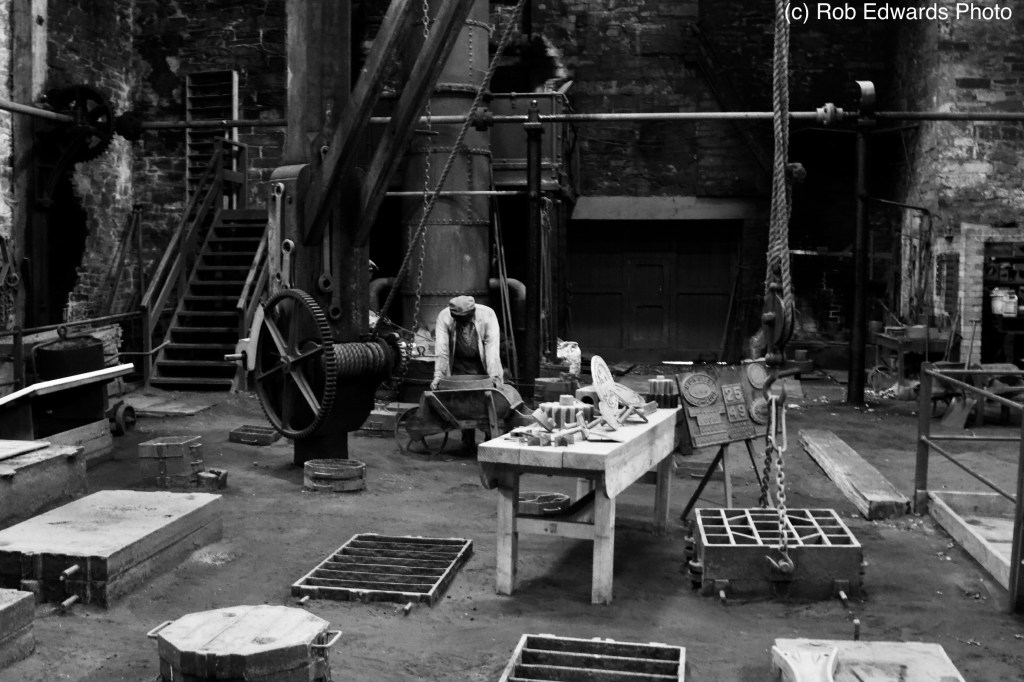
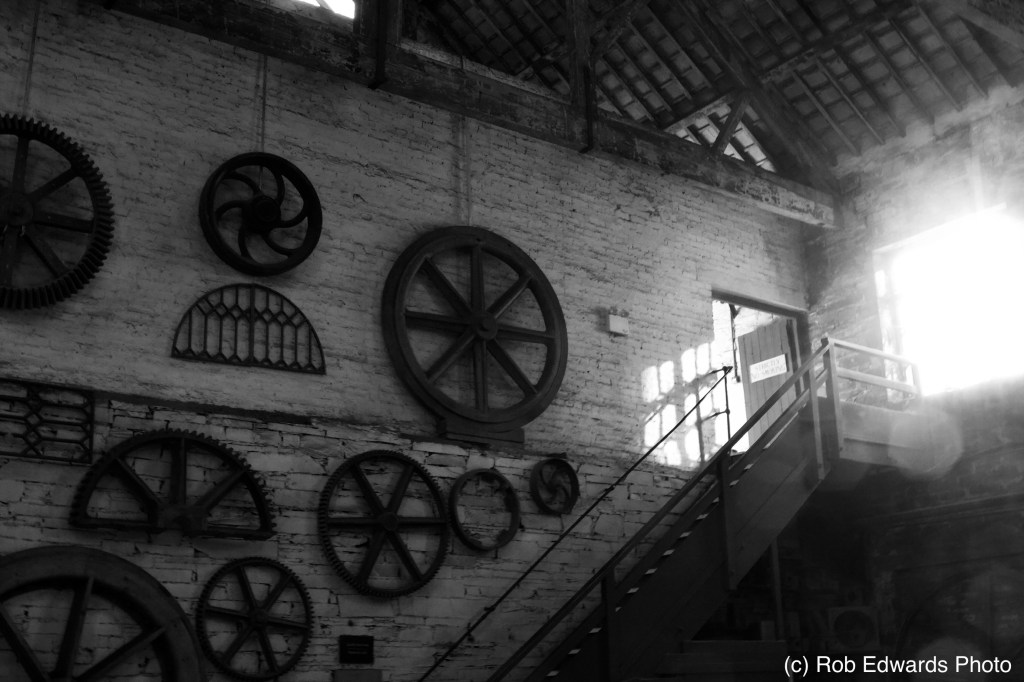
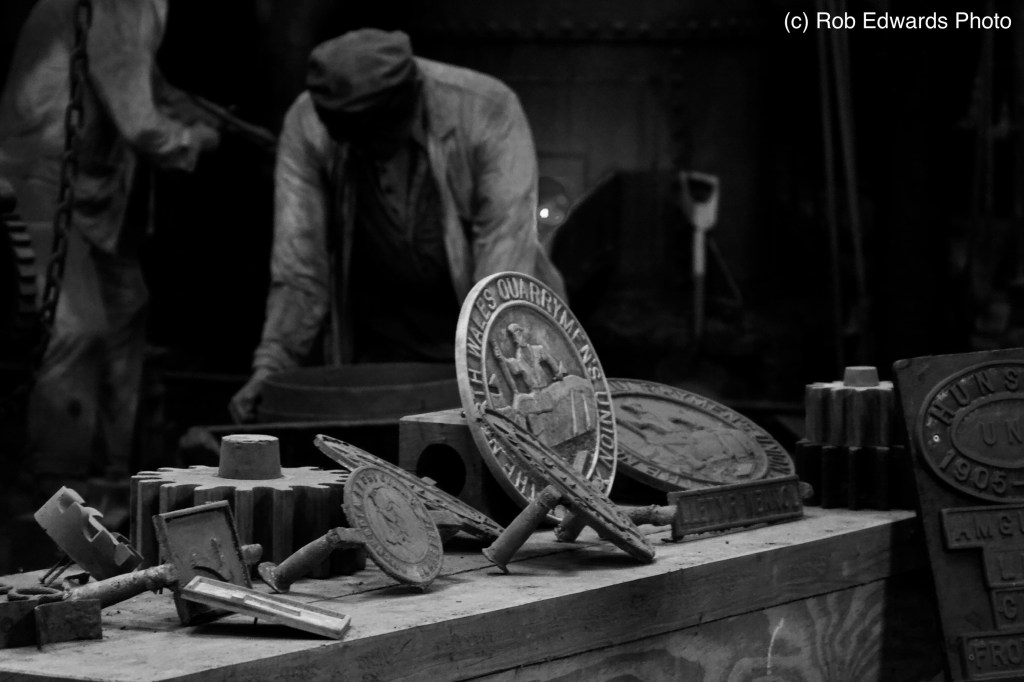
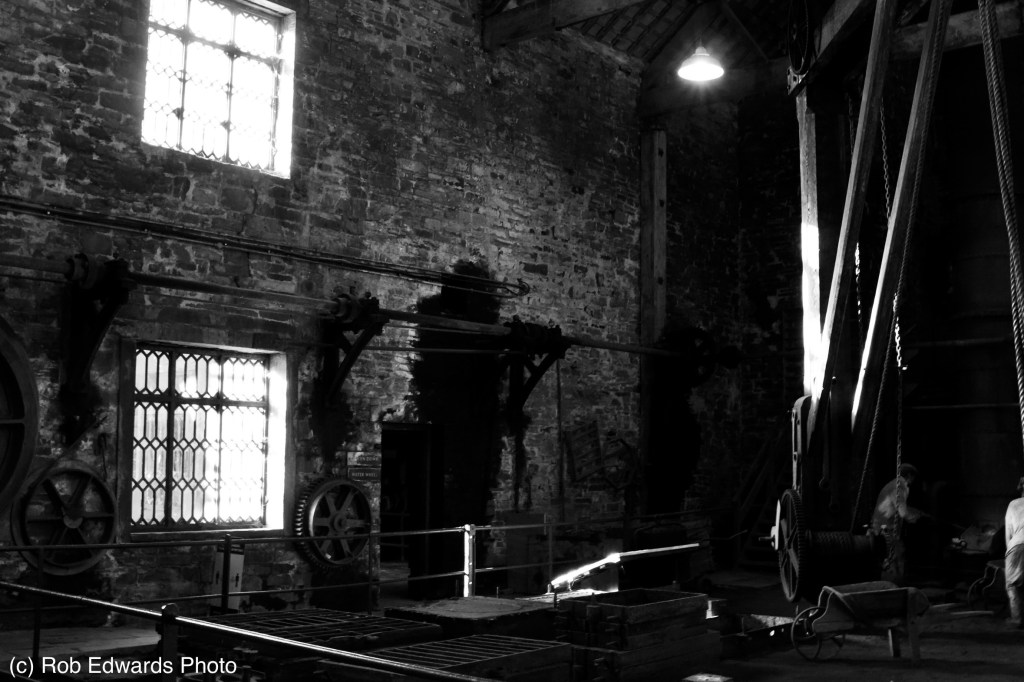
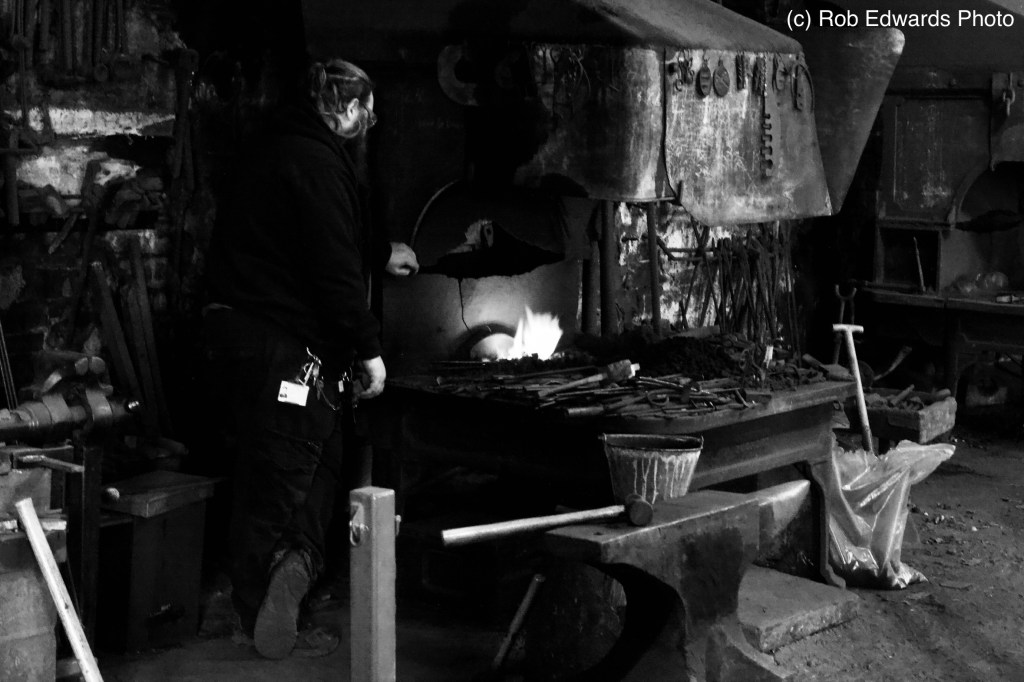
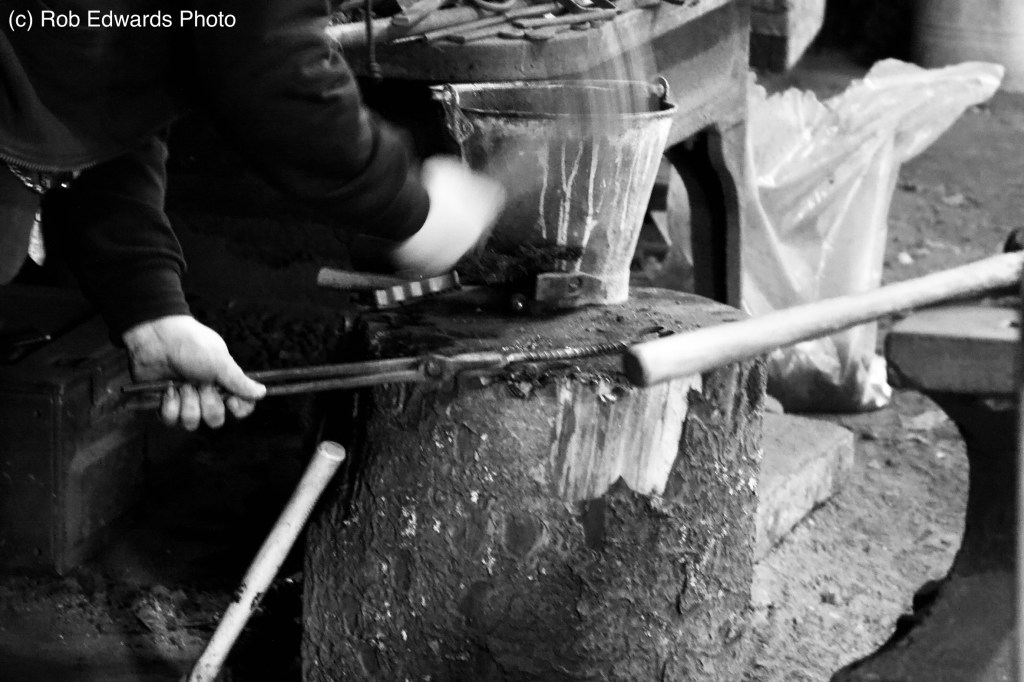
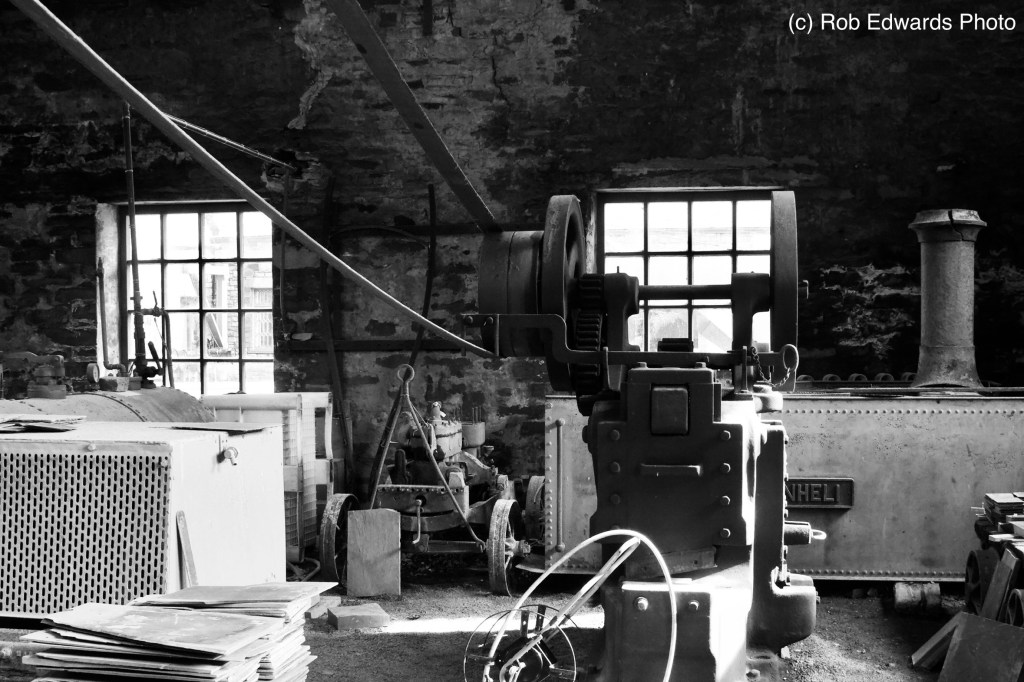
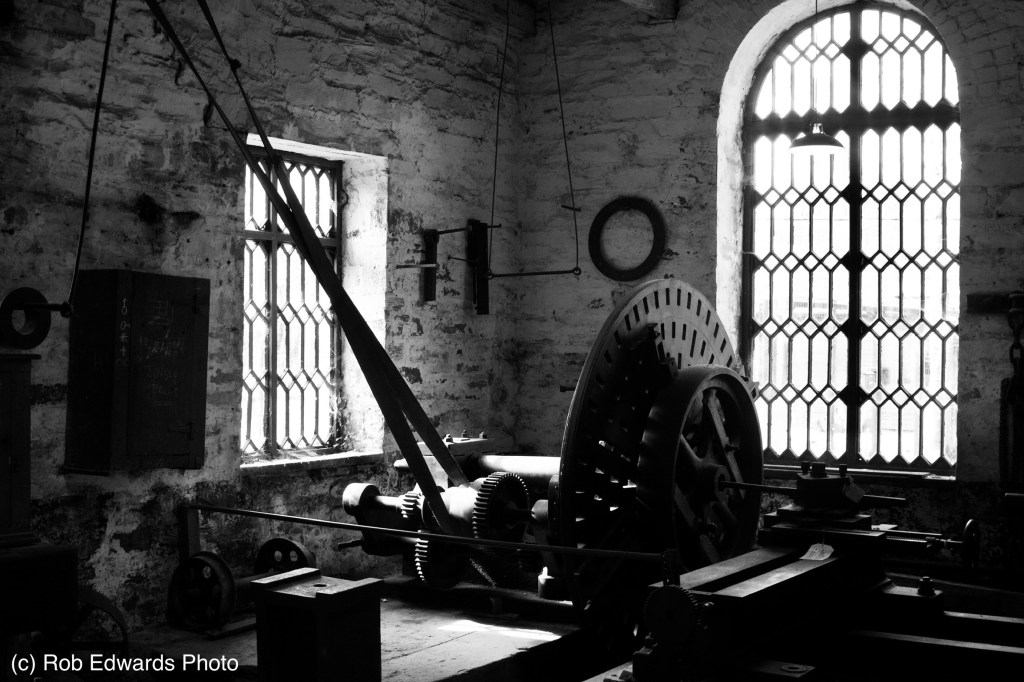
The entrance to the museum and the workshops, therefore, is through an impressive arched gateway. Ahead is the main courtyard of the workshops.View from the other side of the court yard, looking out of the sawing shed. The entrance archway was underneath the offices.Inside the saw shed, there is a belt driven set of saws that can saw a tree trunk into to planks of wood, which could be used for all sorts from sleepers for the various railway lines to decking for the inclined plains.The various machines in the workshop were driven by water wheel, which then powered a line shaft throughout the workshops. Drive was transferred from water and then to the line shaft through right angled bevel gears.The line shaft would continue pulley wheels to allow belts to be put on to drive the machinery in the various parts of the workshop. Skilled men could put a belt on with the line shaft moving, although this was frowned upon…This part of the workshop contained the large cutting benches, and like all the other machinery in the workshop, it was all belt driven. Note that to reverse the direction of the cutting saws, the belts were put on in a figure of 8.A cathedral like room contained the foundry. Patterns would be made in wood that are slightly larger than the item being made, the amount depended on the metal being cast. These would then be filled with air drying sand, and the molten metal then poured into the mould created through holes (if it is a closed casting) or into the top (if it is an open casting). There are still place in the UK that still do foundry work in this way.Many of the patterns created in the pattern shop were reused, eg, like here the gears and wheels, which were made and remade on a regular basisIt was not only large items that could be cast; intricate items like the plague shown could also be cast, showcasing the skills of the foundry men and pattern makersJust another picture of the foundry – included this because I liked the light in it.Compared to the foundry, the smithy is in a much smaller, darker space. There was space for up 4 blacksmiths to be working at once.The smithy is a fully functional smithy, but on the many visits to the welsh slate museum, I’ve never seen it working until October 2020, when one of the blacksmiths was making articles to sell in the shop. It’s skills like those off a blacksmith I admire; the ability to mould and shape metal into different objects by heating the metal and making it pliable is amazing.The workshop also contained machines for working on the various locomotives for the 2’ gauge (actually 1’ 11 3/4” gauge but referred to as 2’ gauge) system, but also the 4’ gauge Padarn railway to Port Dinorwic, where much of the slate was exported.The final part of the workshop is where the large lathes are kept. These lathes could turn anything up to the size of a locomotive wheel.
That’s all folks for this post. Don’t forget to like, subscribe and share!!


 Flat Cap and Camera