The remains of the industrial revolution in pictures
Moving the slate: The Padarn Railway
So far, my slate blogs have concentrated on the lives of the quarrymen, how slate was split and dressed, and the quarry workshops that allowed the slate workings to continue. But how was slate moved from the quarries to the places it was needed and exported around the world?
Many narrow gauge railways and tramways were constructed across north wales to take the dressed slate from the quarries to the ports, many of these using literal horse power at first, and as time went on, steam replaced horses, and some of the older tramways were replaced by better laid railways.
Ones of these was the old Padarn Railway, officially called the Dinorwic Quarry Railway, that ran from Gilfach Ddu near Llanberis to Penscoins, just above port Dinorwic (now called Y Felinheli). The railway opened in 1843, replacing the former tramway that had been in use since 1825, and was powered by horses.
The railway was of an unusual 4 ft gauge, and also had unusual wagons in that each wagon had two 1 ft 10 3/4 inch tracks on the to transport the smaller slate wagons. The wagons were transported the short distance from the quarry workshops at Gilfach Ddu to the loading point for the Padarn Railway, this being 1 ft 10 3/4 inch gauge, and then at Penscoins, the wagons would be offloaded onto the incline to Port Dinorwic, also of 1 ft 10 3/4 inch gauge.
The railway officially closed in 1961 , the Dinorwic quarry outliving this by some eight years until 1969, but although the railway shut more than half a century ago, it can still be easily traced, and on a recent holiday in North Wales, I traced the old Padarn railway from Pen-y-llyn (where todays Llanberis Lake Railway ends, and runs on the former track bed of the Padarn Railway) to Penscoins.
[insert re fire queen shed]
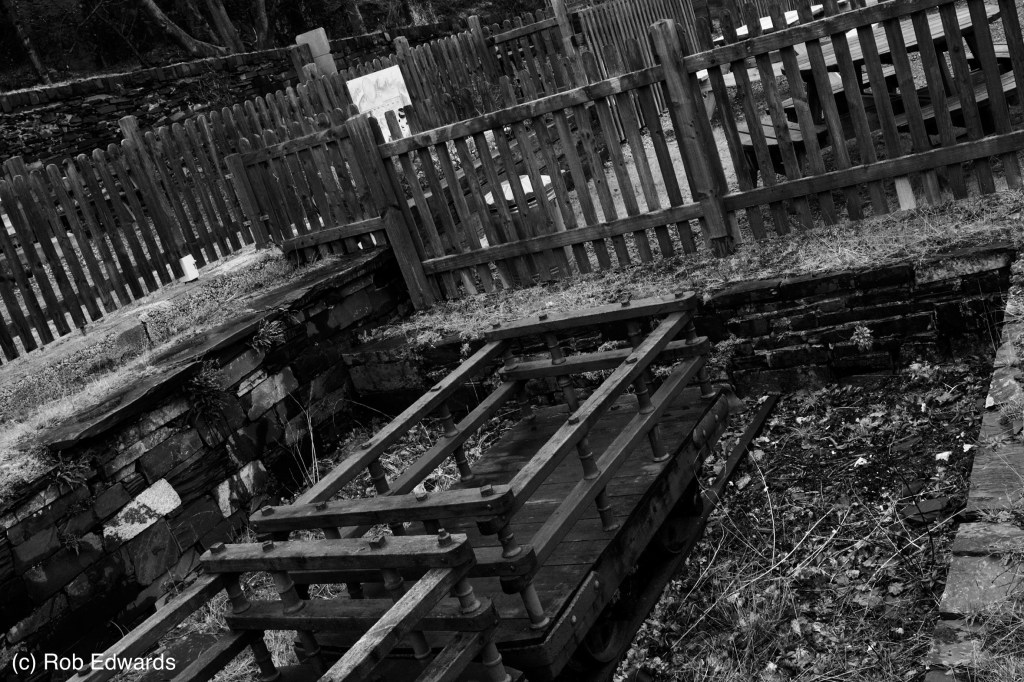
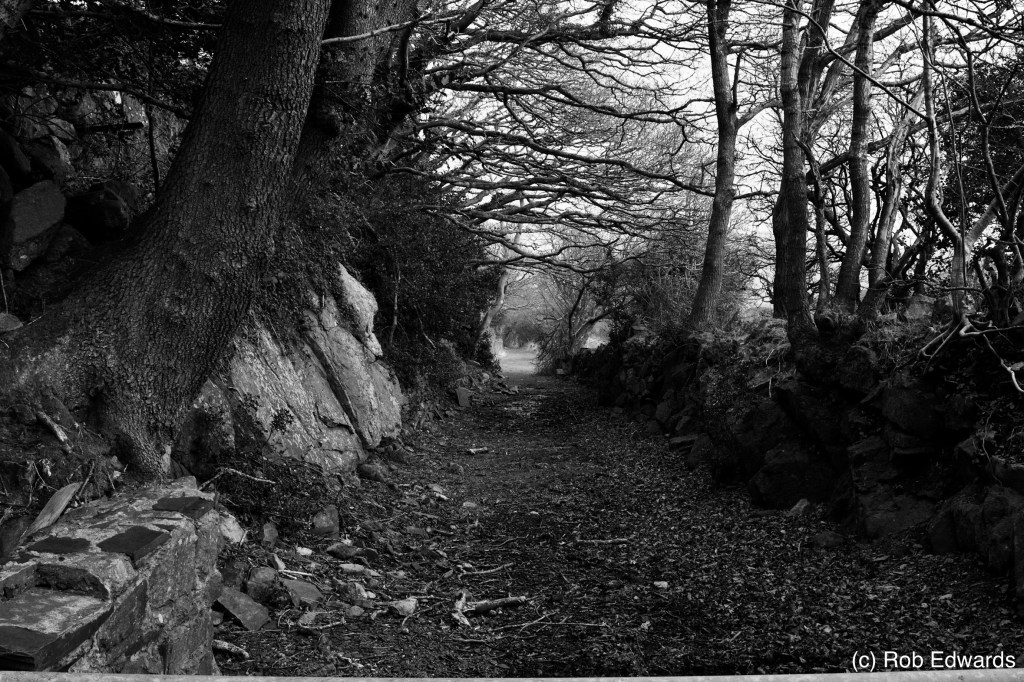
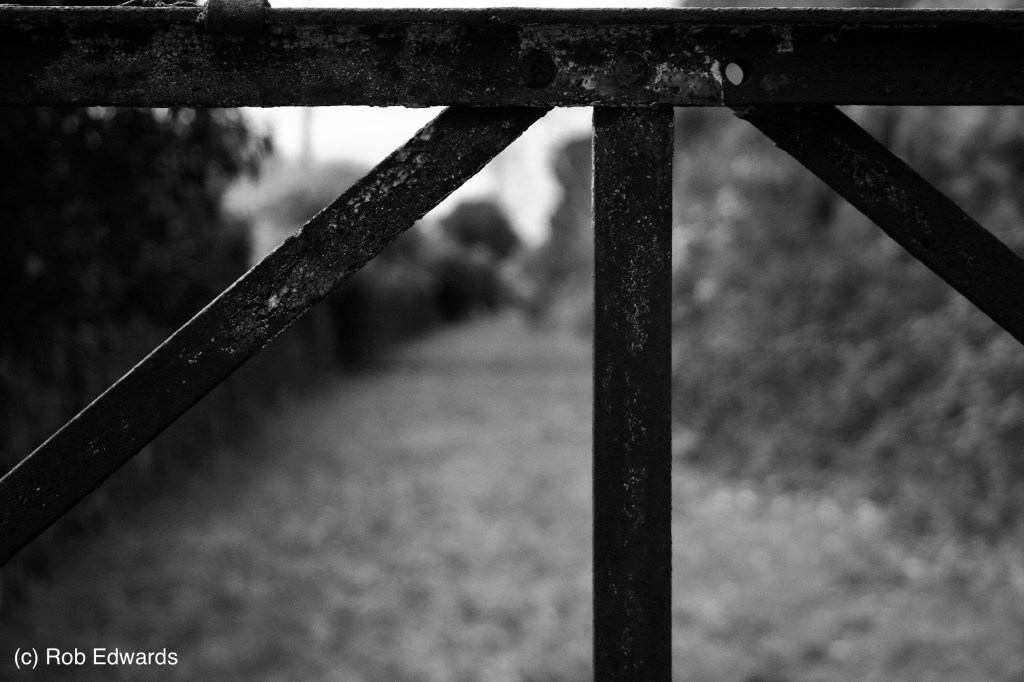
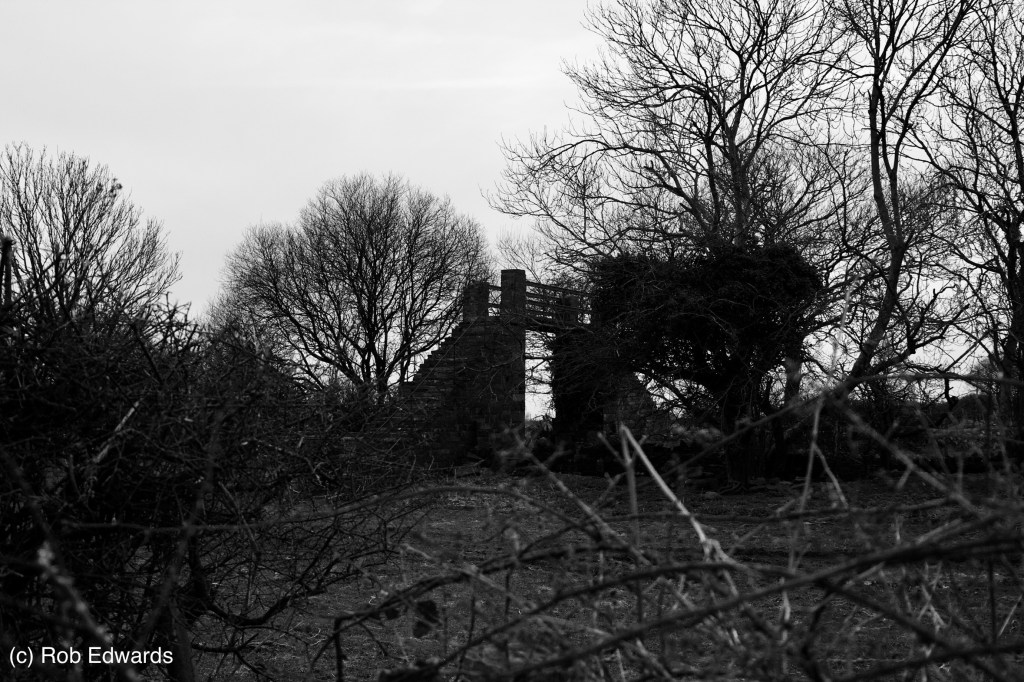
At Gilfach Ddu, the remains of the loading dock. The 1 ft 10 3/4 inch gauge wagons would run to the end of the platform and then on the 4 ft gauge transporter wagons.Another shot of the loading platform. The height of the of the old transporter wagons can be seen by looking at the height of the platform behind the slate wagons.Even after the passage of more than 60 years, most of the trackbed is still visible. This is the trackbed from Pen-y-llyn to the first of the many former small occupation crossings Both sides of this crossing are gated, and the other side of this crossing runs behind a number of private dwellings towards the first major road crossing of the A4244.The railway continued in a north easterly direction towards Brynrefail and Llanrug. At Craig-y-dinas, near Llanrug, is the remains of an engine shed, dated 1895, built on the site of the old stables, from when the line was horse worked.The crossing at Cefn Rhyd, between Craig-y-dinas and Bethel, the gates having been shout across the line for over 60 years. Here the trackbed of the old LNWR’s line to Llanberis is very close, having been on the opposite side of Llyn Padarn and Afon Rhythallt since Llanberis.The line continues it’s North Easterly course towards the village of Bethel. Near Bethel, the bridge abutments where the railway crosses the B4366 are still clearly seen, although the bridge deck is long gone.A little further on, there is the clear remains of a footbridge across the railway. Despite much of the trackbed now being I’m private hands for many years, structures like this still stand.At Bethel the railway turned due North, and, a little further on, at Cefn Gwyn Crossing Halt, the old station building remains.The end of the line was at Penscoins, with it’d 1896 built engine shed. Penscoins is still c300 ft above Port Dinorwic (Y Felinheli), the slate descended down a 1 in 4 incline to the docks, through a tunnel under the village of Port Dinorwic.Today, the southern section is used by the Llanberis Lake Railway from Gilfach Ddu to Pen-y-Llyn. As a post script, former Dinorwic quarry hunslet ‘Eldir’ departs Gilfach Ddu for Llanberis.





The use of b/w photos makes them look so much more evocative than colour photos.
LikeLike
Thank you very much. I take so many photos in black and white.
LikeLike