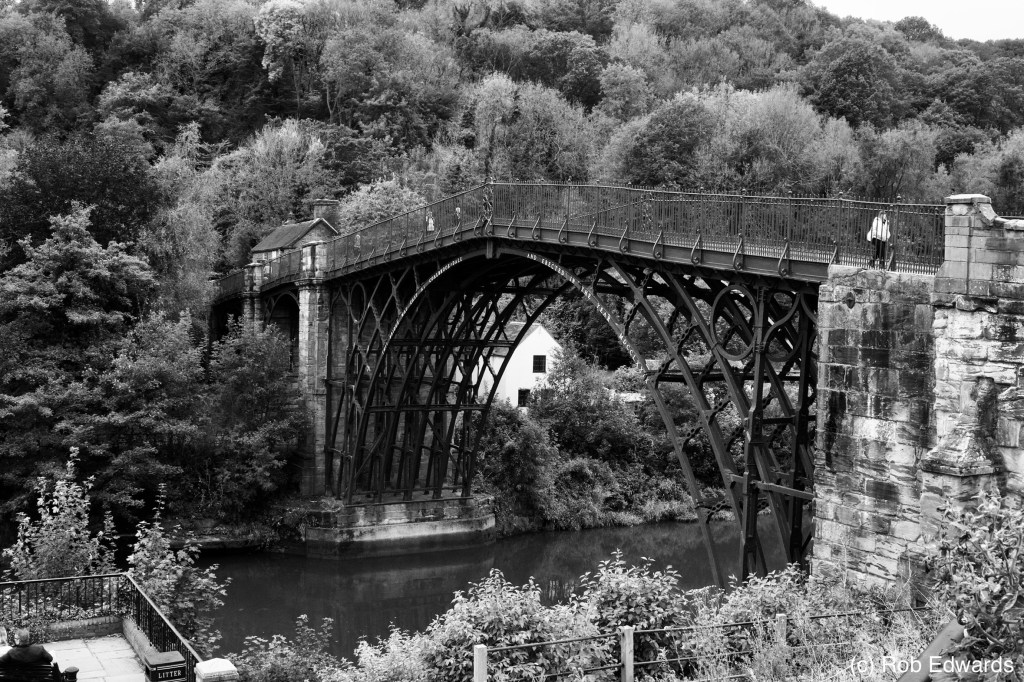
The industrial revolution really started in the Iron Bridge gorge in Shropshire. Abraham Darby successfully smelted iron ore with coke made from coal from nearby Coalbrookedale in 1709. In 1781, the very first Iron Bridge was completed, designed by Thomas Pritchard, a local architect, the first large scale use of cast iron.
From there, Shropshire became the industrial centre, and many see the Iron Bridge as a symbol of the Industrial Revolution, made from the material that spurred on that same significant period of time.
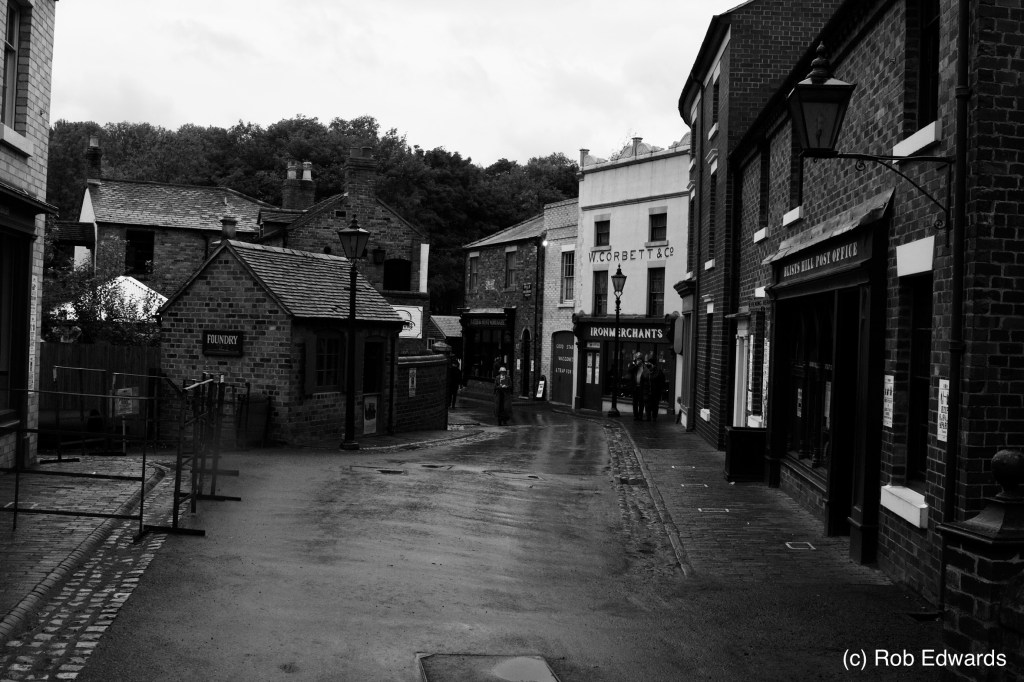
A few miles away from Ironbridge is the Blists Hill Victorian Town, part of the Ironbridge Gorge Museum Trust, its self built on a former site of brick and tile works, coal mines, iron ore mines and blast furnaces. The town depicts a typical industrial town in the Victorian age, and this post is all about this amazing museum.
Where it all started – the world’s first iron bridge in…Ironbridge, and still standing to this day. It is reckoned that to be able to cast such a large structure back then that the furnace would have been tapped straight into large moulds on to the foundry floor. As you walk into the village, the imposing structure of the Blists Hill Goods Shed stands before you. Although there was never a railway here, the LNWR and GWR had lines nearby on opposite sides of the river Severn, serving the nearby Ironbridge and Coalport.The town was never here before the museum opened – it was built around the former iron works, coal mine and brick works. But what it shows is how a typical Victorian town would look.
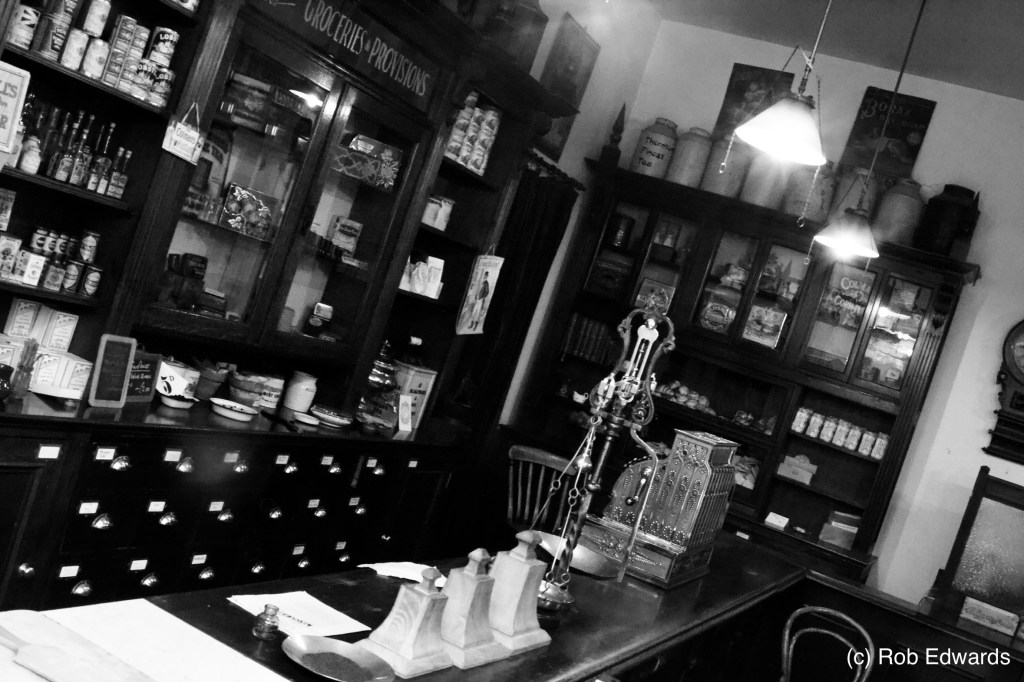
This is inside the grocers shop. So many old artefacts, such as the old scales, the old till, and the shelves behind the counter – all from a period long before self service shops where even known.
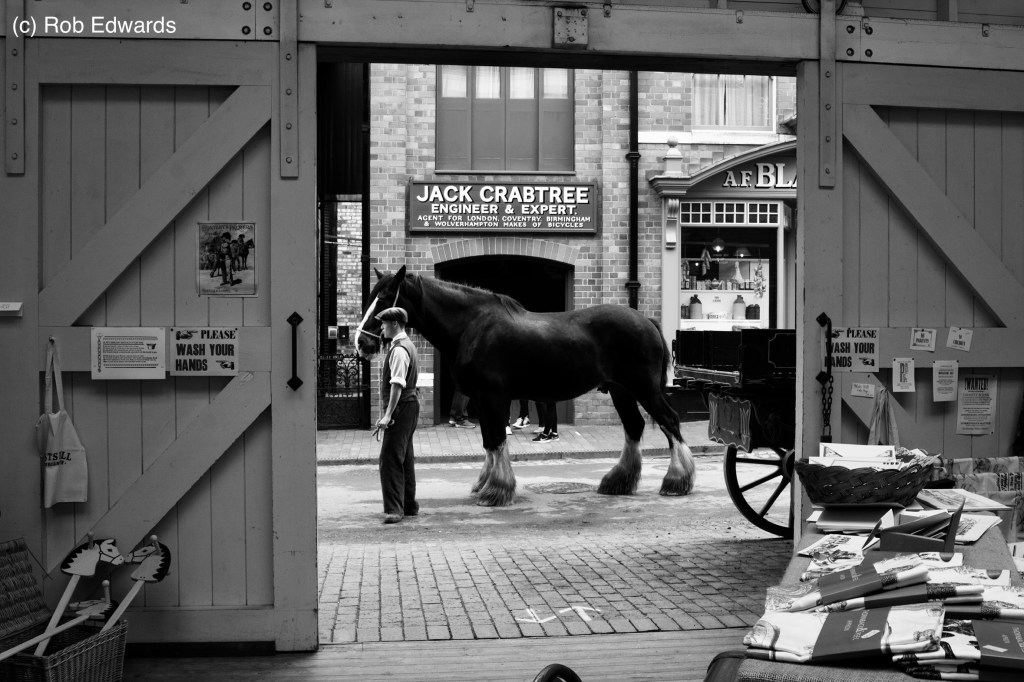
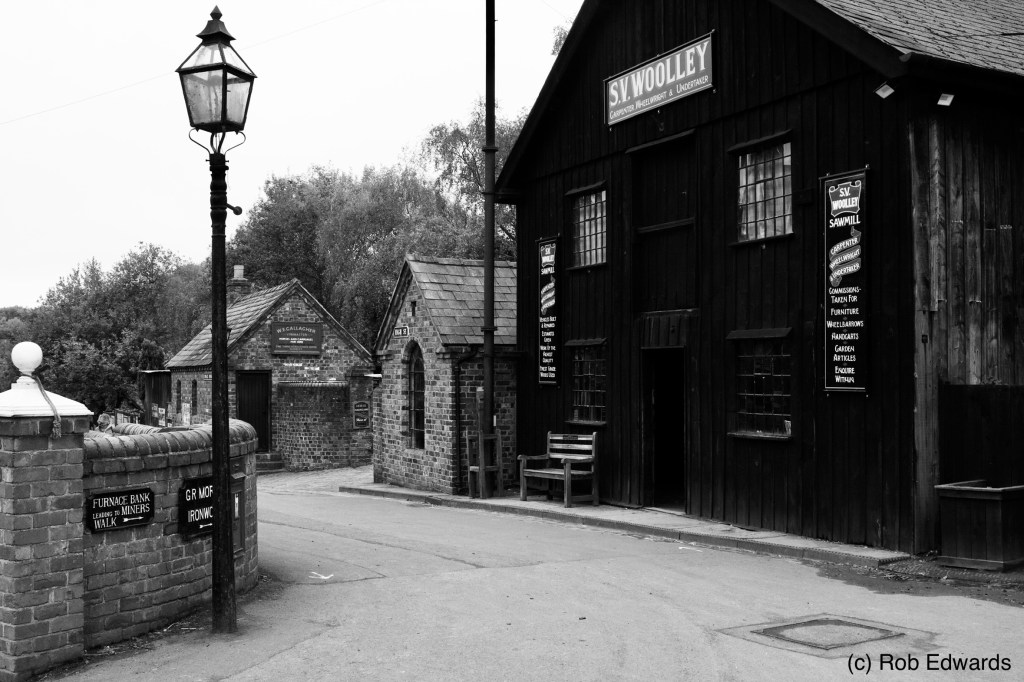
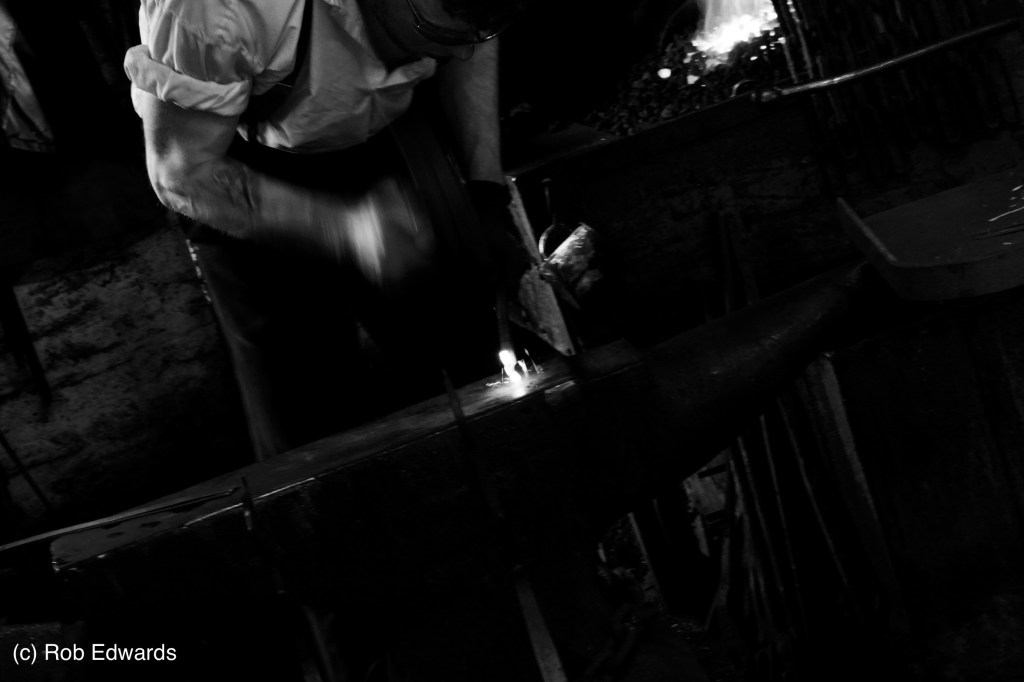
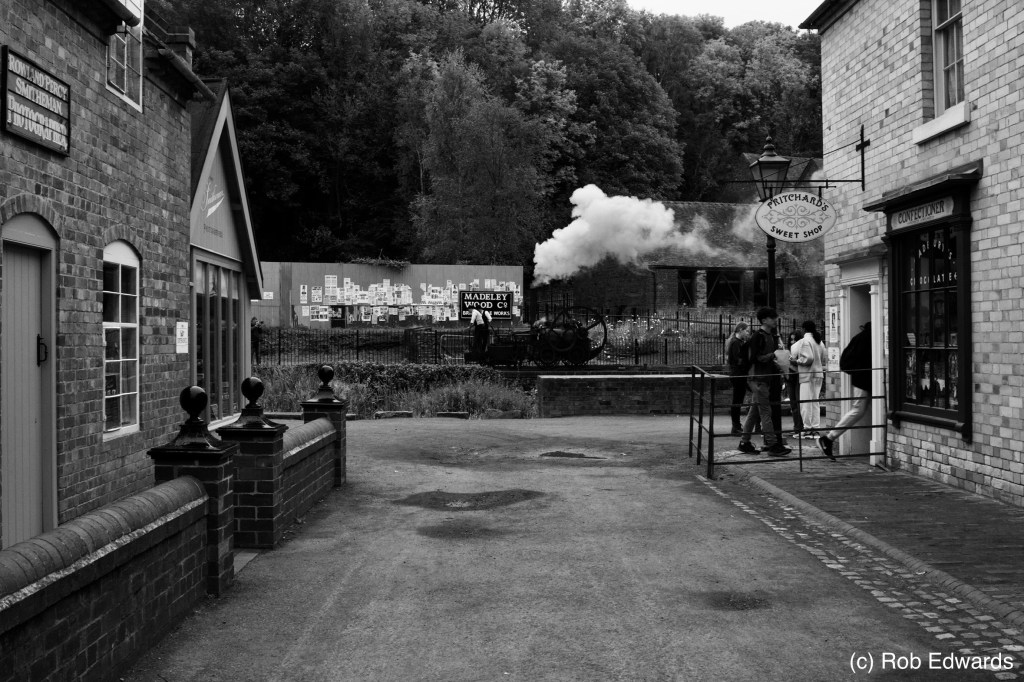
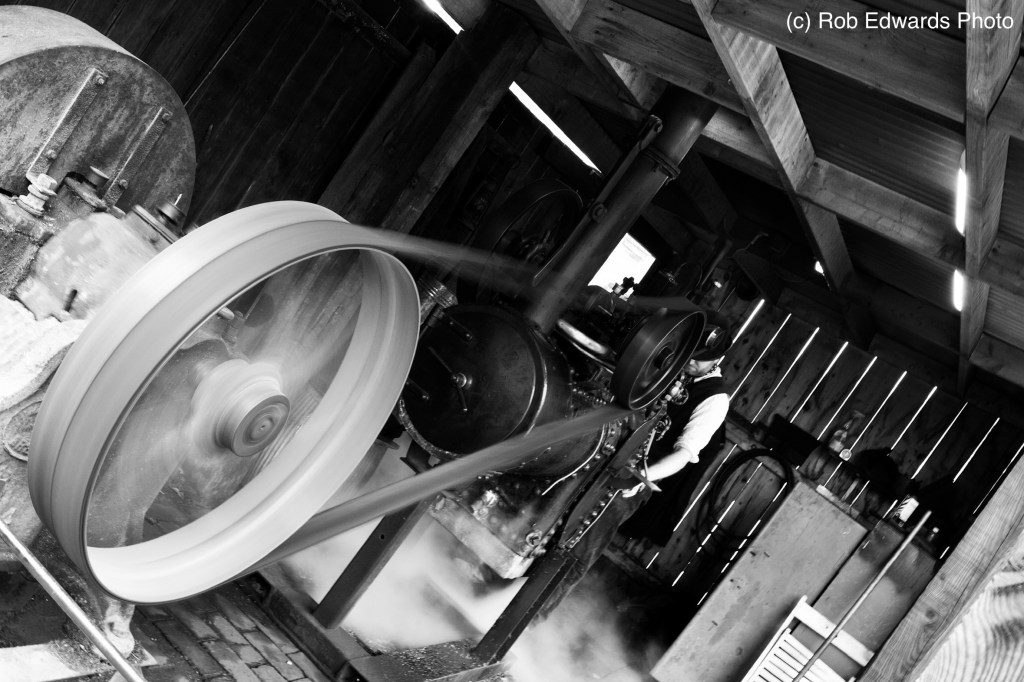
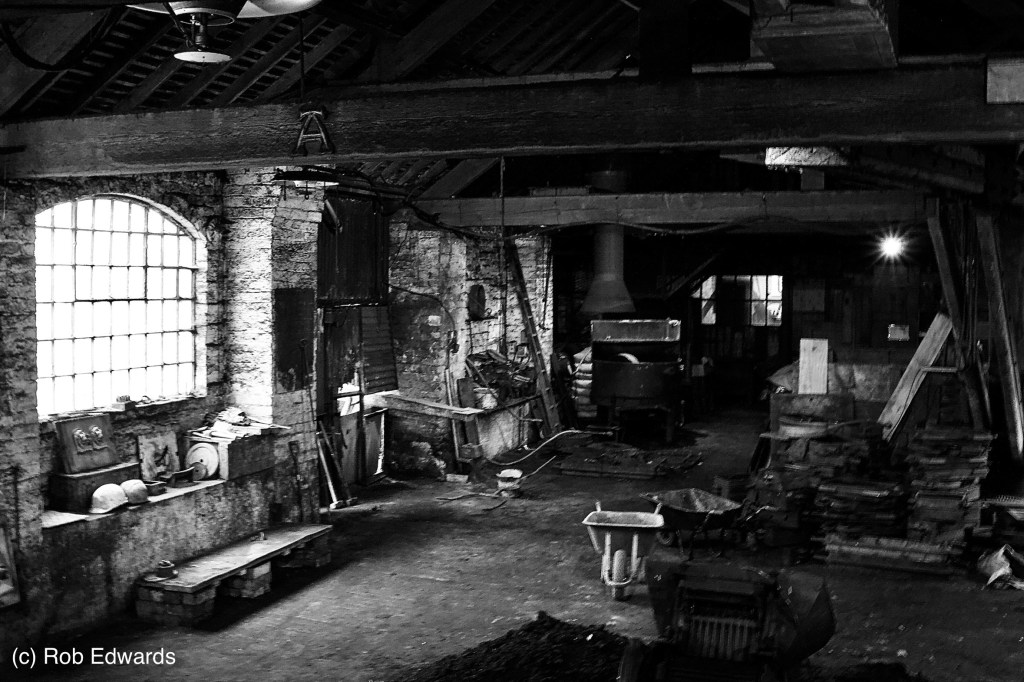
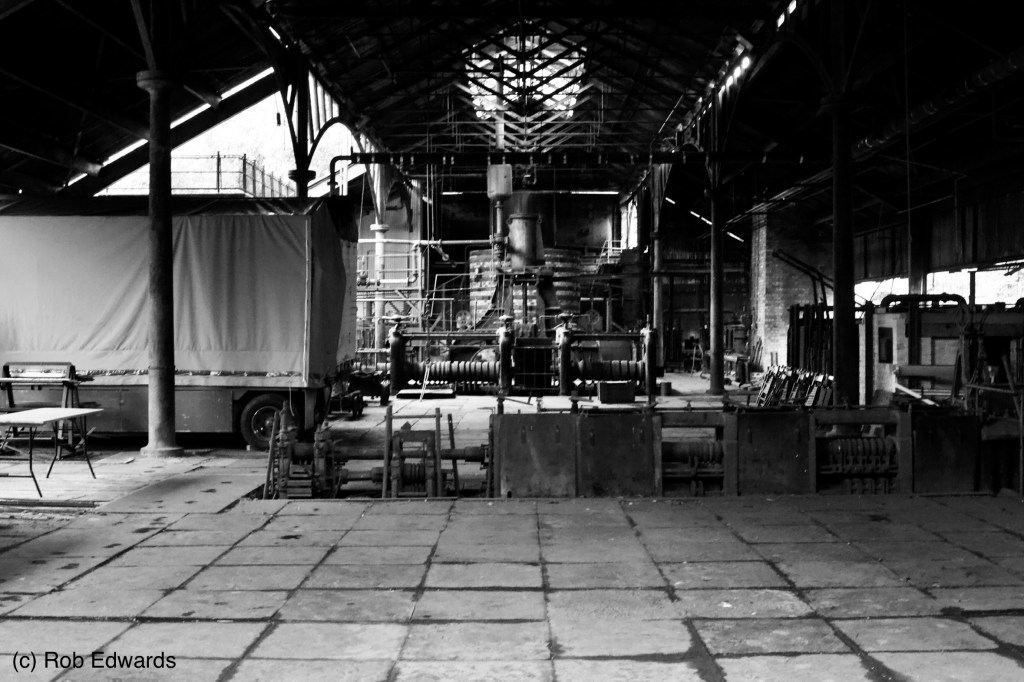
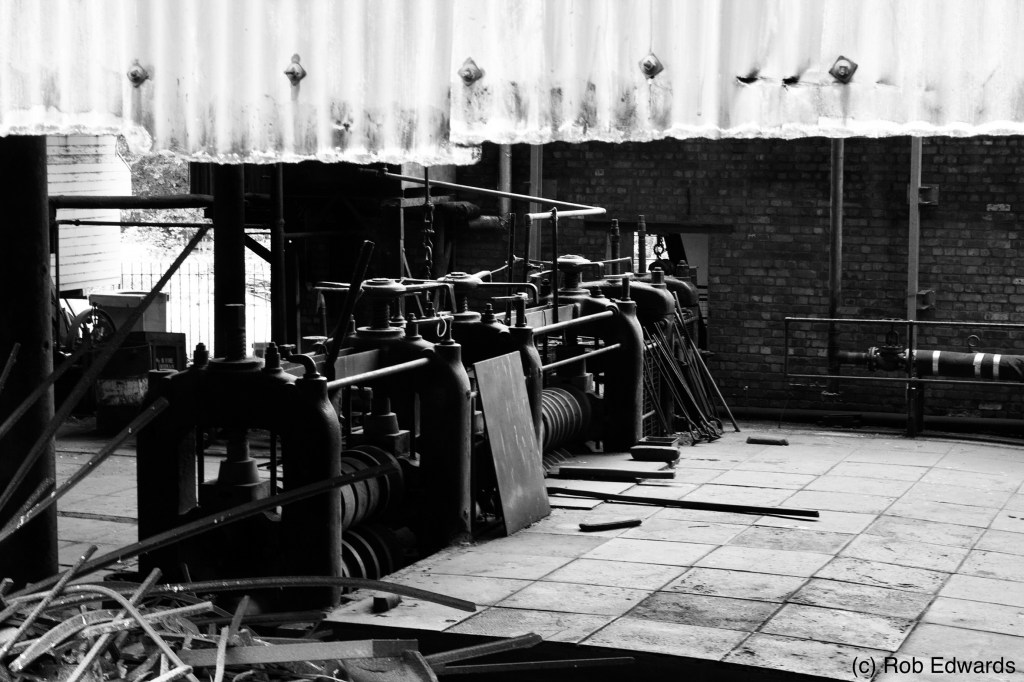
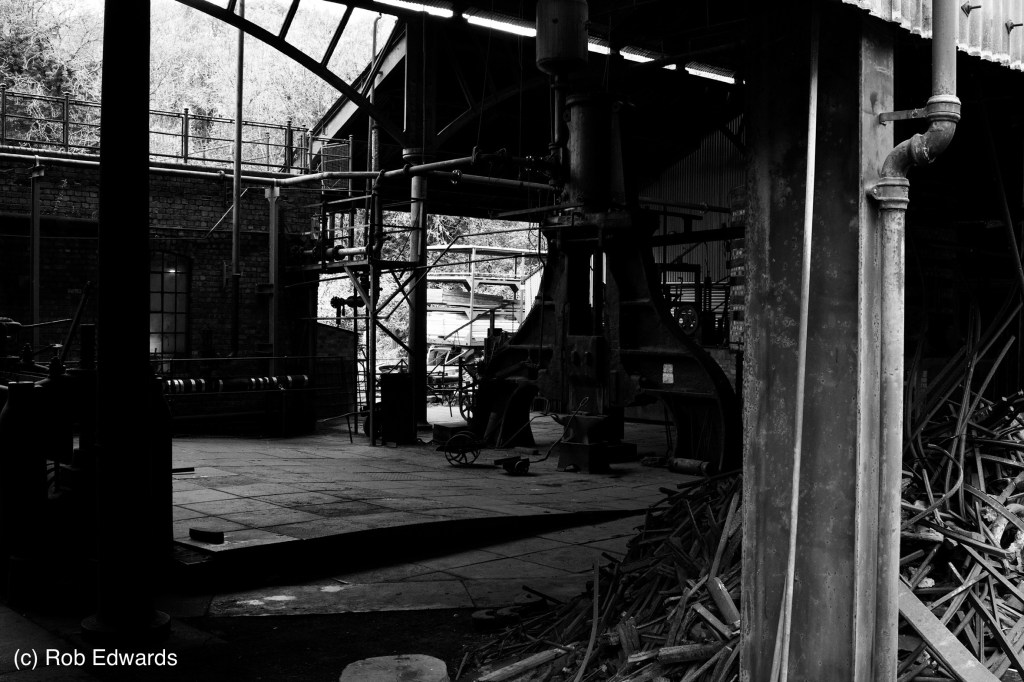
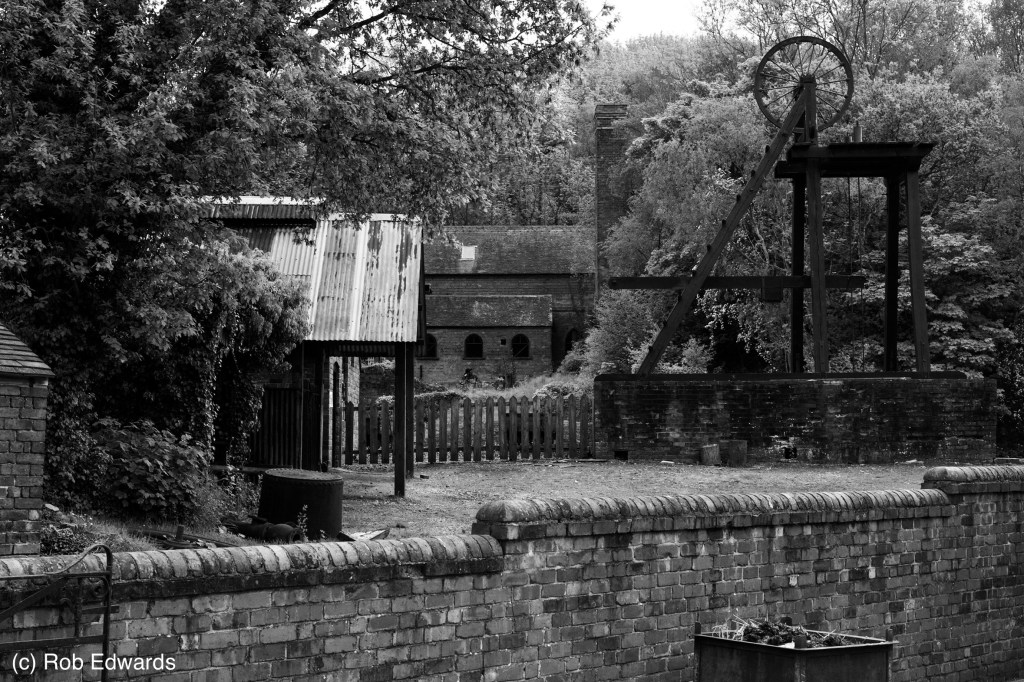
All aspects of Victorian life are portrait, including the fact that horses were still common place in everyday life.The attention to detail is amazing, right down to the working gas lamps. But there is also a reminder that in many towns, all sorts of small scale engineers set up business to undertake work for the town; here we see the carpenters and saw mill.Small scale heavy engineers also set up shop, able to work with metal for a whole variety of applications, and all belt driven from line shafts driven by steam. Blacksmiths were a feature of many towns in the Victorian times, and here is one of the resident blacksmiths at work making large nails. I love watching people like this at work, preserving skills from the past.As steam was an important part of the Industrial Revolution, steam features at Blists Hill. In 1989, a group of engineers built a replica of an engine that was never completed by Richard Trevithick, the famous Cornish engineer who patented ‘high pressure’ or ‘strong’ steam in 1802. He never finished this 3 foot gauge engine, known as the ‘Coalbrookdale Engine’, most of the work undertaken in nearby Coalbrookdale. Stationary steam engines also feature, and this one is being used to power a stone crushing machine. Other stationary engines powered the engineering works, the winding engine for the coal mine, and the iron works. One of the fascinating attractions is the iron foundry. The foundry has blast furnace attached, which, until recently, was fully functioning, but currently requires major attention to be able to be used again. Inside the iron foundry reminds us what these places were like in the Victorian times – the pattern moulds, the air drying sand used to make the moulds for casting, and the ‘ladles’ for carrying molten iron to the moulds.Another of the fascinating parts is the iron works, which contains the rolling mill from an old iron works in Bolton, known to the late great Fred Dibnah. Whereas the iron foundry was concerned with cast iron, the ironworks produced wrought iron, which was tougher material. The drop forge and rolling mill are in the background. A better shot of the rolling mill. Hot iron would be taken taken from the blast furnace, and passed through the rolling mill to shape it. Quite often, there would be easy chairs in these places for the men to ‘flop’ in to after undertaking a few passes through the rolling mill, due to the intense nature of this work. This is the old drop forge, where a large steam operated hammer would bash and mould hot iron blocks into different shapes, under the skilful operation of a team of men.Blists Hill also has an old coal mine complete with shaft, pit head gear and working winding engine. In the background is the old brick works, that was originally on the site.




 Flat Cap and Camera