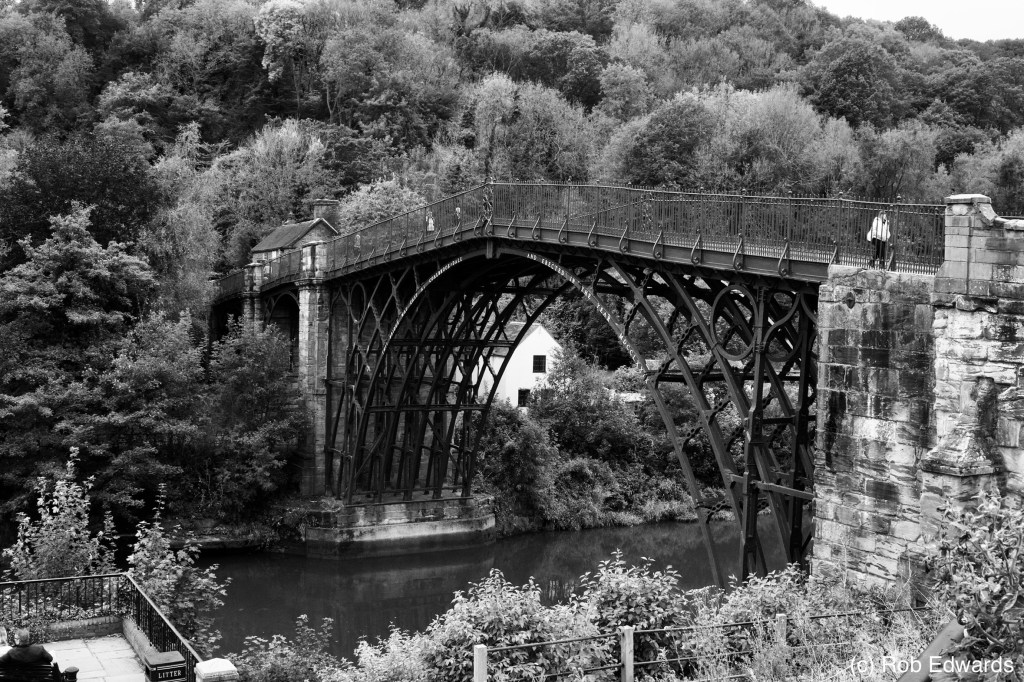
The industrial revolution really started in the Iron Bridge gorge in Shropshire. Abraham Darby successfully smelted iron ore with coke made from coal from nearby Coalbrookedale in 1709. In 1781, the very first Iron Bridge was completed, designed by Thomas Pritchard, a local architect, the first large scale use of cast iron.
From there, Shropshire became the industrial centre, and many see the Iron Bridge as a symbol of the Industrial Revolution, made from the material that spurred on that same significant period of time.
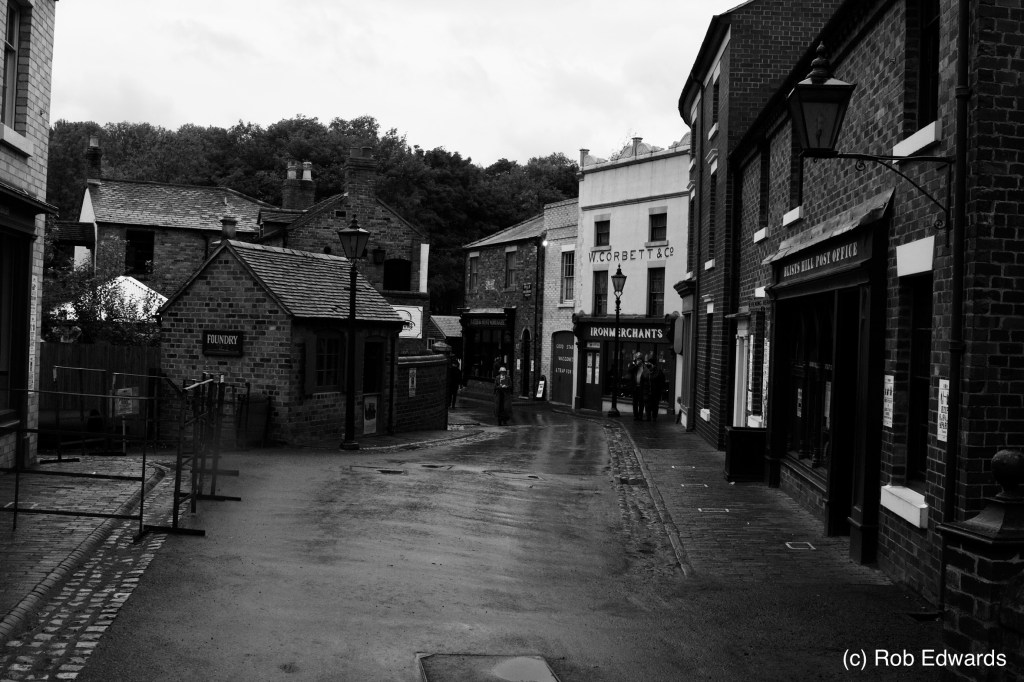
A few miles away from Ironbridge is the Blists Hill Victorian Town, part of the Ironbridge Gorge Museum Trust, its self built on a former site of brick and tile works, coal mines, iron ore mines and blast furnaces. The town depicts a typical industrial town in the Victorian age, and this post is all about this amazing museum.
Where it all started – the world’s first iron bridge in…Ironbridge, and still standing to this day. It is reckoned that to be able to cast such a large structure back then that the furnace would have been tapped straight into large moulds on to the foundry floor. As you walk into the village, the imposing structure of the Blists Hill Goods Shed stands before you. Although there was never a railway here, the LNWR and GWR had lines nearby on opposite sides of the river Severn, serving the nearby Ironbridge and Coalport.The town was never here before the museum opened – it was built around the former iron works, coal mine and brick works. But what it shows is how a typical Victorian town would look.
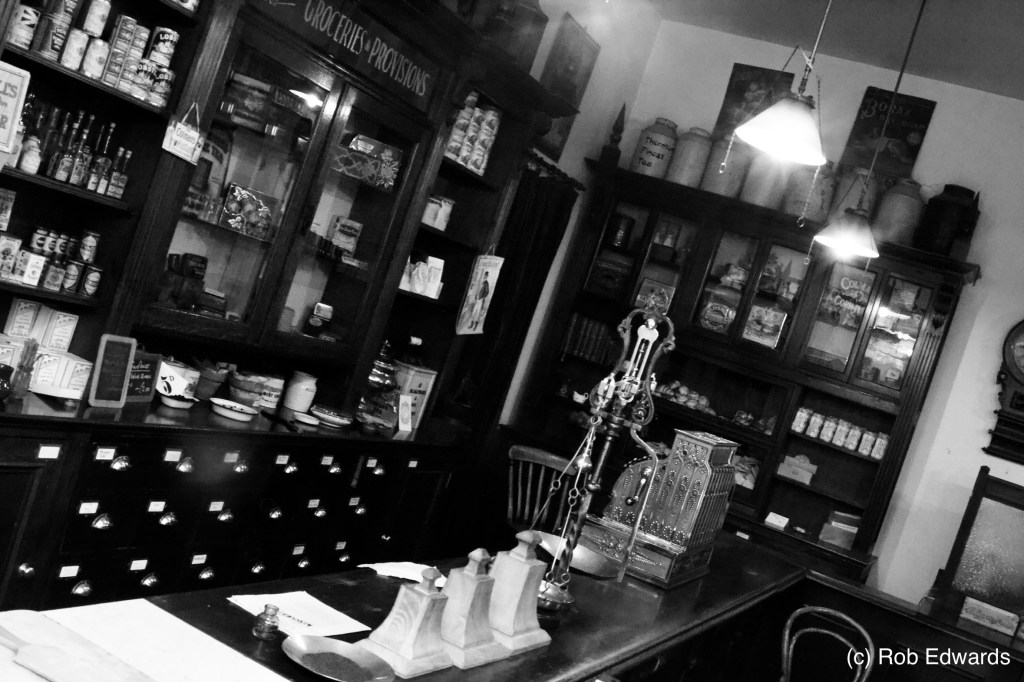
This is inside the grocers shop. So many old artefacts, such as the old scales, the old till, and the shelves behind the counter – all from a period long before self service shops where even known.
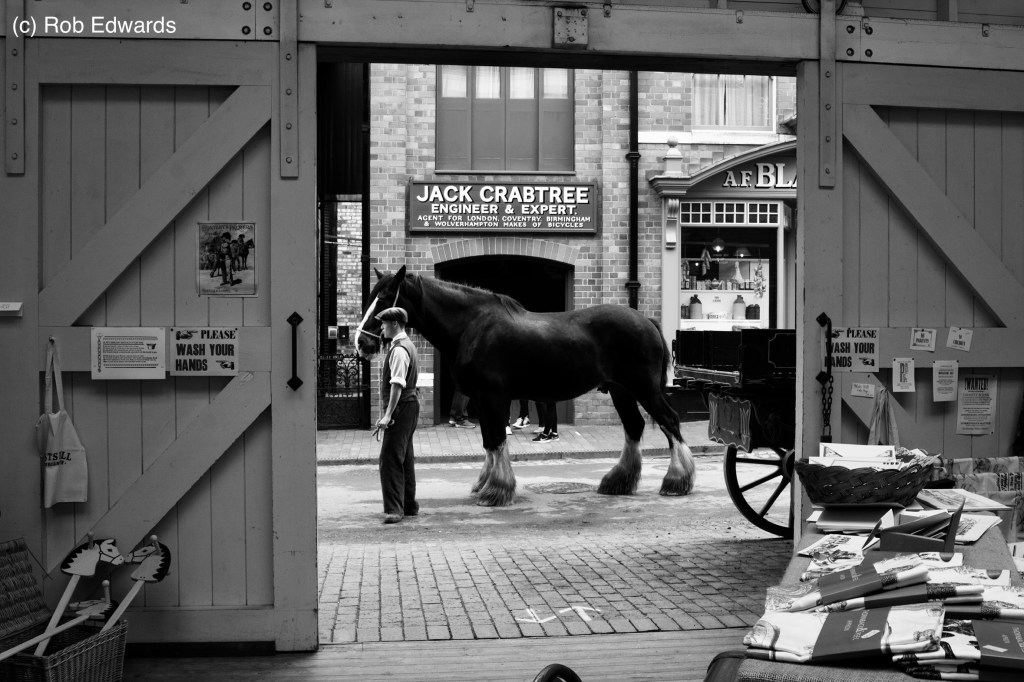
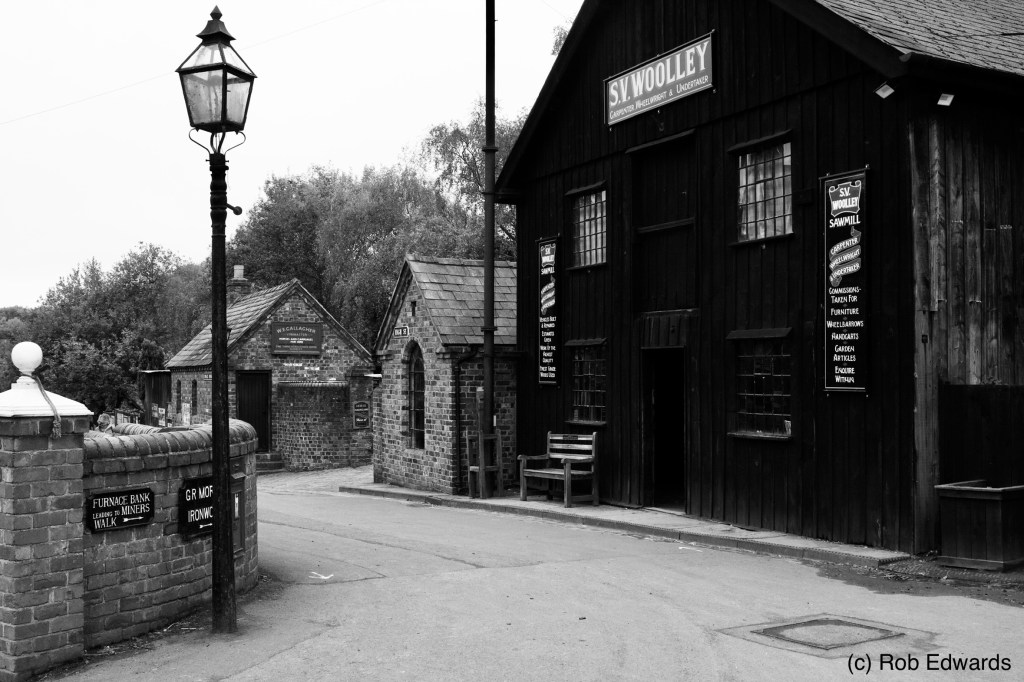
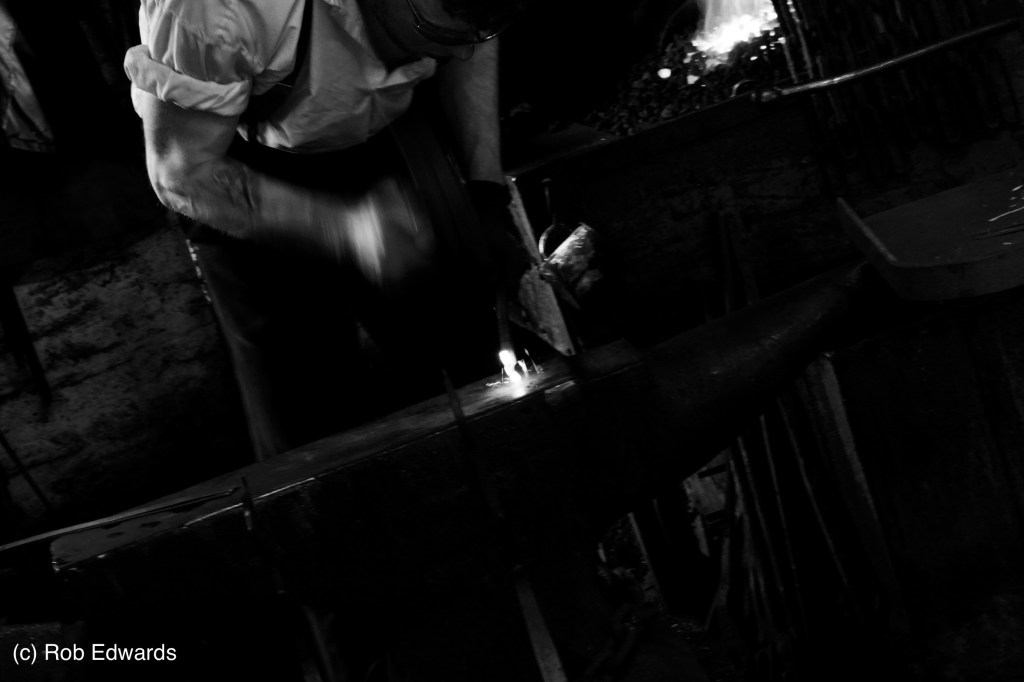
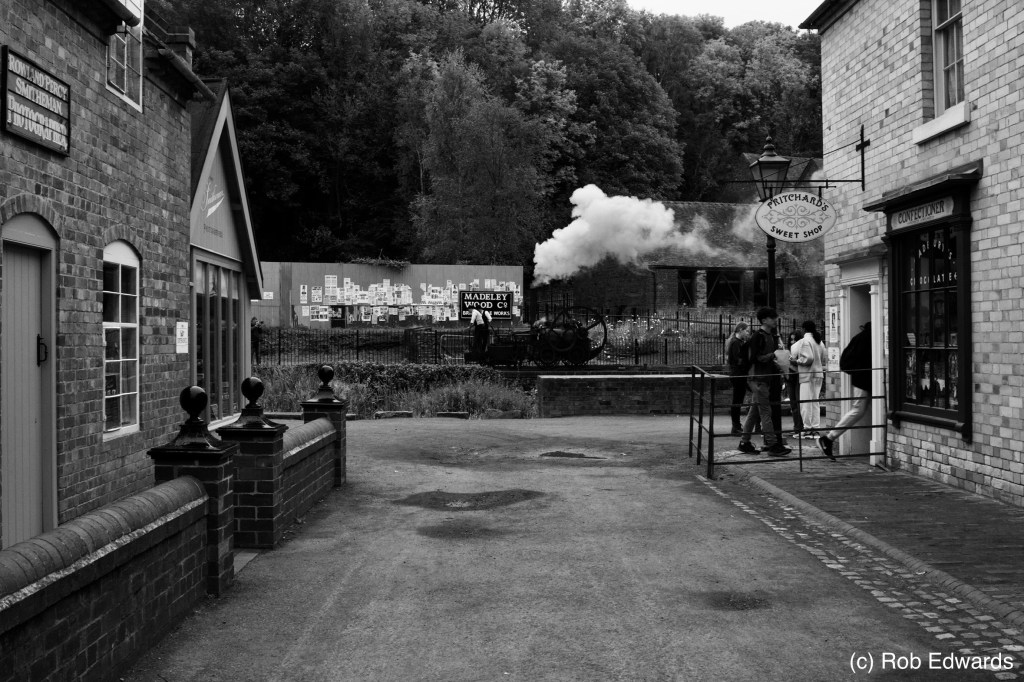
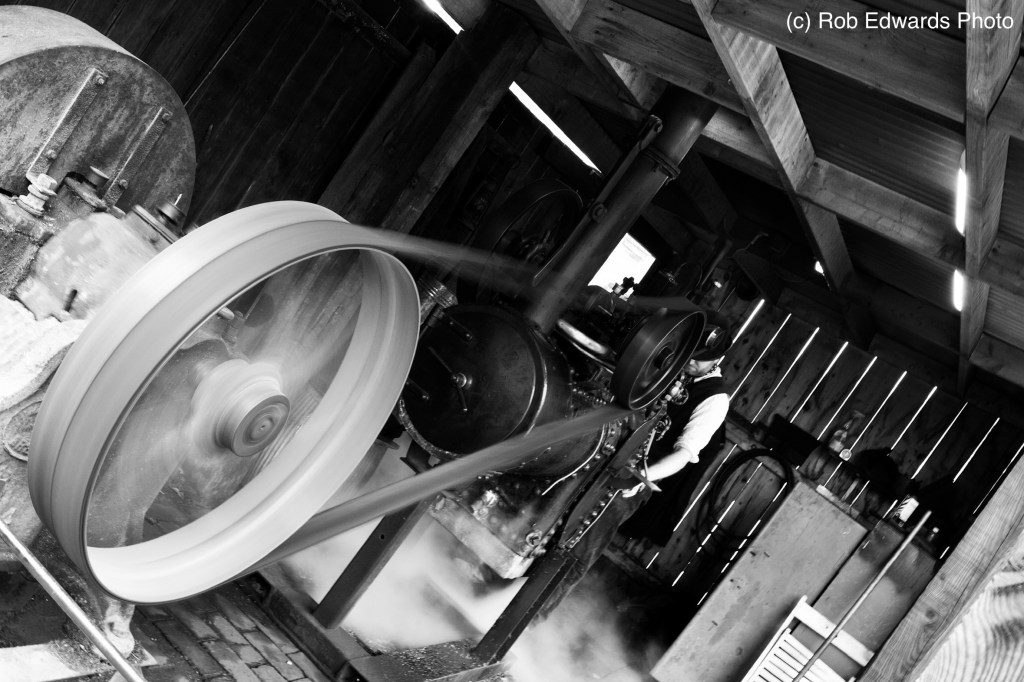
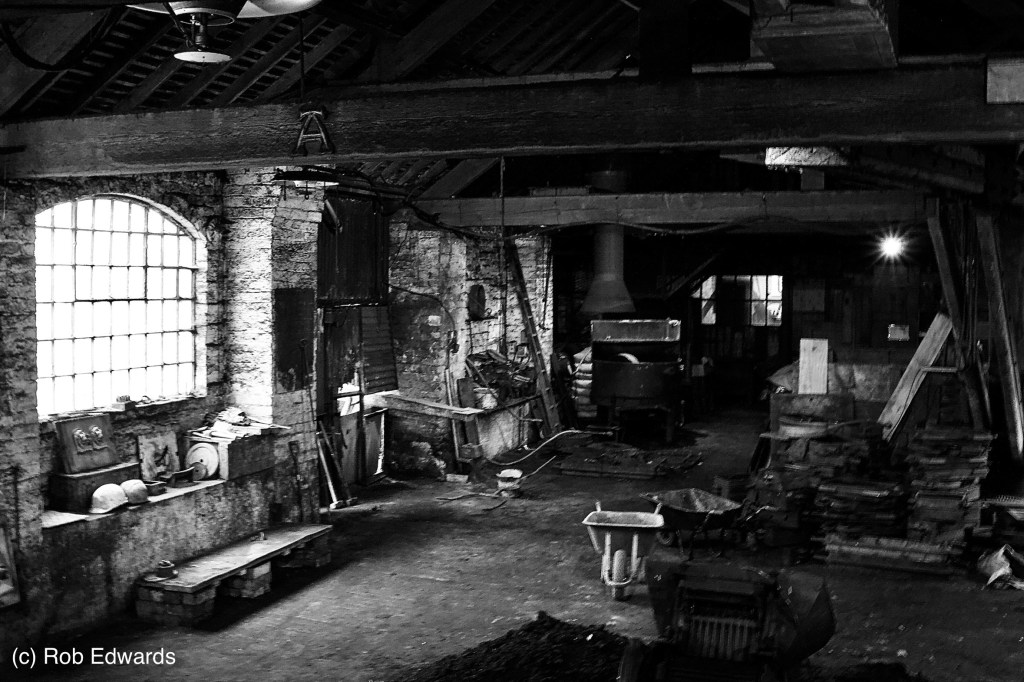
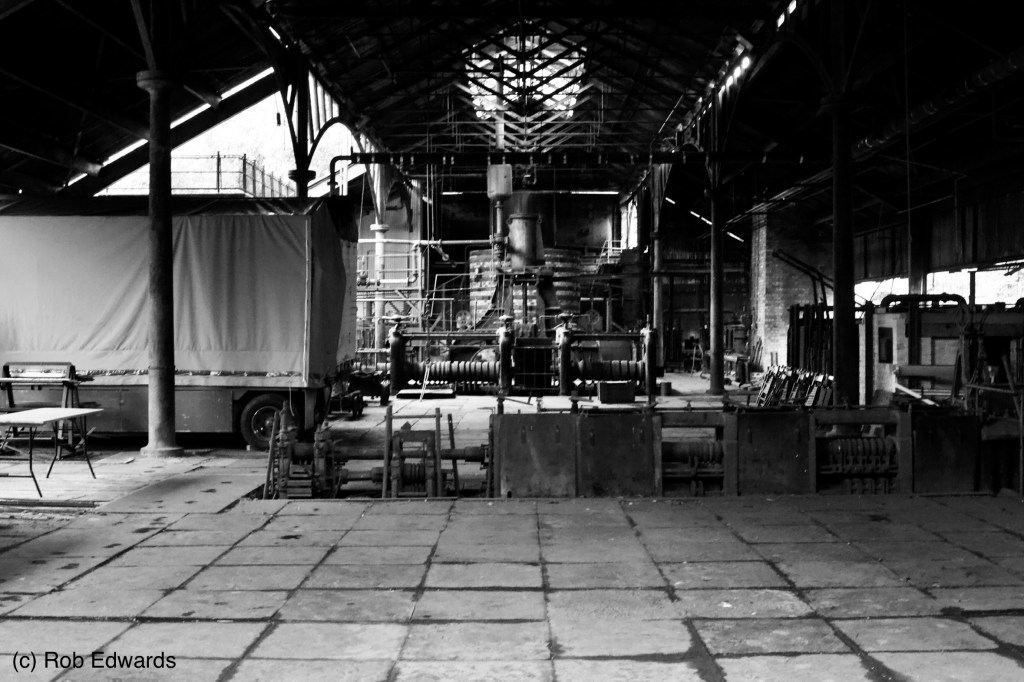
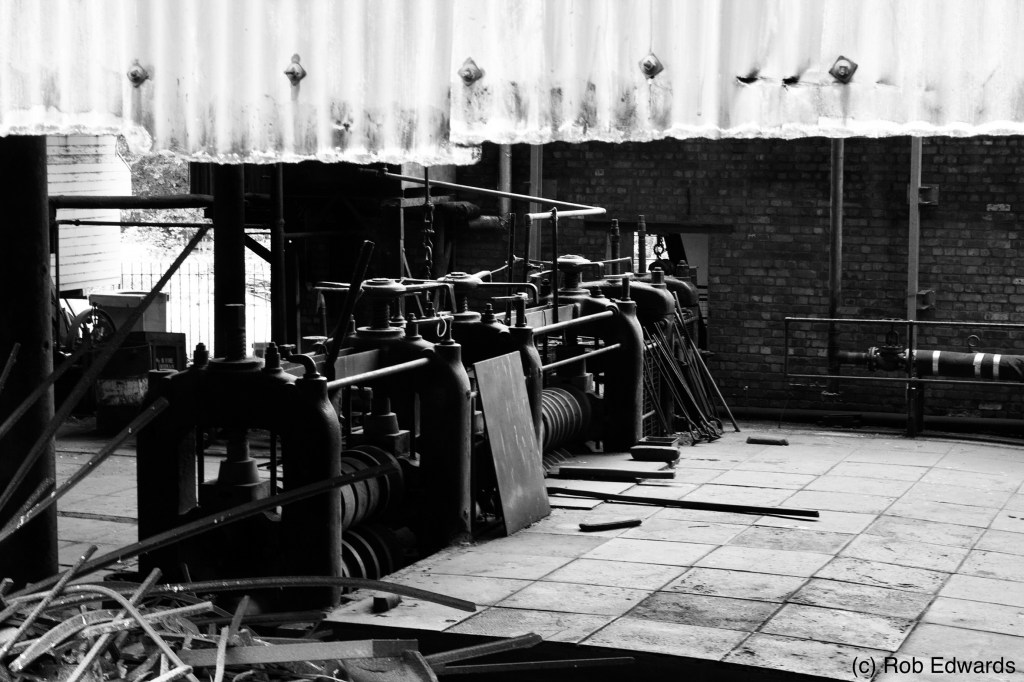
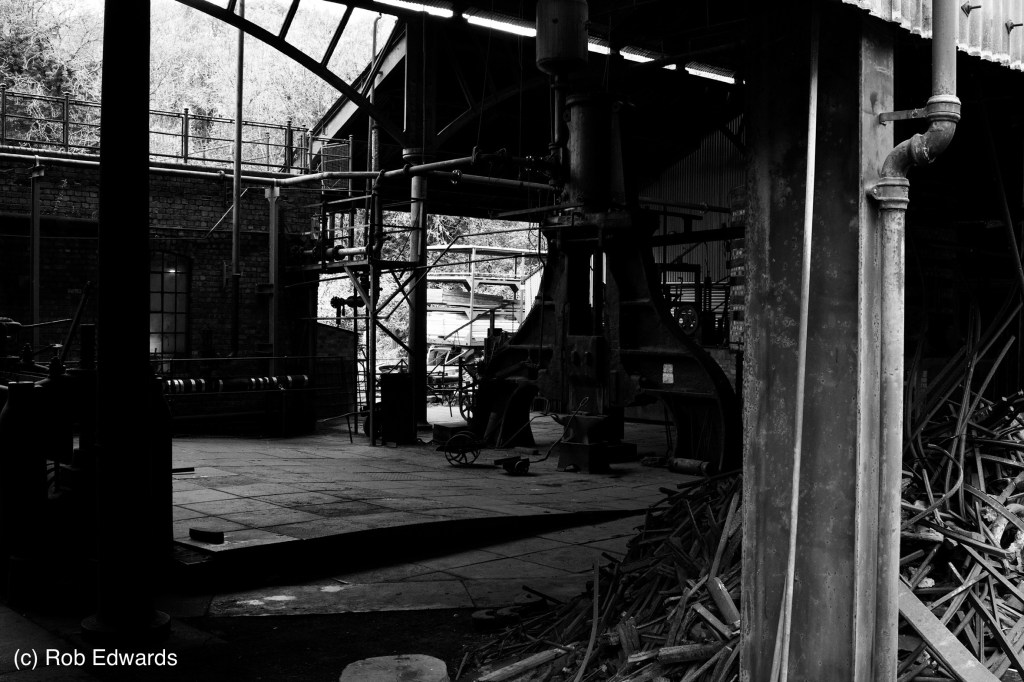
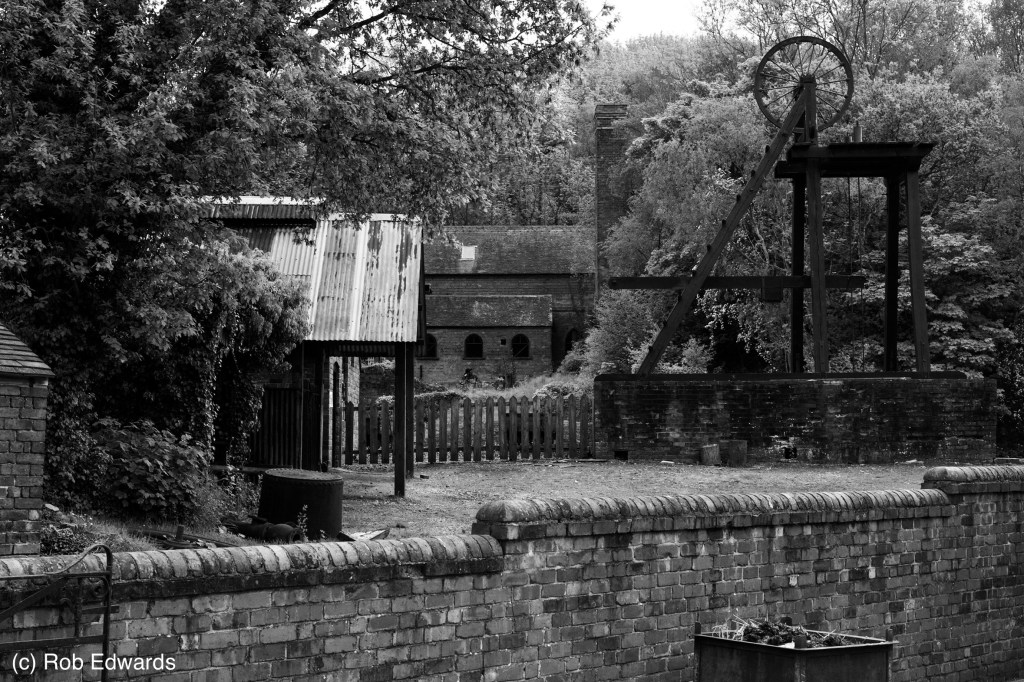
All aspects of Victorian life are portrait, including the fact that horses were still common place in everyday life.The attention to detail is amazing, right down to the working gas lamps. But there is also a reminder that in many towns, all sorts of small scale engineers set up business to undertake work for the town; here we see the carpenters and saw mill.Small scale heavy engineers also set up shop, able to work with metal for a whole variety of applications, and all belt driven from line shafts driven by steam. Blacksmiths were a feature of many towns in the Victorian times, and here is one of the resident blacksmiths at work making large nails. I love watching people like this at work, preserving skills from the past.As steam was an important part of the Industrial Revolution, steam features at Blists Hill. In 1989, a group of engineers built a replica of an engine that was never completed by Richard Trevithick, the famous Cornish engineer who patented ‘high pressure’ or ‘strong’ steam in 1802. He never finished this 3 foot gauge engine, known as the ‘Coalbrookdale Engine’, most of the work undertaken in nearby Coalbrookdale. Stationary steam engines also feature, and this one is being used to power a stone crushing machine. Other stationary engines powered the engineering works, the winding engine for the coal mine, and the iron works. One of the fascinating attractions is the iron foundry. The foundry has blast furnace attached, which, until recently, was fully functioning, but currently requires major attention to be able to be used again. Inside the iron foundry reminds us what these places were like in the Victorian times – the pattern moulds, the air drying sand used to make the moulds for casting, and the ‘ladles’ for carrying molten iron to the moulds.Another of the fascinating parts is the iron works, which contains the rolling mill from an old iron works in Bolton, known to the late great Fred Dibnah. Whereas the iron foundry was concerned with cast iron, the ironworks produced wrought iron, which was tougher material. The drop forge and rolling mill are in the background. A better shot of the rolling mill. Hot iron would be taken taken from the blast furnace, and passed through the rolling mill to shape it. Quite often, there would be easy chairs in these places for the men to ‘flop’ in to after undertaking a few passes through the rolling mill, due to the intense nature of this work. This is the old drop forge, where a large steam operated hammer would bash and mould hot iron blocks into different shapes, under the skilful operation of a team of men.Blists Hill also has an old coal mine complete with shaft, pit head gear and working winding engine. In the background is the old brick works, that was originally on the site.
Before the railways came, the prime mover of goods around the UK was the canal system. Canals were built to connect major cities and major industrial sites around the country. Some of the early railways were built to connect canals.
In 1789, the act of parliament to construct the Cromford canal, and after construction and financial problems, it opened in 1794. 36 years later in 1830, the Comford and High Peak railway opened, connecting the Cromford canal at High Peak Junction to the Peak Forest canal at Whaley Bridge. One of the features of this railway is that it contained quite a few inclines to gain height over the Derbyshire dales, including the first incline between High Peak Junction and Middleton Top called Sheep Pasture incline.
Back in August 2020, we had a weekend visiting that part of Derbyshire, and here are the pictures of the canal wharf at Cromford, where goods would be loaded, and the top of the former sheep’s pasture incline at Middleton Top
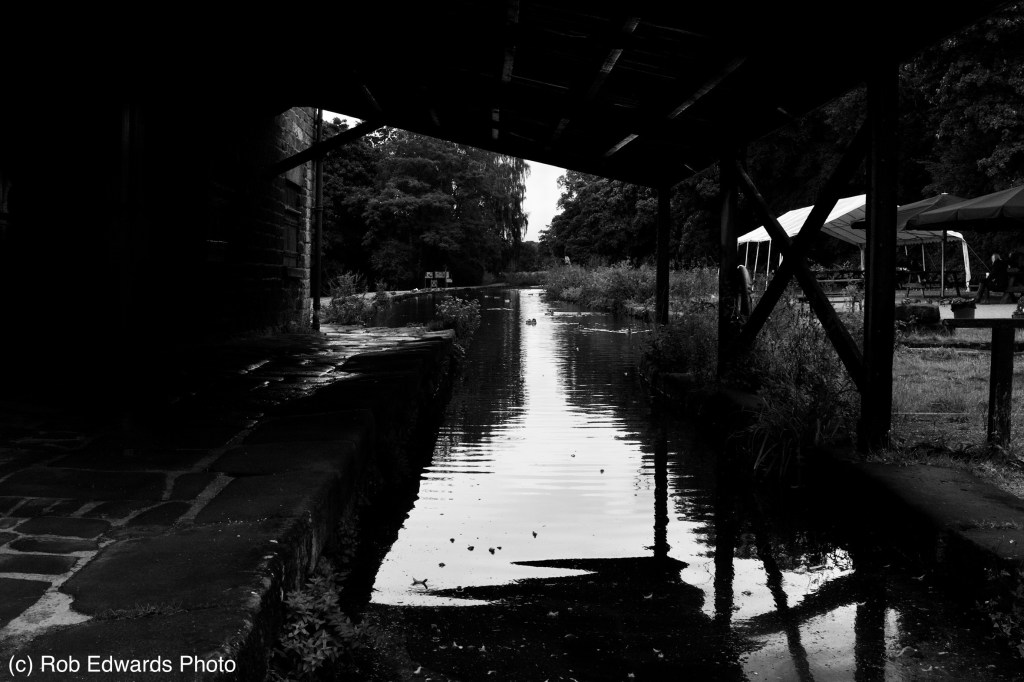
Cromford Wharf
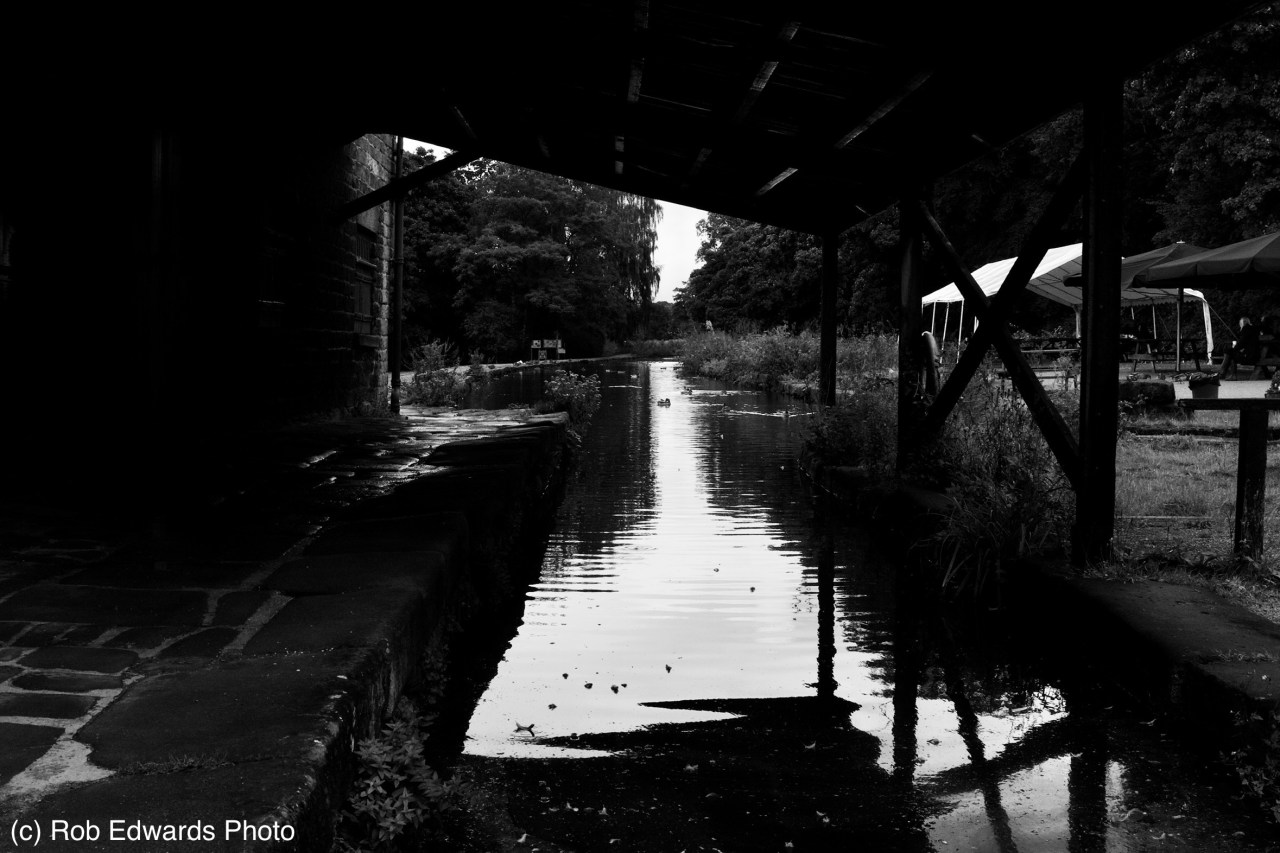
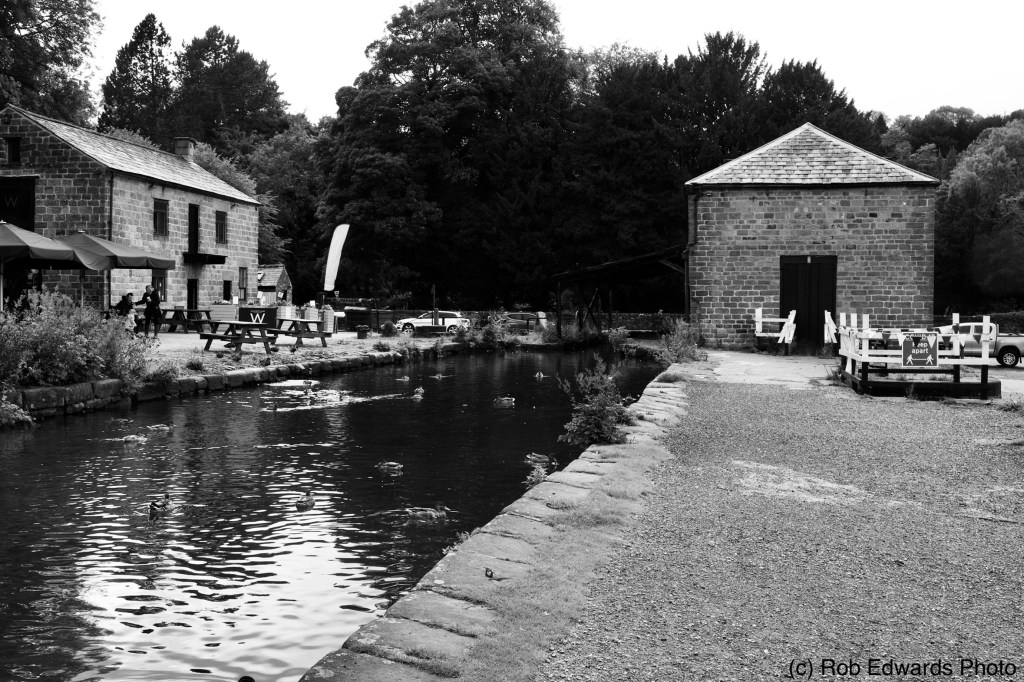
Cromford wharf still exists today, and (when COVID-19 restrictions allow), pleasure trips on canal boats are still run from here. But it is a place where the industry of the past can still be seen.
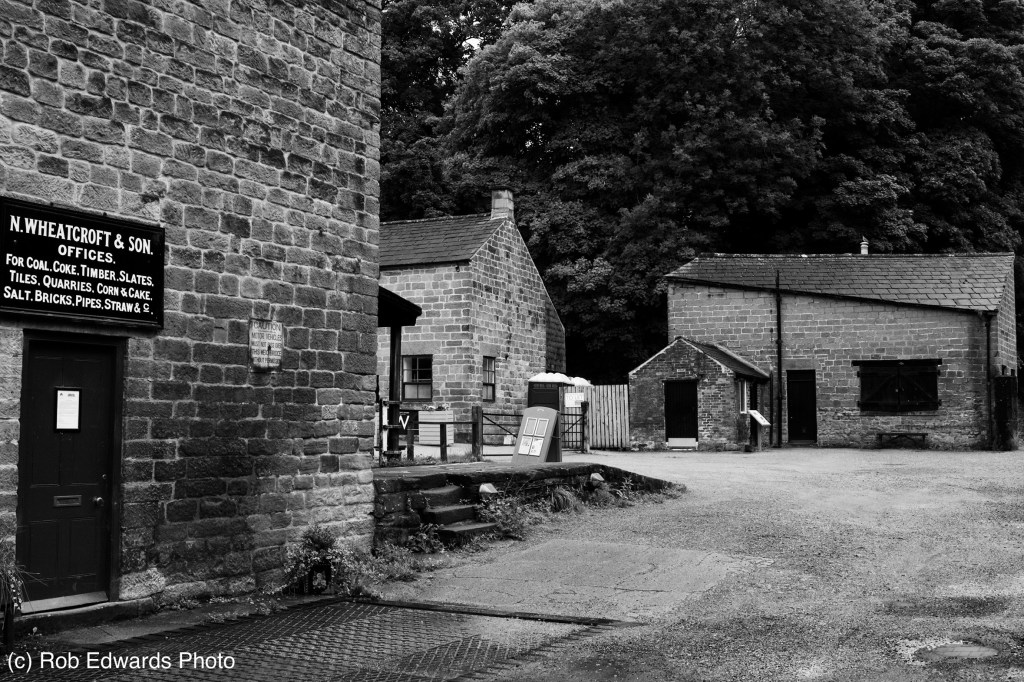
The canal wharf was a place for goods to be transferred from horse and cart to the waiting canal barges to transported, potentially, all round the country. Originally, the barges would have been horse drawn along the ‘towpath’, hence the name of the path alongside the canal itself.The remains of the loading shed at Cromford wharf. This side was the N Wheatcroft & Son wharf for all sorts of goods.The office at the wharf of N Wheatcroft & Son. The sign shows the variety of goods that were conveyed by this company from this wharf.
Middleton Top
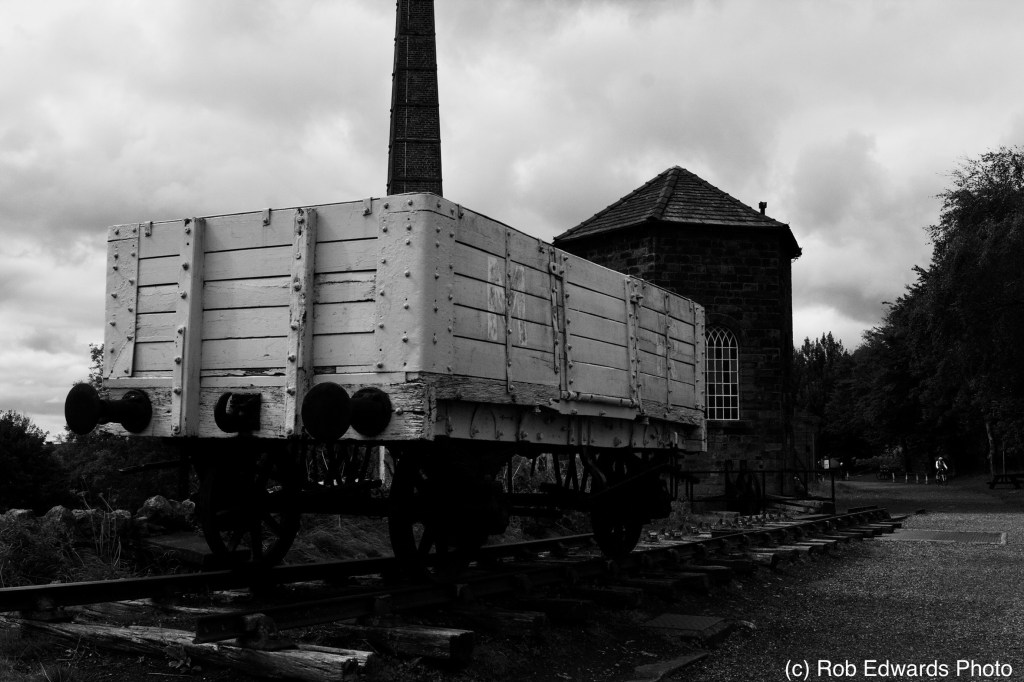
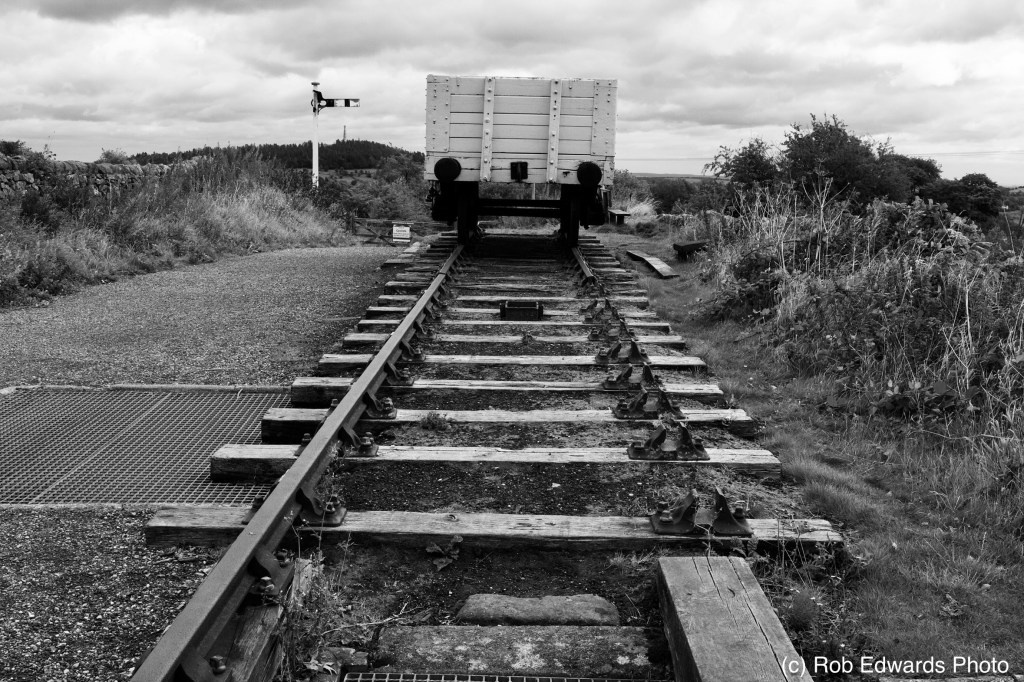
Middleton top was the top of the former sheep pasture incline from the Cromford canal at High Peak Junction. Wagons would be hauled up the 1 in 9 incline by steal ropes, as the video below from the Huntley Archives shows – the incline in use in the 1930s by the then LMS railway company.
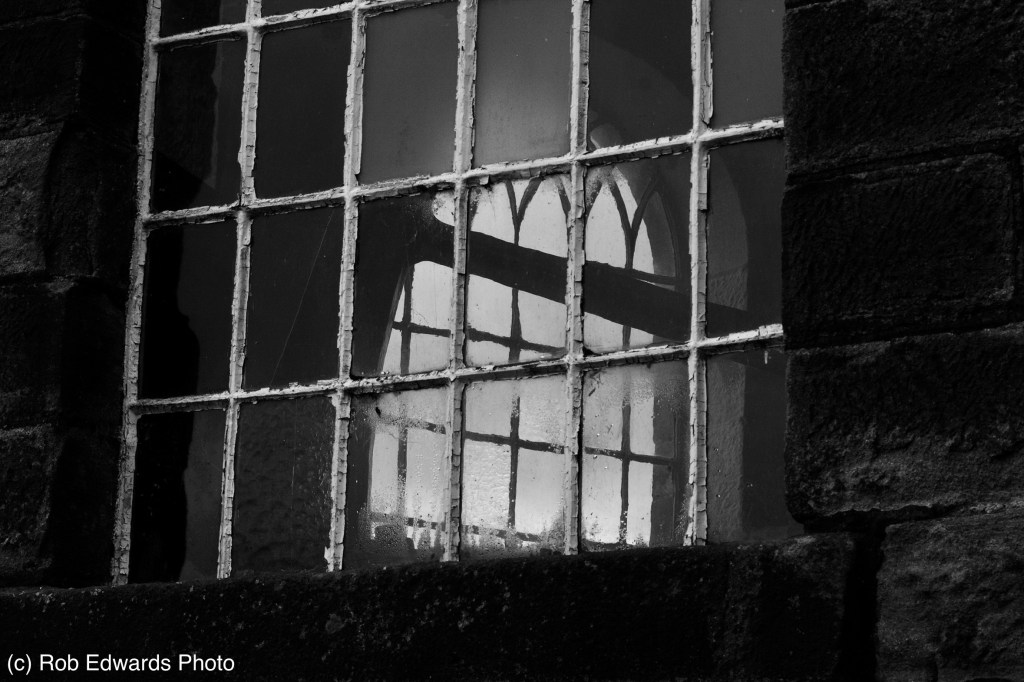
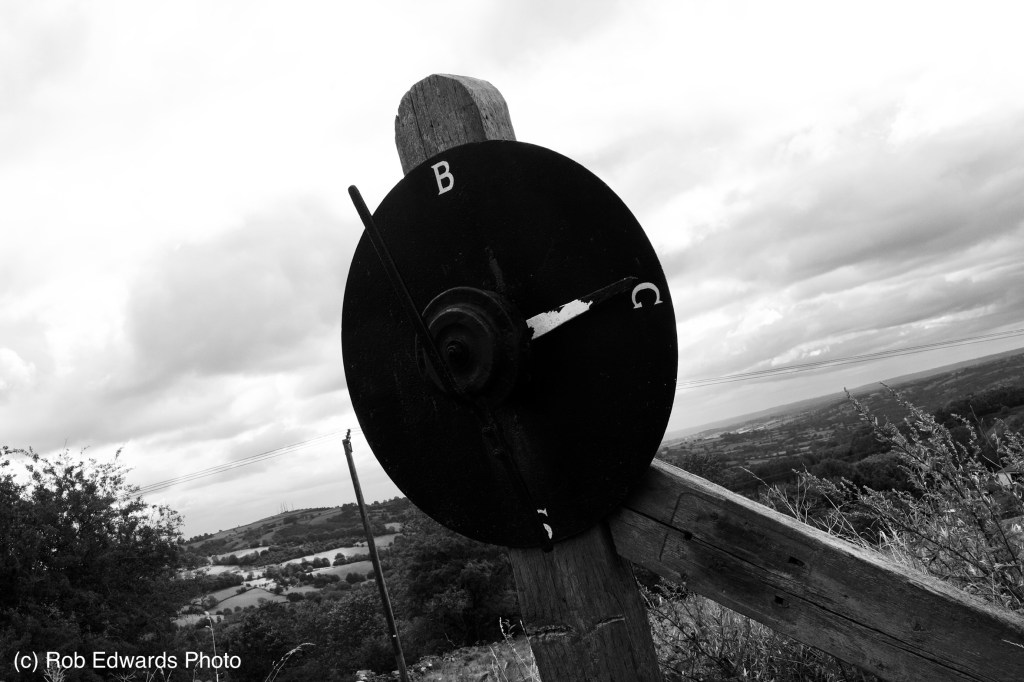
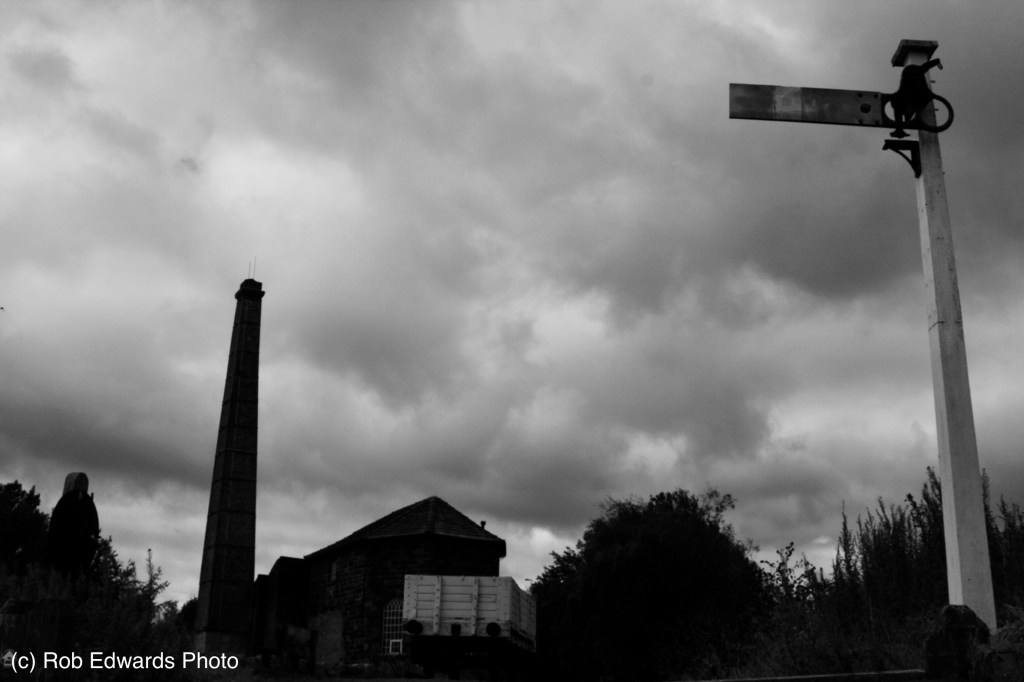
MIddleton Top is dominated by the the 1830 engine house, its imposing chimney, and an example of the wagons that used to work over the former railwayThe two Butterly Company 20 HP rotary beam engines in the engine house were driven by two Cornish boilers. The Cornish Boiler had a single flu tube to carry the heat through the length of the boiler. The Cornish boiler was first developed by Richard Trevithick in 1812. This pair here were probably built in the LNWR works in Crewe in the 1860s, following the original boilers being described as being in ‘poor shape’ in the 1850s. Because a number of the boiler fittings are missing, and the shed covering the front of the boilers was demolished, the engines are powered, today, by compressed air.Through the window – the beam engine can just be seen. Sadly, the day I was there, the engine was not in operation.At the top of the former incline, there is a section of track remaining (albeit with a rail missing), and the aforementioned wagon, showing something of what the incline used to beThe old telegraph indicator, used to signal to the engine house when to operate the winding engine, has been moved from the bottom to the top of the incline. The letters were ‘S’ for stop, ‘G’ for go, and I believe, ‘B’ for back or reverse. The incline operated on an endless wire rope, and therefore, to be in reverse was unusual.Although bereft of track, this picture gives an idea of the steepness of the incline, and why a traditional railway locomotive could never have worked up the incline.The final picture is taken at the top of the incline looking back towards the engine house ,and showing a signal, used to indicate if the line from the top of the incline on to the Cromford and High Peak Railway proper was clear.
That’s all for this time folks. Don’t forget to like comment and share.
All I can say is that it’s been a while since I last posted…so here we go with a promise to post more frequently
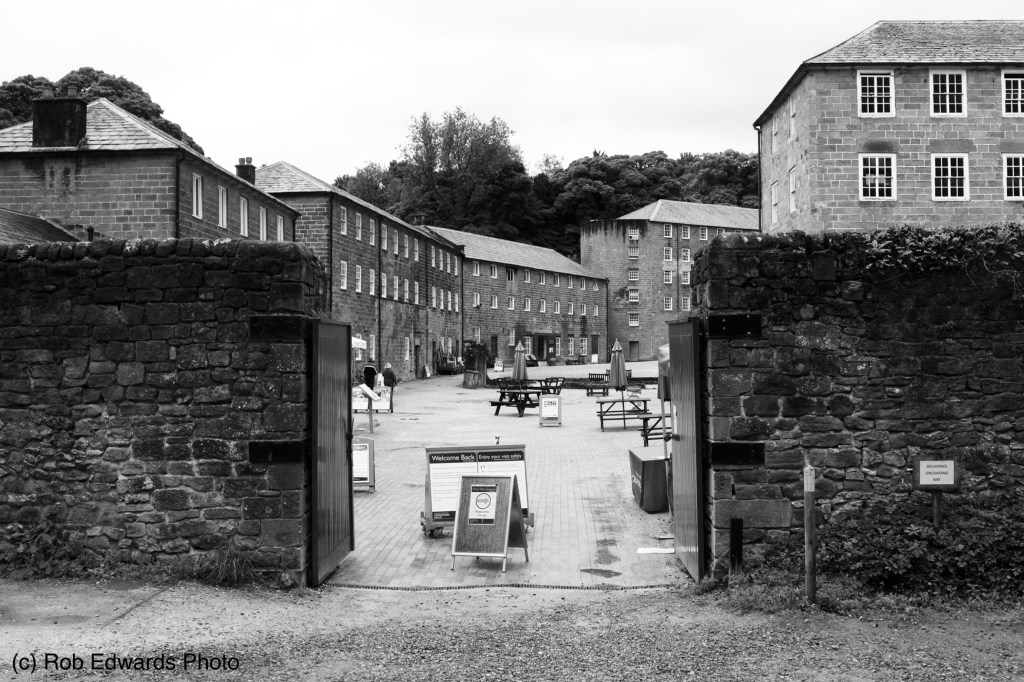
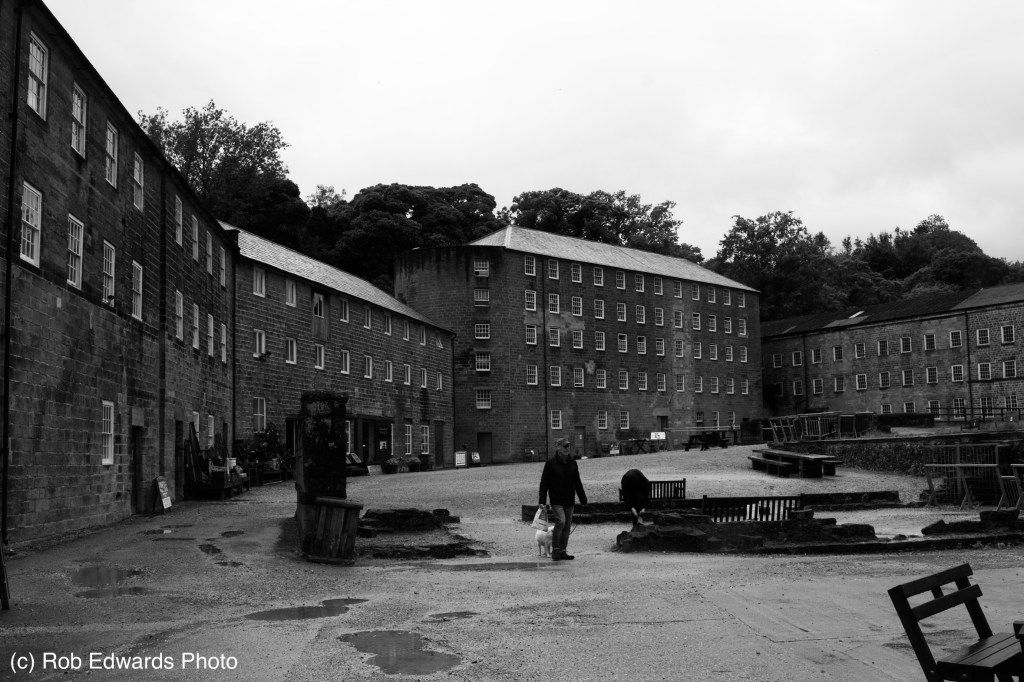
Cromford Mills, near Cromford in Derbyshire, is the site of Sir Richard Arkwright’s first successful water powered cotton spinning mill in 1771. Further developments were made to the site until 1790 when the buildings were seen here were all built.
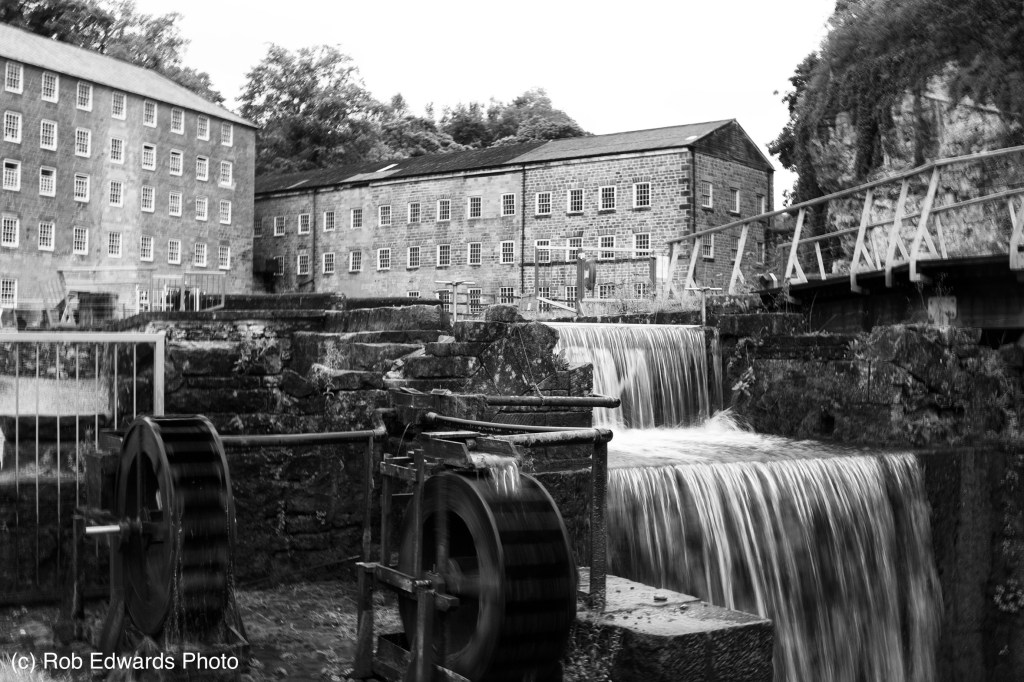
This is what the industrial revolution was about – mechanising tasks to increase production, replacing the smaller, less efficient methods; and before the use of steam, Sir Richard Arkwright made use of water to drive his contribution to the industrial revolution.
The site is a UNESCO World Heritage site, and today contains various shops and cafes, but the old machinery for the driving of the mills is all preserved. These pictures are from a visit at the end of August 2020.
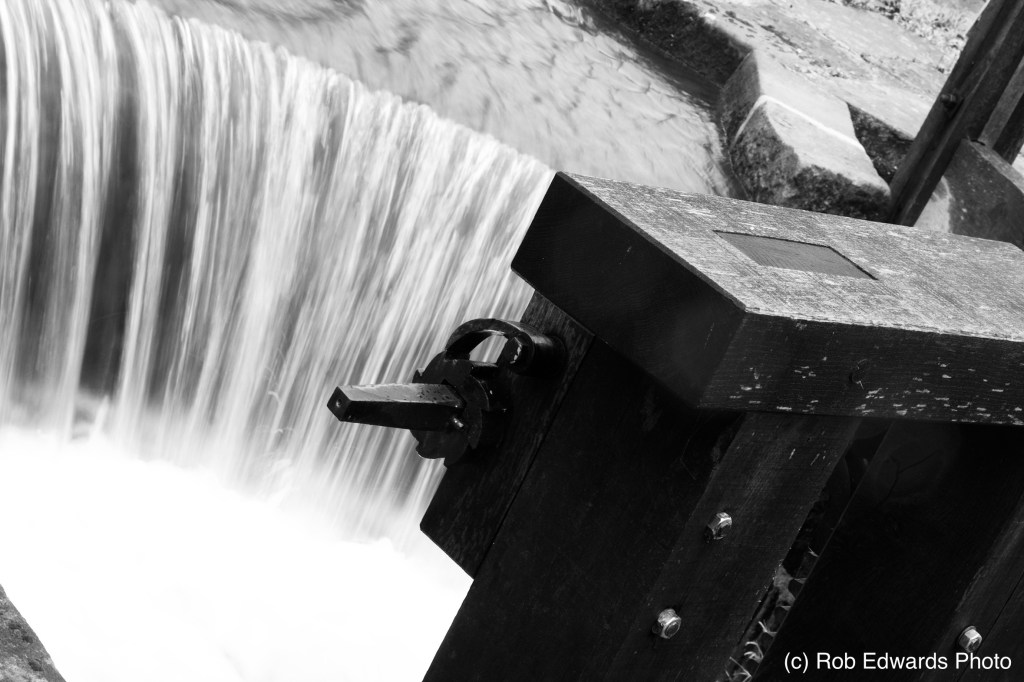
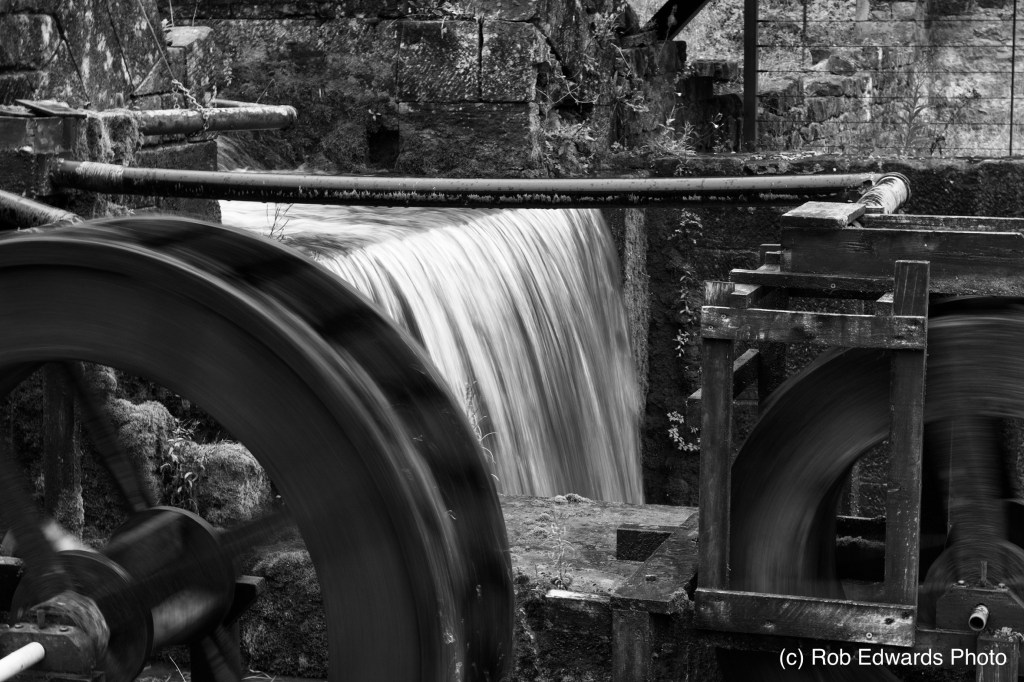
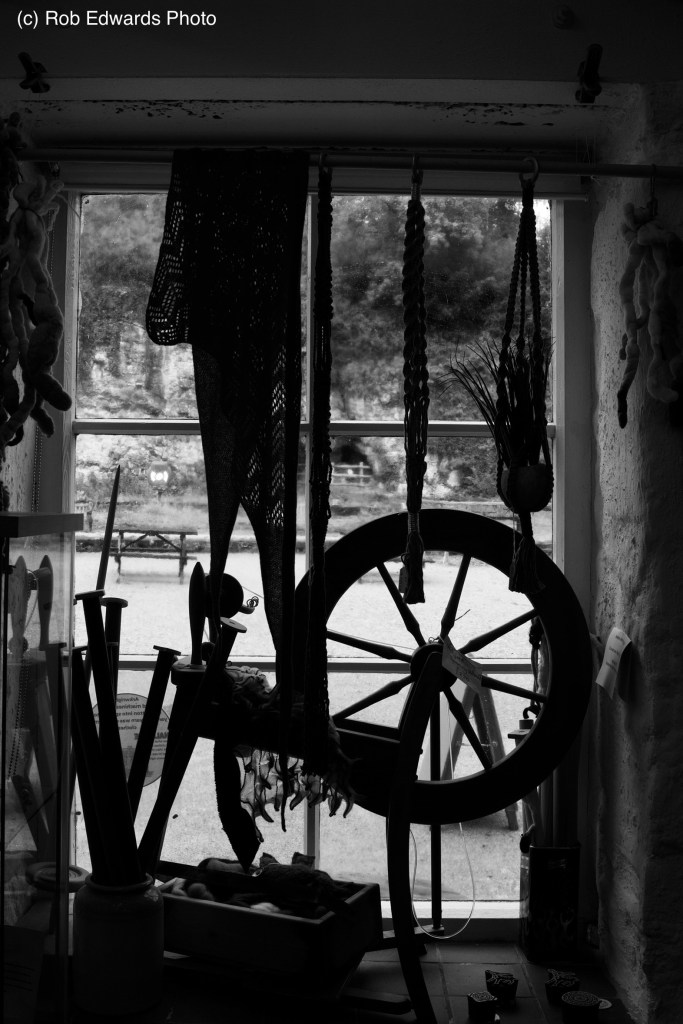
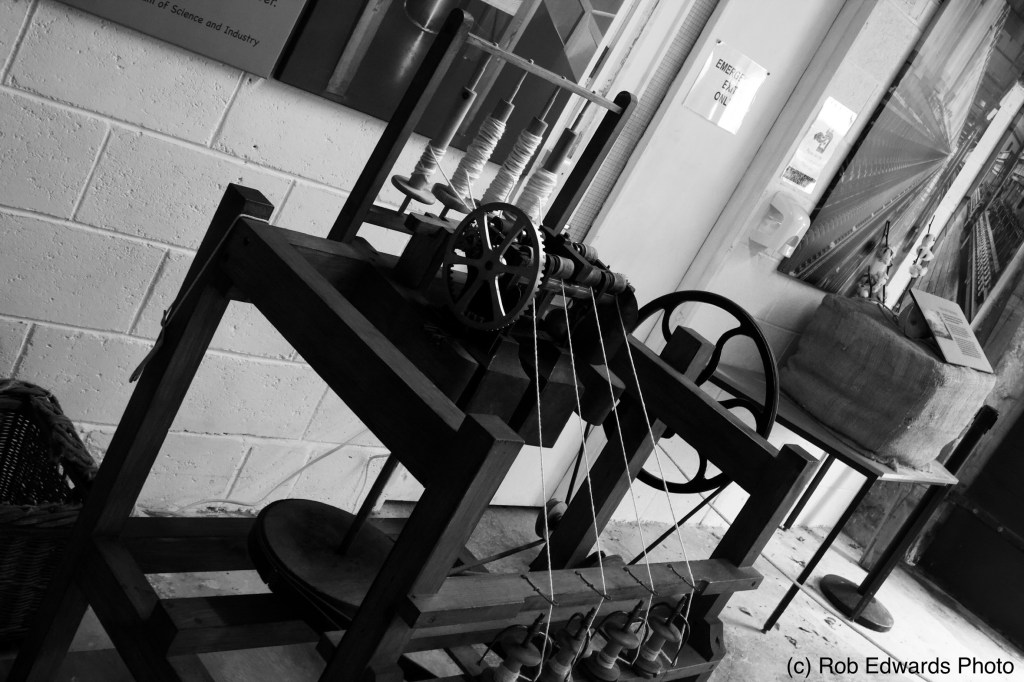
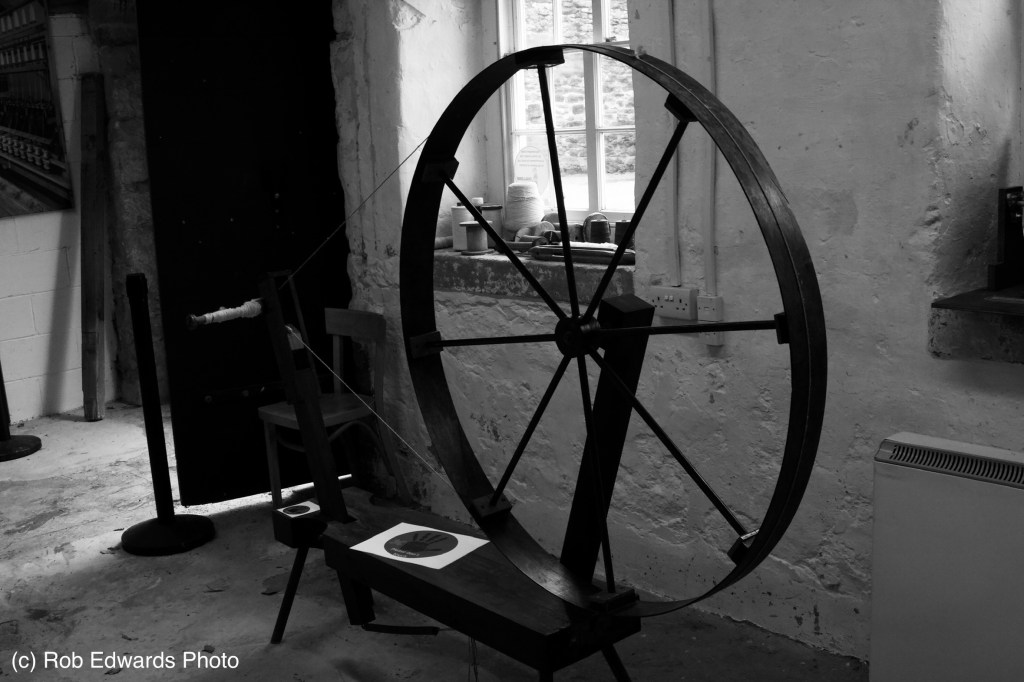
The entrance to the Comford Mills shows the buildings dating from the 18th CentruryAnother view of the various buildings on the site, that once contained spinning machines, clattering with may decibels, driving the early industrial revolution A few years before the discovery of steam power, water power was the only form of propulsion available for the spinning machinery.Water power was harnessed by the use of sluice gates to control the flow of the water. Water was a powerful driver and was used in the manufacture of all sorts from cotton to flour. We know the damage water can do with such power, and this power was harnessed to drive machinery. The ‘controlled’ water would then drive water wheels connected to the machinery The buildings now house various shops and cafes. What is nice is to see references to the past in some fo these shopsThere is also a museum that talks about this history of Cromford Mills, with exhibits like this……and this. Harking back to a time before large machines that replaced these methods of making cotton
That’s all folks this time – don’t forget to like, comment and share






 Flat Cap and Camera