So far, my slate blogs have concentrated on the lives of the quarrymen, how slate was split and dressed, and the quarry workshops that allowed the slate workings to continue. But how was slate moved from the quarries to the places it was needed and exported around the world?
Many narrow gauge railways and tramways were constructed across north wales to take the dressed slate from the quarries to the ports, many of these using literal horse power at first, and as time went on, steam replaced horses, and some of the older tramways were replaced by better laid railways.
Ones of these was the old Padarn Railway, officially called the Dinorwic Quarry Railway, that ran from Gilfach Ddu near Llanberis to Penscoins, just above port Dinorwic (now called Y Felinheli). The railway opened in 1843, replacing the former tramway that had been in use since 1825, and was powered by horses.
The railway was of an unusual 4 ft gauge, and also had unusual wagons in that each wagon had two 1 ft 10 3/4 inch tracks on the to transport the smaller slate wagons. The wagons were transported the short distance from the quarry workshops at Gilfach Ddu to the loading point for the Padarn Railway, this being 1 ft 10 3/4 inch gauge, and then at Penscoins, the wagons would be offloaded onto the incline to Port Dinorwic, also of 1 ft 10 3/4 inch gauge.
The railway officially closed in 1961 , the Dinorwic quarry outliving this by some eight years until 1969, but although the railway shut more than half a century ago, it can still be easily traced, and on a recent holiday in North Wales, I traced the old Padarn railway from Pen-y-llyn (where todays Llanberis Lake Railway ends, and runs on the former track bed of the Padarn Railway) to Penscoins.
[insert re fire queen shed]
At Gilfach Ddu, the remains of the loading dock. The 1 ft 10 3/4 inch gauge wagons would run to the end of the platform and then on the 4 ft gauge transporter wagons.Another shot of the loading platform. The height of the of the old transporter wagons can be seen by looking at the height of the platform behind the slate wagons.Even after the passage of more than 60 years, most of the trackbed is still visible. This is the trackbed from Pen-y-llyn to the first of the many former small occupation crossings Both sides of this crossing are gated, and the other side of this crossing runs behind a number of private dwellings towards the first major road crossing of the A4244.The railway continued in a north easterly direction towards Brynrefail and Llanrug. At Craig-y-dinas, near Llanrug, is the remains of an engine shed, dated 1895, built on the site of the old stables, from when the line was horse worked.The crossing at Cefn Rhyd, between Craig-y-dinas and Bethel, the gates having been shout across the line for over 60 years. Here the trackbed of the old LNWR’s line to Llanberis is very close, having been on the opposite side of Llyn Padarn and Afon Rhythallt since Llanberis.The line continues it’s North Easterly course towards the village of Bethel. Near Bethel, the bridge abutments where the railway crosses the B4366 are still clearly seen, although the bridge deck is long gone.A little further on, there is the clear remains of a footbridge across the railway. Despite much of the trackbed now being I’m private hands for many years, structures like this still stand.At Bethel the railway turned due North, and, a little further on, at Cefn Gwyn Crossing Halt, the old station building remains.The end of the line was at Penscoins, with it’d 1896 built engine shed. Penscoins is still c300 ft above Port Dinorwic (Y Felinheli), the slate descended down a 1 in 4 incline to the docks, through a tunnel under the village of Port Dinorwic.Today, the southern section is used by the Llanberis Lake Railway from Gilfach Ddu to Pen-y-Llyn. As a post script, former Dinorwic quarry hunslet ‘Eldir’ departs Gilfach Ddu for Llanberis.
The Dinorwic slate quarry was, at its height, the second largest slate quarry in Wales, after Penrhyn quarry in nearby Bethesda. The first quarrying activity took place in 1787 when a lease was taken from the land owners, the Assheton-Smiths, but due to the outbreak of war with France, taxes, and high transport costs, this ceased in 1809, when the Assheton-Smith family itself led a partnership that lasted until the quarry was closed in July 1969.
Dinorwic was a slate quarry as opposed to a slate mine; this part of North Wales, the slate vein is at or near to the surface of the mountain, unlike further south in Blaenau Ffestiniog, for example, where the slate vein is deeper inside the mountain. In this method, the slate was quarried in a series of galleries, with the slate then transported down incline railways to the lower levels.
Industrial decline and the difficulty of removing slate, in part due to large amount of tipped wasted slidding into one of the major quarrying sites in 1966, caused the quarry to finally close in 1969.
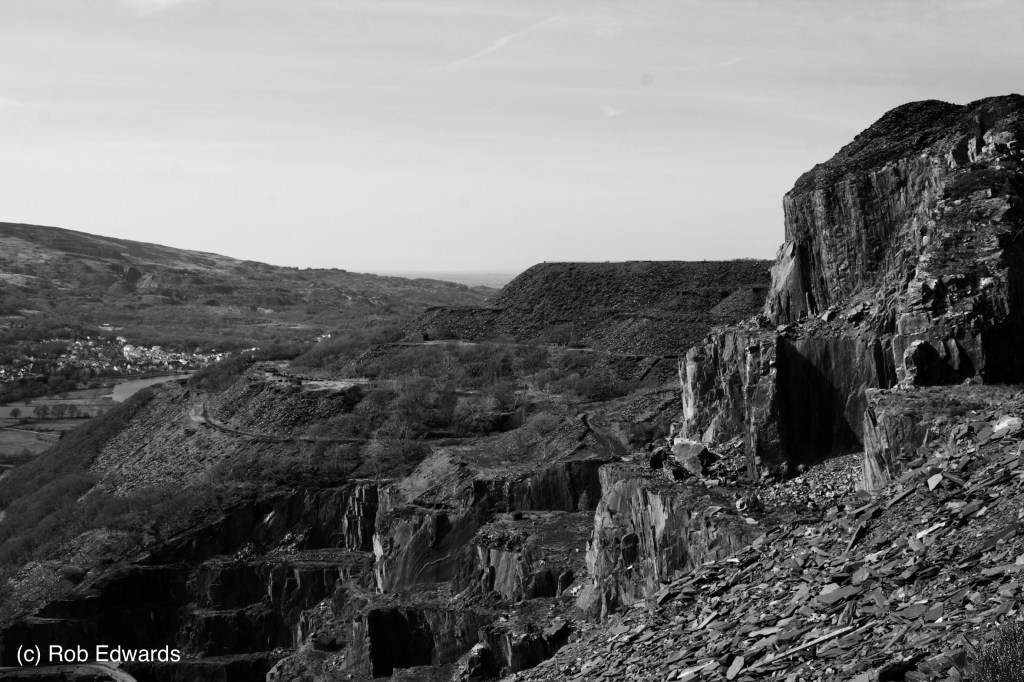
I don’t think there is any industry that has quite changed the landscape the way that slate quarrying has done, and the quarry can still be walked around today. These pictures are from my last few visits to the quarry.
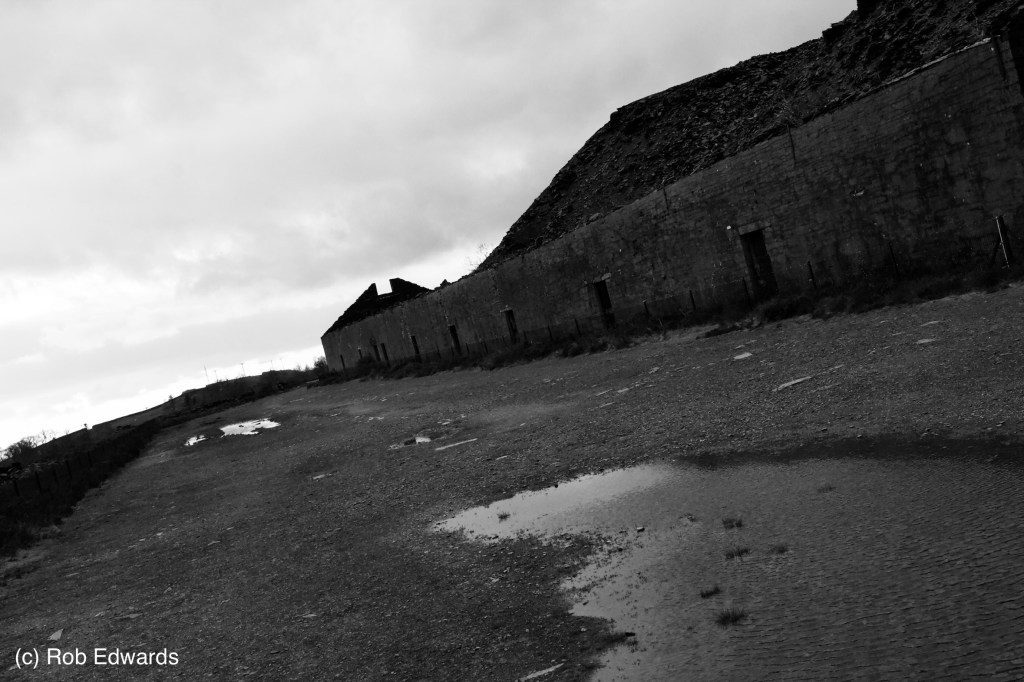
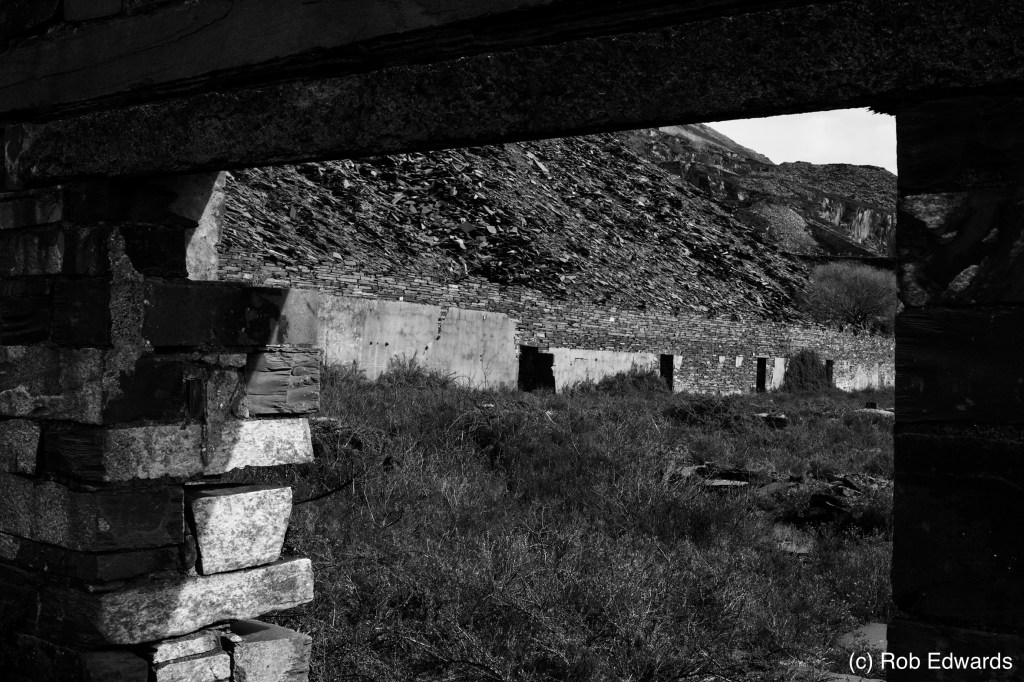
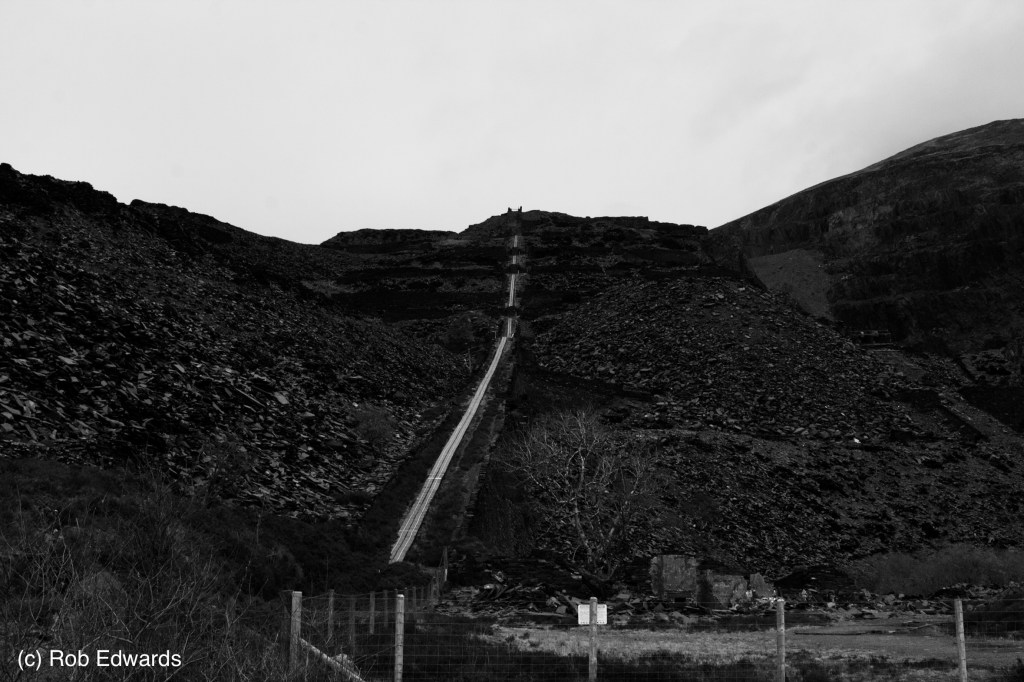
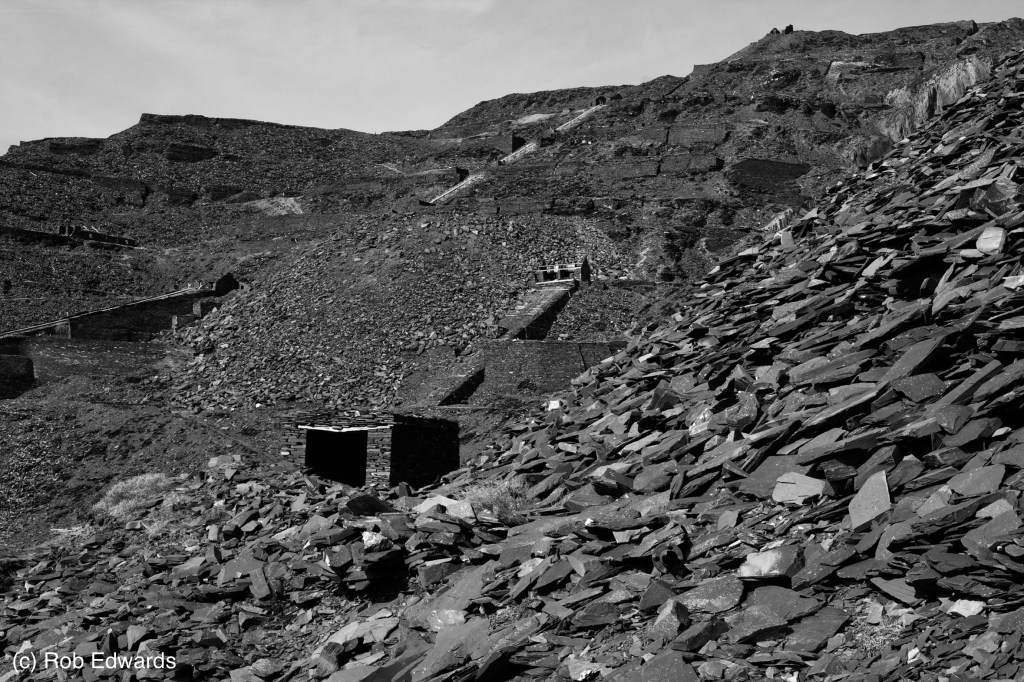
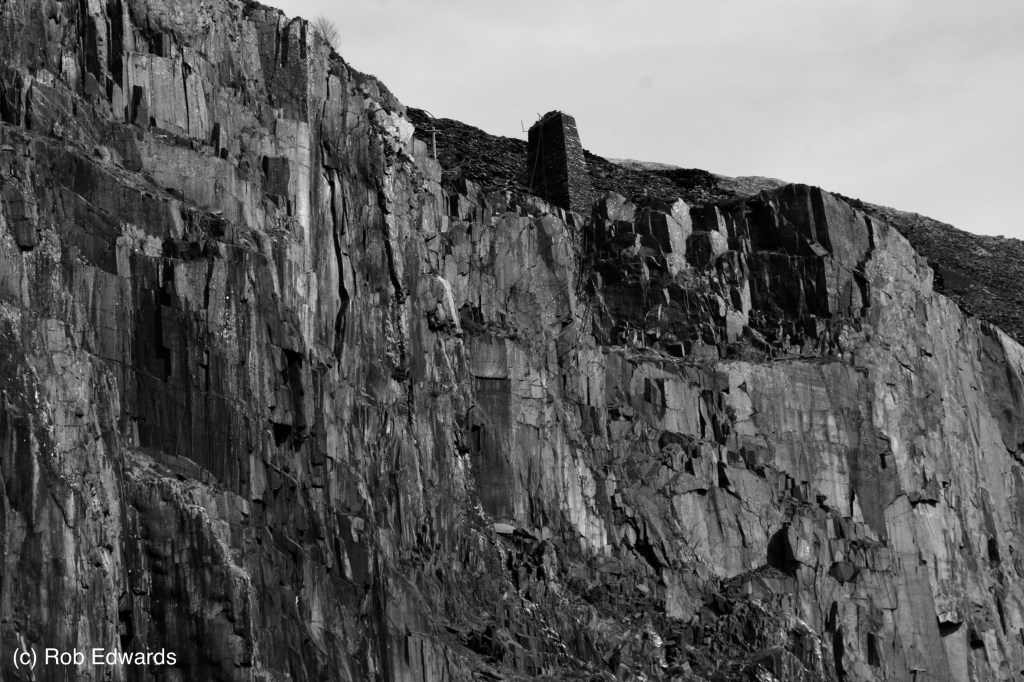
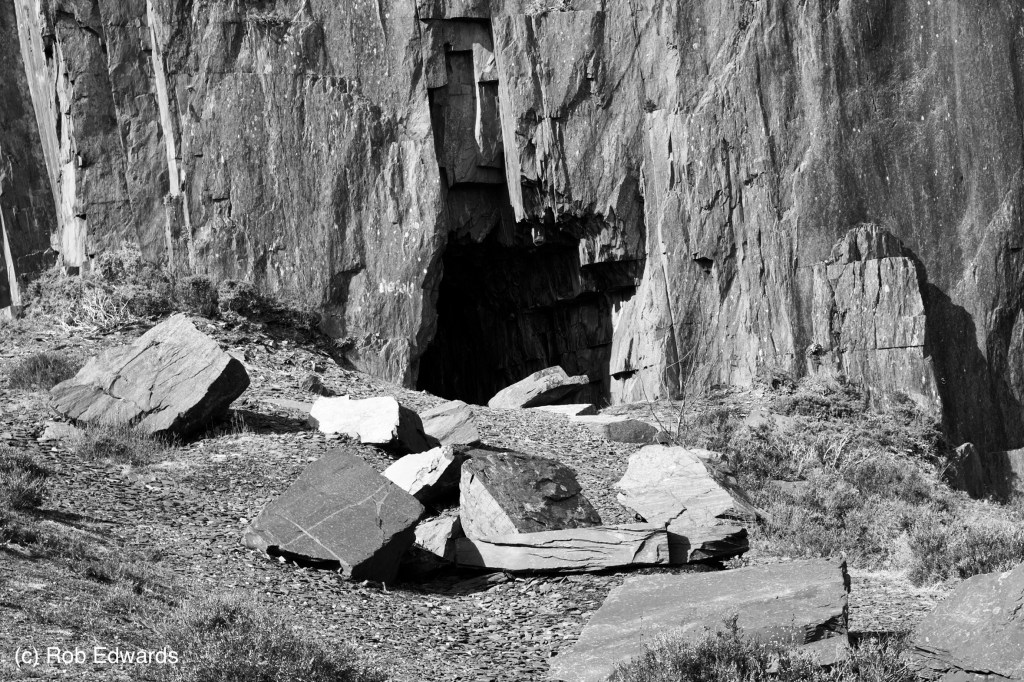
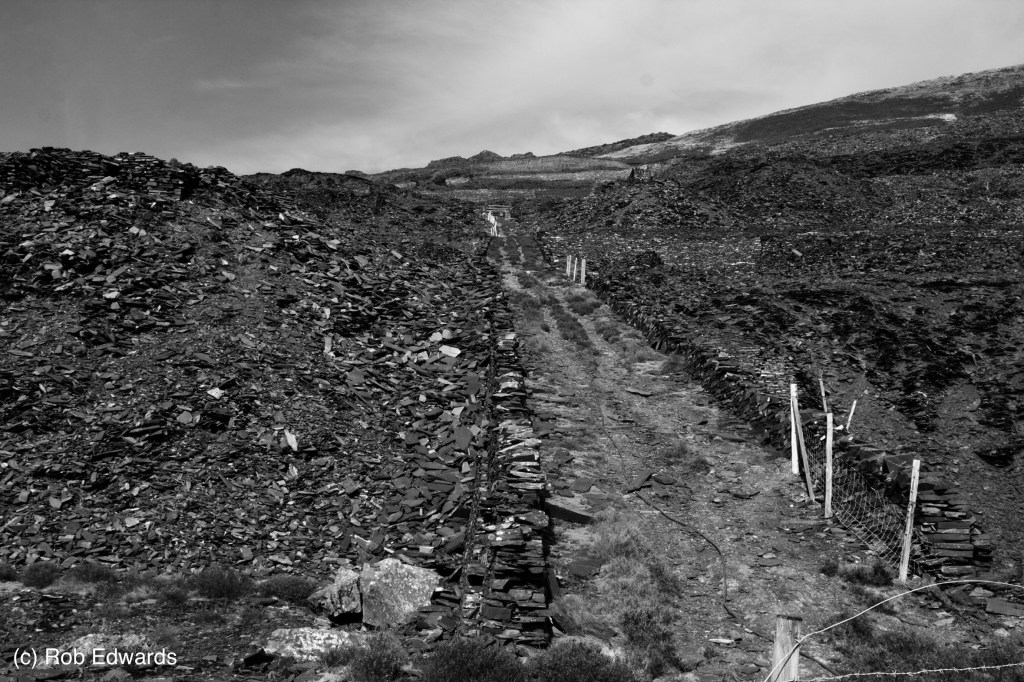
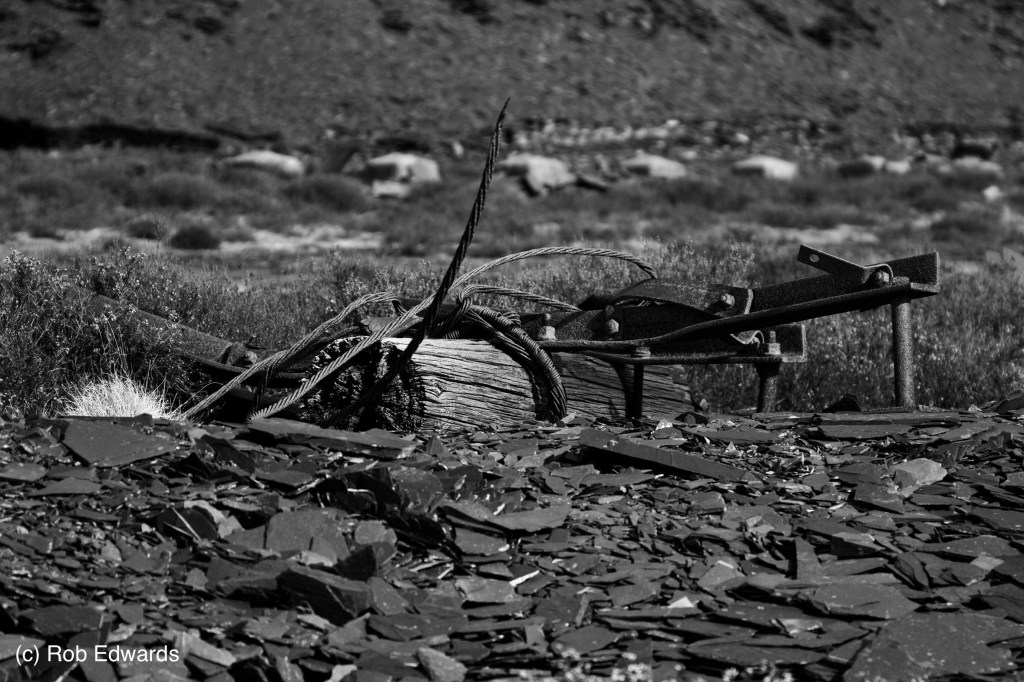
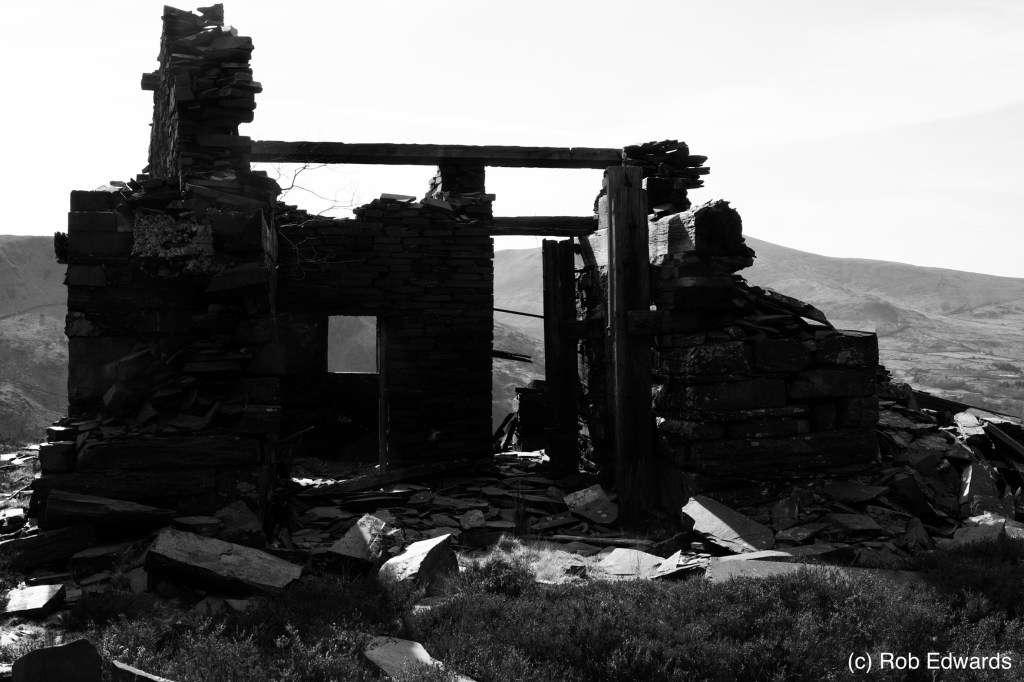
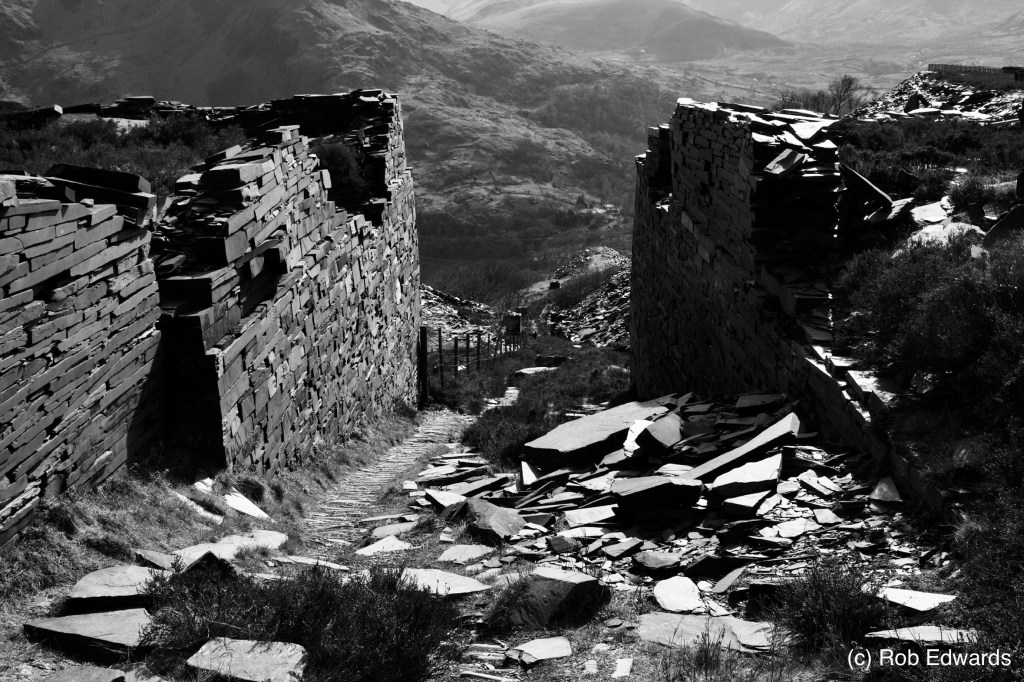
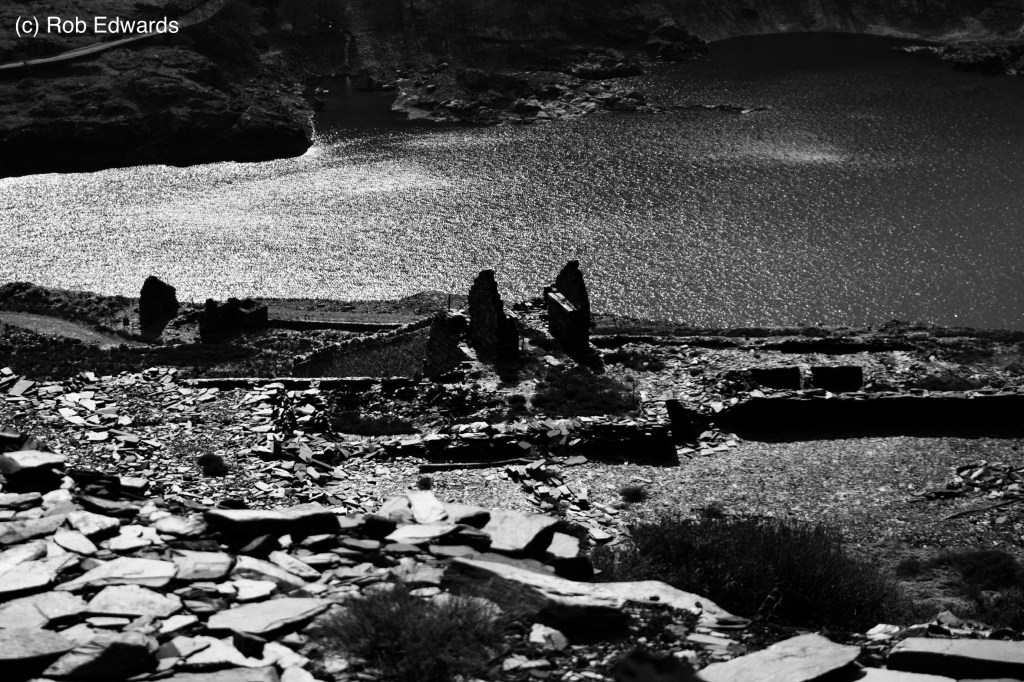
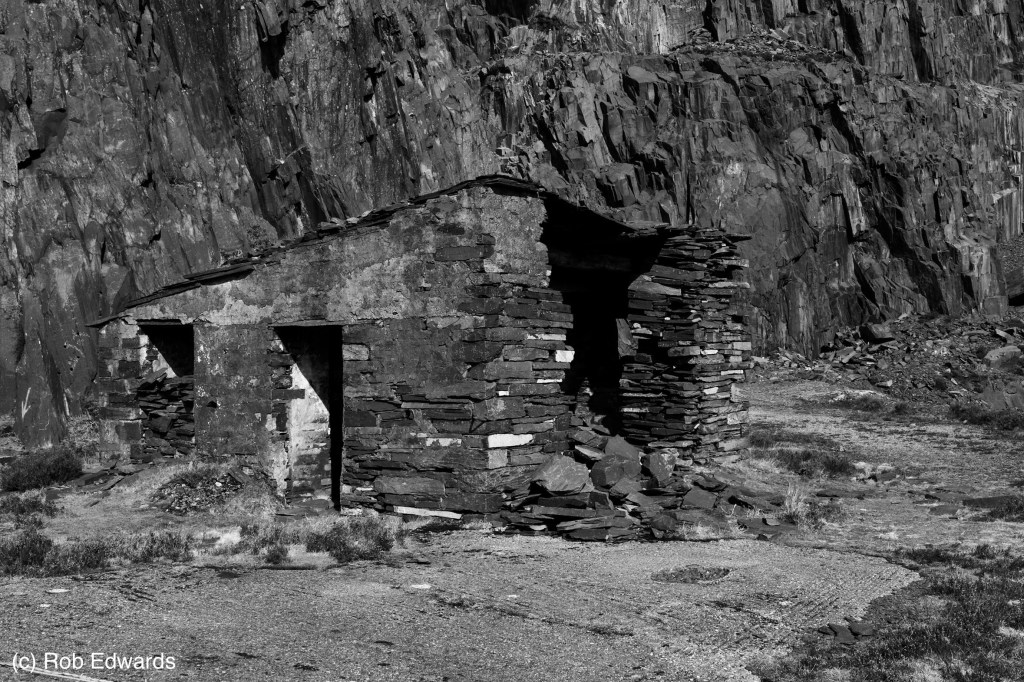
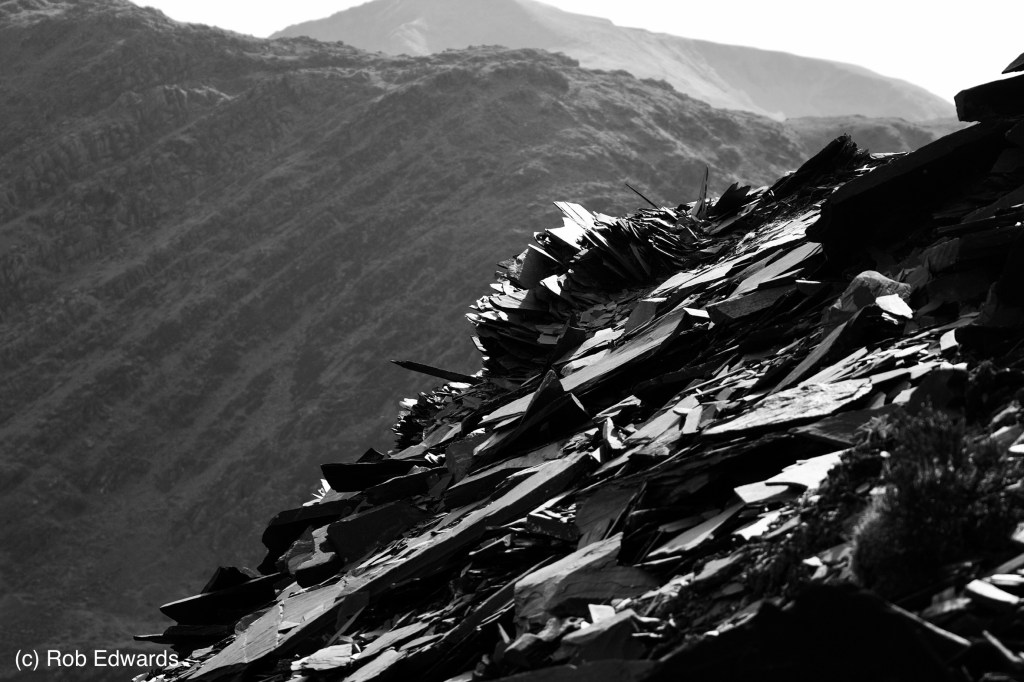
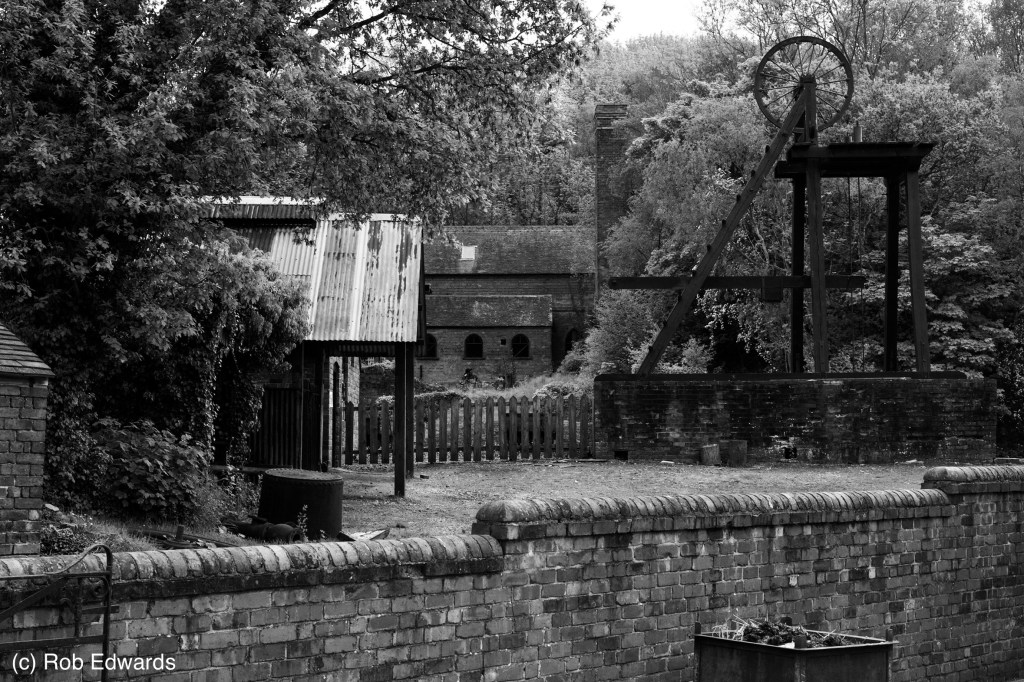
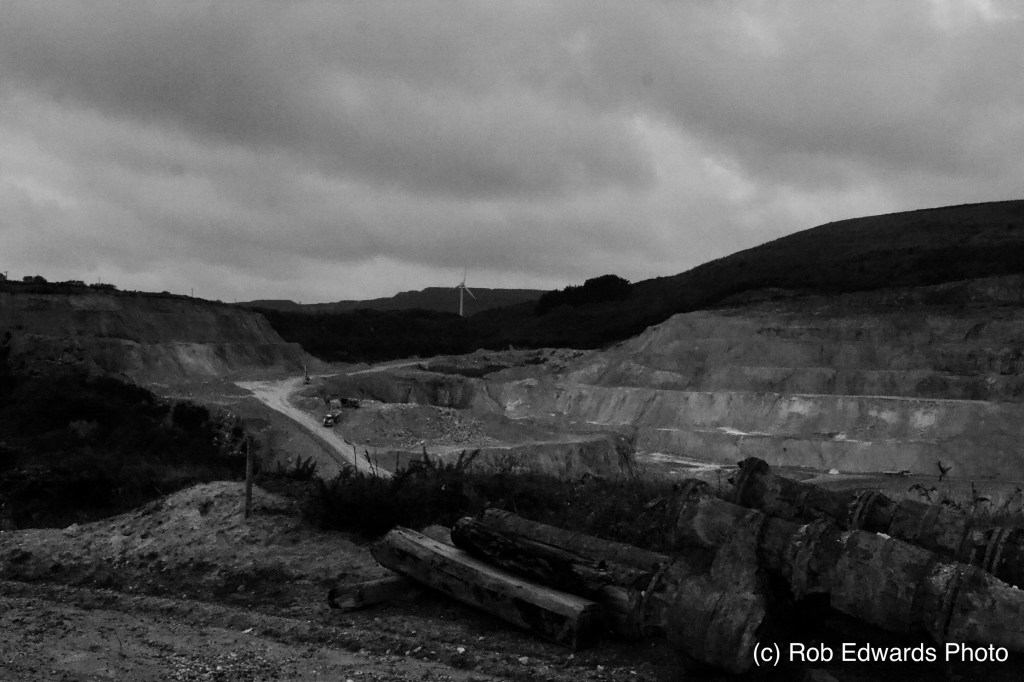
Walking up from the nearest place to park, you walk along the track bed of the old ‘village tramway’, which took slate from the old Garret part of the quarry to the old Dinorwic railway until 1843, when the new Padarn Railway was opened, and then it was used to transport slate from the Allt Ddu and Chwarel Fawr levels to the Mills level of the Garret area for shipment down the incline to the Padarn Railway. At the top of the path is the remains of one of the 14 large slate mills that featured at Dinorwic, where the slates were split and dressed before being shipped down to Gilfach Ddu.You can get a feeling of the shear size of these buildings, and imaging the number of people of working to split and dress slates, all cutting, splitting and dressing hundreds and sometimes thousands of slates in a shift. The wages depend on how many skates they produced in a month from the pieces of rock lowered from the mountain. Just past the slate mill, you are greeted by the the remains of the massive incline railway from the Upper Garret level down to the Mills level. This type of incline the wagons full of skate rock would be lowered on 1 ft 10 3/4 inch gauge tracks as opposed to using the transporters (see below). Further along, there is the remains of a ‘winding house’ complete with wooden drums and a transporter half way up the inclined plain. Walking round the old workings, you get this view. Here you can see the galleries, where the large lumps of slate would be blasted out of the mountain side before being split and dressed. In the background is the village of Llanberis.The slate vein at Dinorwic was nearly vertical, as can be seen from this shot looking at the remains of workings where may tonnes of slate has been removed from the Matilda level. You can see how the slate has been forced away, in neat vertical strips. The rock would be blasted to loosen it, then men climbing the rock face with only a rope for safety and crowbars would prize the loose rock away before it was split and then sent for final cutting and dressing. Not all workings at Dinorwic were ‘outside’, and here we see an entrance to an old tunnel in the Matilda level.Walking around the old Dinorwic quarries, you not only see the massive changes the slate industry made to the landscape, but also that the quarry was virtually abandoned on closure, largely because it was! Look carefully, and you can see the remains of the wire that once was used to haul the transporters up and down the old C4 incline. C4 was the eastern boundary of the quarry workings – to the right of this was where waste slate was mainly dealt with. The remains of of the wooden drums, with the remains of the wire that was once attached.At the top of another incline, there is the remains of this ‘winding house’. The inclines worked on the basis that the the loaded transporter, going down the incline, would haul the empty transporter back up on the opposite track. The track gauge for the inclines with transporters was 5’ 6”.The view down from one of the top of the inclines from the Victoria Level of the quarry. The dangers of working with slate were slightly abated by the fantastic views of Snowdon, as is here.Looking down towards Llyn Peris, you can see the inclines running down to the lakeside at Hafon Owen. From there, slate could be moved along the Padarn-Peris Tramway, worked by steam, towards Gilfach Ddu, and the Padarn Railway to Port Dinorwic.Other buildings also survive, including this old hut, which was a hut to shelter from blasting to get the large lumps of slate away from the mountain. The large waste tips are synonymous with slate working all over north wales; off cuts of slate were thrown away as unusable years ago, and in the background is the lower lopes of Snowdon. One of these waste tips fell into the Garret level in 1966 and caused the final demise of the quarry.
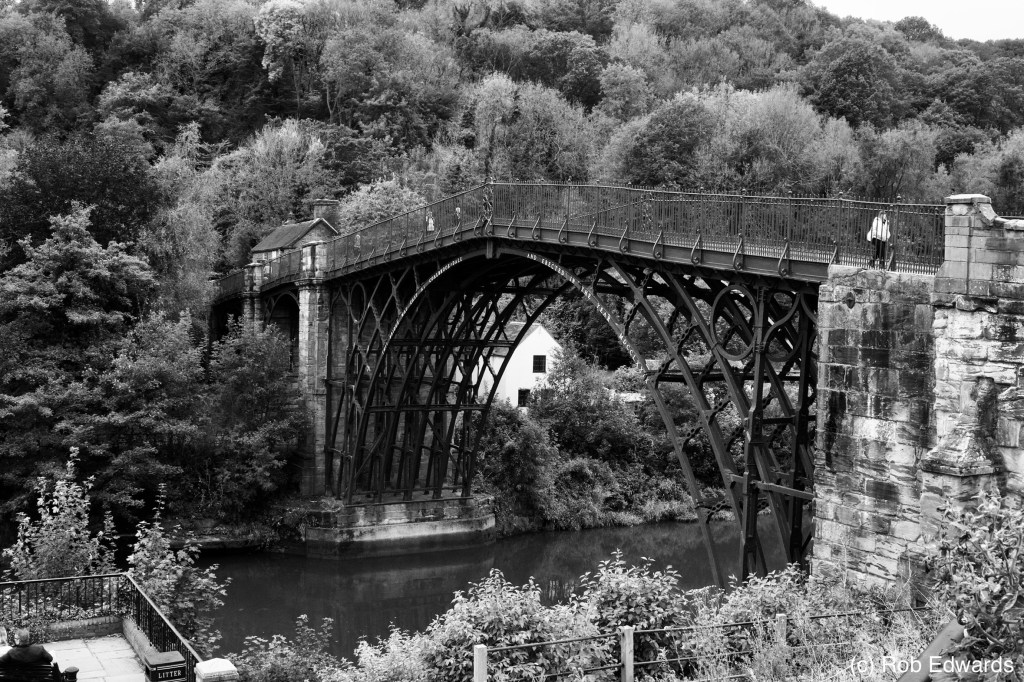
The industrial revolution really started in the Iron Bridge gorge in Shropshire. Abraham Darby successfully smelted iron ore with coke made from coal from nearby Coalbrookedale in 1709. In 1781, the very first Iron Bridge was completed, designed by Thomas Pritchard, a local architect, the first large scale use of cast iron.
From there, Shropshire became the industrial centre, and many see the Iron Bridge as a symbol of the Industrial Revolution, made from the material that spurred on that same significant period of time.
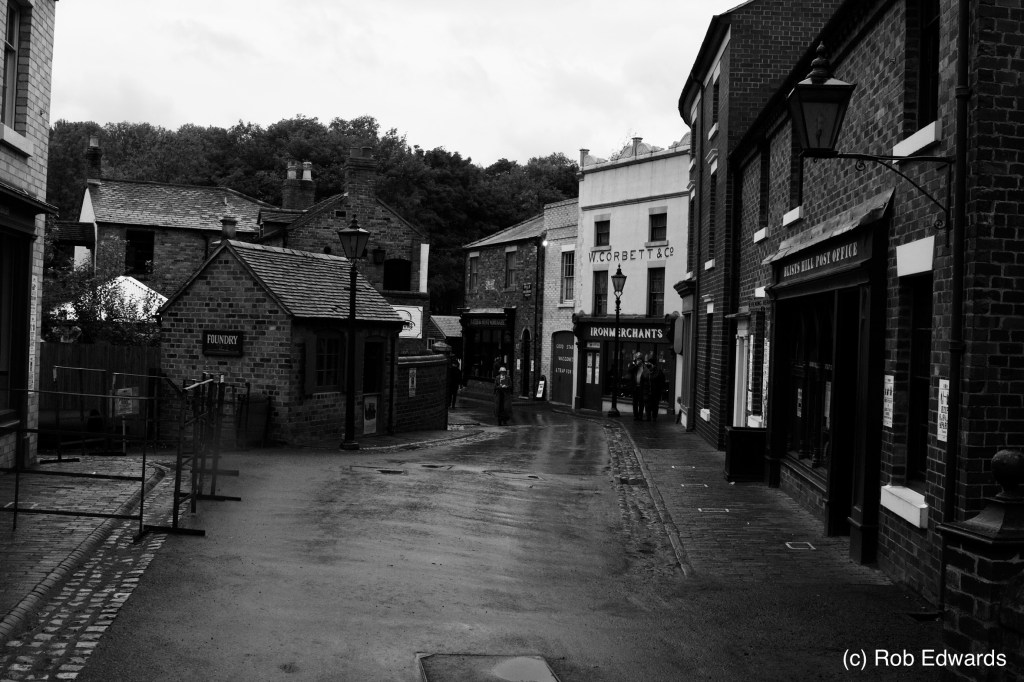
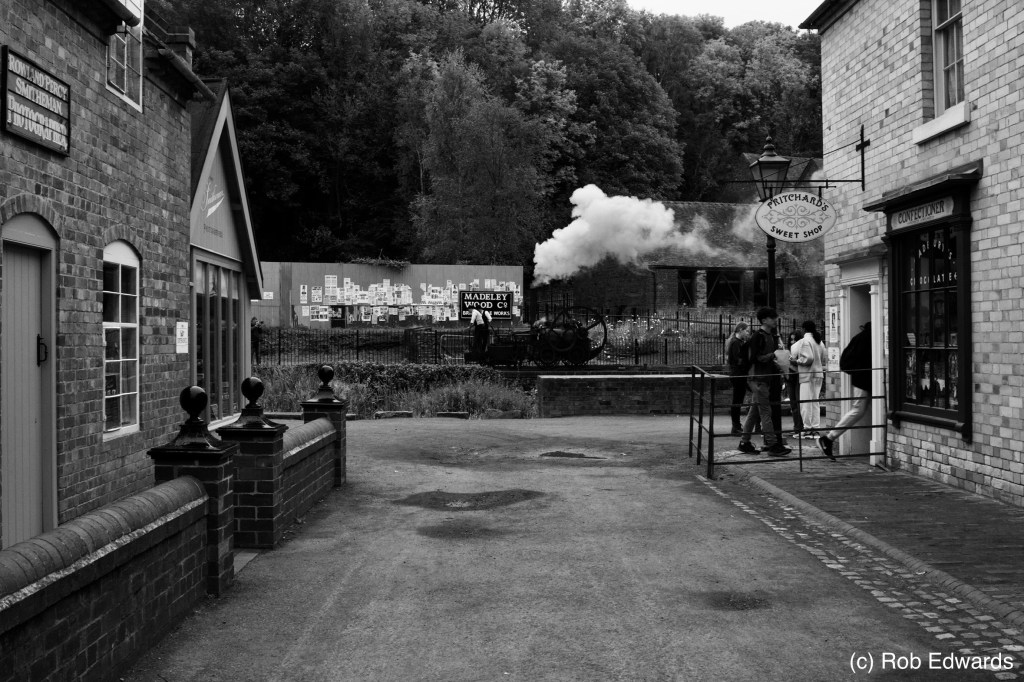
A few miles away from Ironbridge is the Blists Hill Victorian Town, part of the Ironbridge Gorge Museum Trust, its self built on a former site of brick and tile works, coal mines, iron ore mines and blast furnaces. The town depicts a typical industrial town in the Victorian age, and this post is all about this amazing museum.
Where it all started – the world’s first iron bridge in…Ironbridge, and still standing to this day. It is reckoned that to be able to cast such a large structure back then that the furnace would have been tapped straight into large moulds on to the foundry floor. As you walk into the village, the imposing structure of the Blists Hill Goods Shed stands before you. Although there was never a railway here, the LNWR and GWR had lines nearby on opposite sides of the river Severn, serving the nearby Ironbridge and Coalport.The town was never here before the museum opened – it was built around the former iron works, coal mine and brick works. But what it shows is how a typical Victorian town would look.
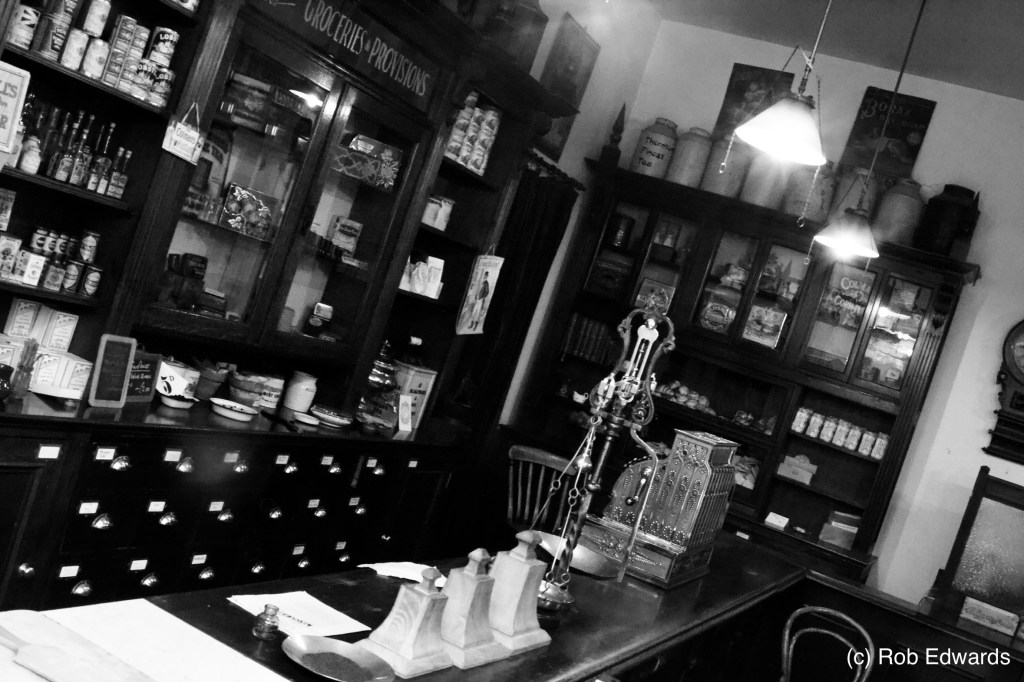
This is inside the grocers shop. So many old artefacts, such as the old scales, the old till, and the shelves behind the counter – all from a period long before self service shops where even known.
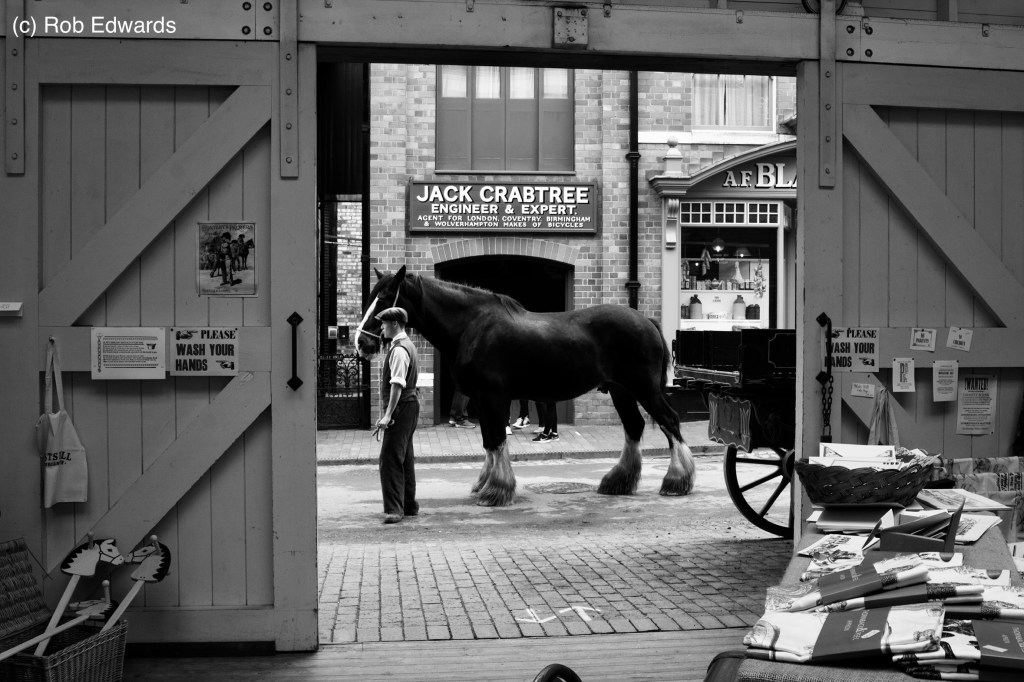
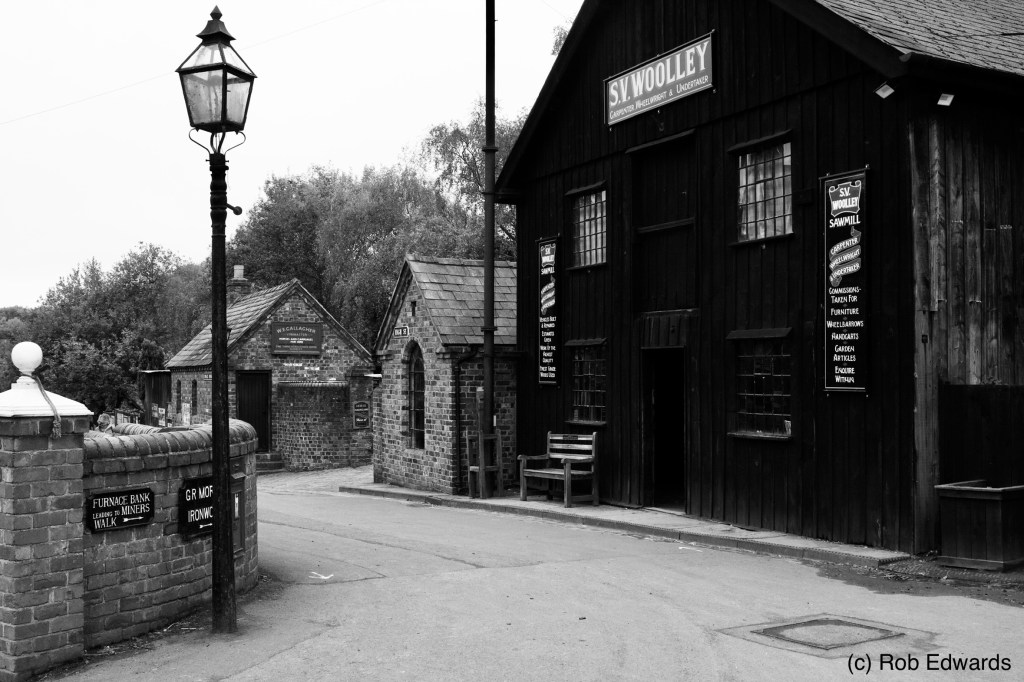
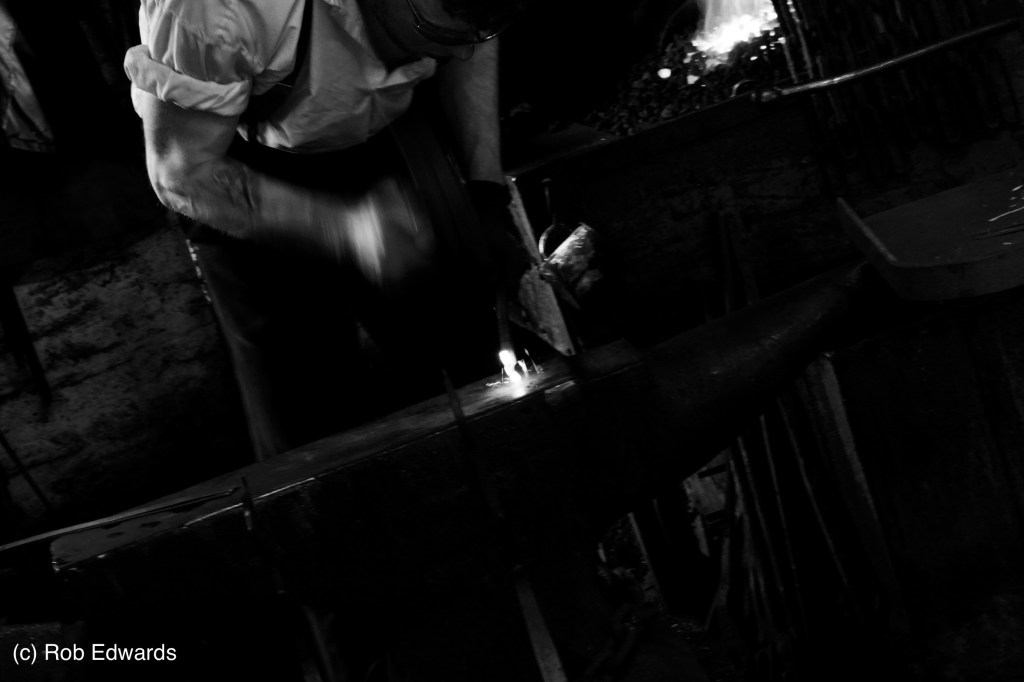
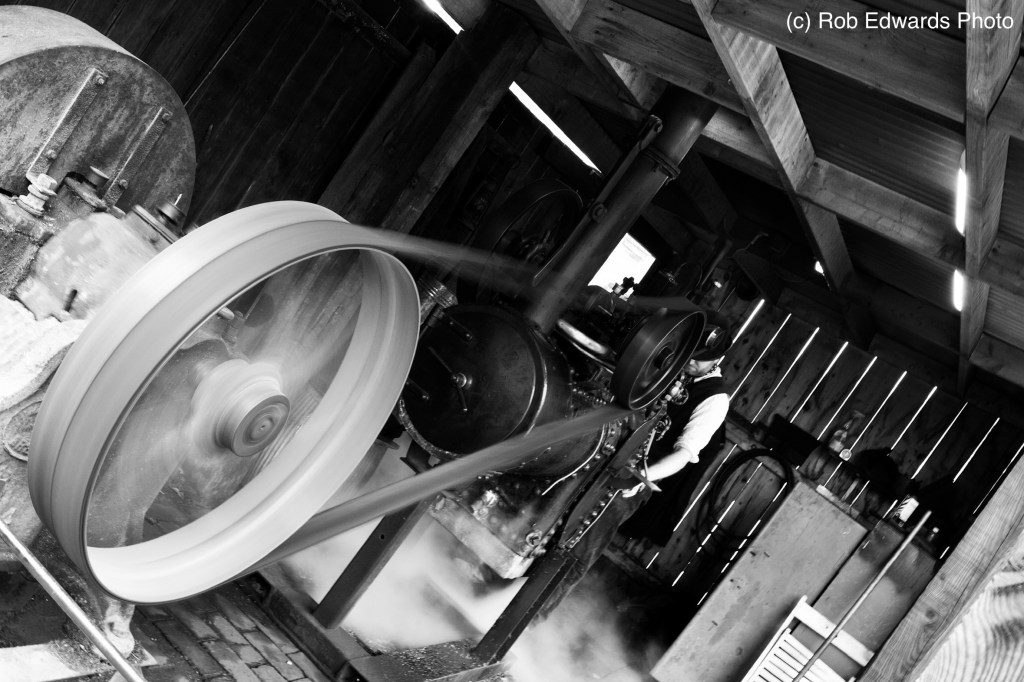
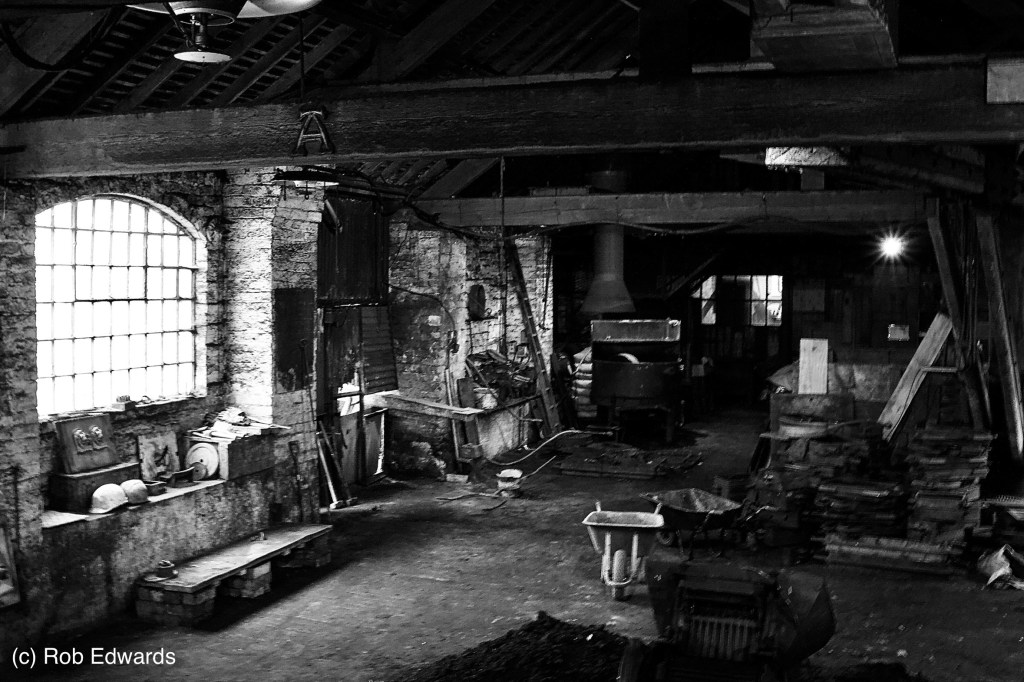
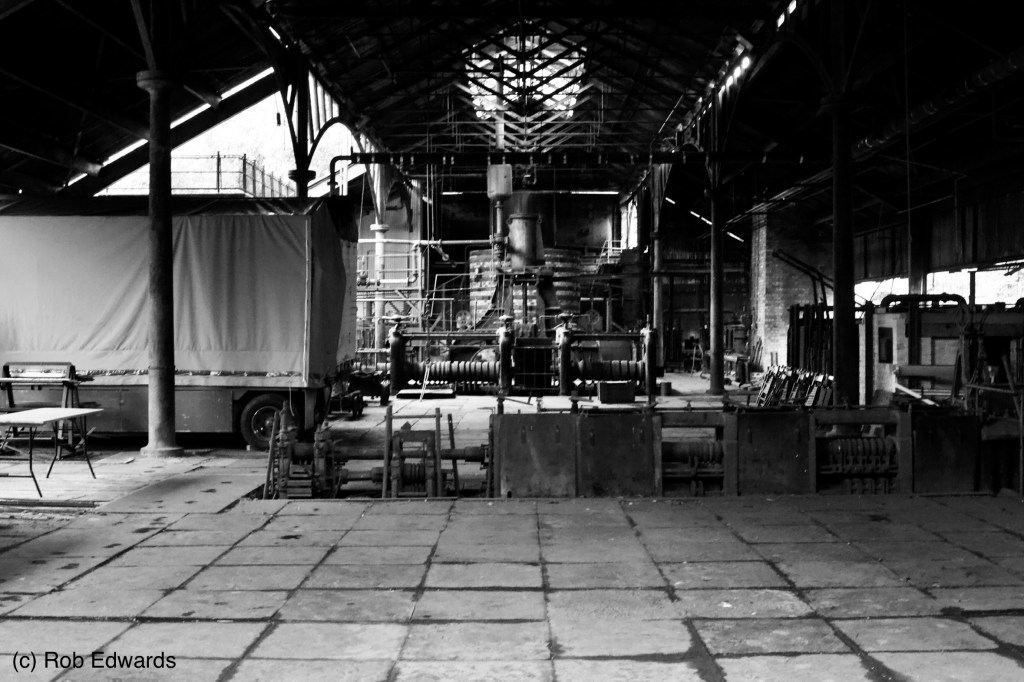
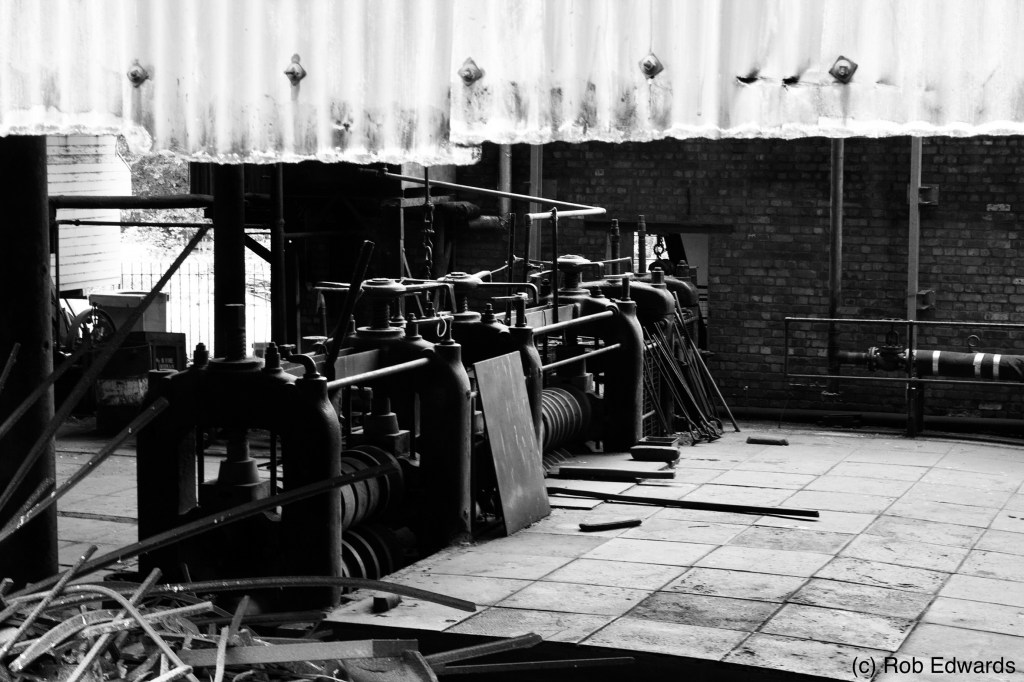
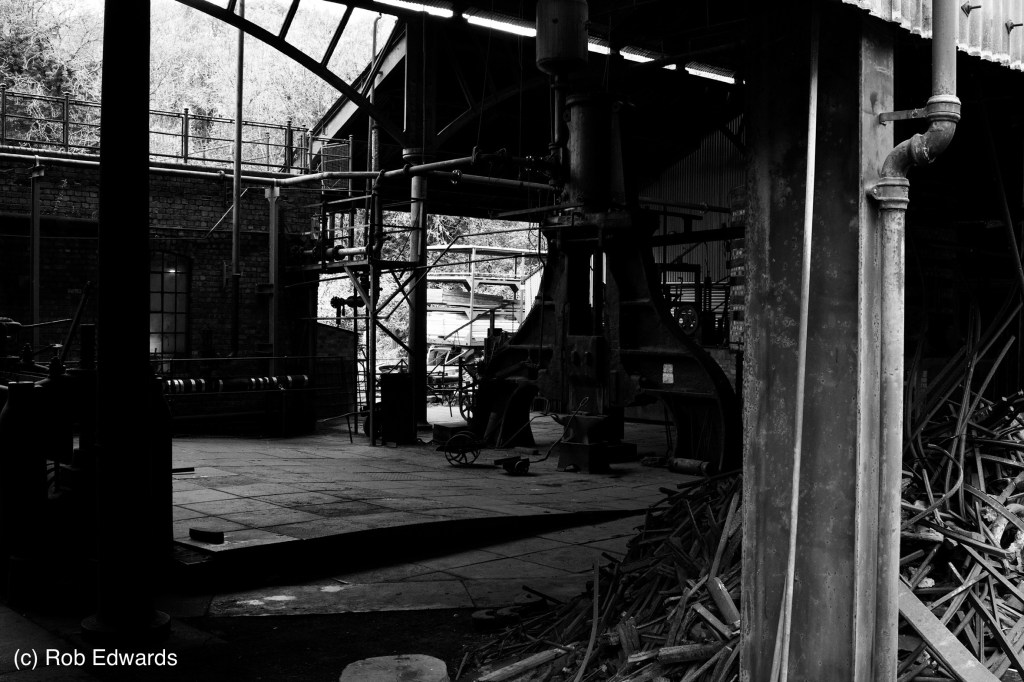
All aspects of Victorian life are portrait, including the fact that horses were still common place in everyday life.The attention to detail is amazing, right down to the working gas lamps. But there is also a reminder that in many towns, all sorts of small scale engineers set up business to undertake work for the town; here we see the carpenters and saw mill.Small scale heavy engineers also set up shop, able to work with metal for a whole variety of applications, and all belt driven from line shafts driven by steam. Blacksmiths were a feature of many towns in the Victorian times, and here is one of the resident blacksmiths at work making large nails. I love watching people like this at work, preserving skills from the past.As steam was an important part of the Industrial Revolution, steam features at Blists Hill. In 1989, a group of engineers built a replica of an engine that was never completed by Richard Trevithick, the famous Cornish engineer who patented ‘high pressure’ or ‘strong’ steam in 1802. He never finished this 3 foot gauge engine, known as the ‘Coalbrookdale Engine’, most of the work undertaken in nearby Coalbrookdale. Stationary steam engines also feature, and this one is being used to power a stone crushing machine. Other stationary engines powered the engineering works, the winding engine for the coal mine, and the iron works. One of the fascinating attractions is the iron foundry. The foundry has blast furnace attached, which, until recently, was fully functioning, but currently requires major attention to be able to be used again. Inside the iron foundry reminds us what these places were like in the Victorian times – the pattern moulds, the air drying sand used to make the moulds for casting, and the ‘ladles’ for carrying molten iron to the moulds.Another of the fascinating parts is the iron works, which contains the rolling mill from an old iron works in Bolton, known to the late great Fred Dibnah. Whereas the iron foundry was concerned with cast iron, the ironworks produced wrought iron, which was tougher material. The drop forge and rolling mill are in the background. A better shot of the rolling mill. Hot iron would be taken taken from the blast furnace, and passed through the rolling mill to shape it. Quite often, there would be easy chairs in these places for the men to ‘flop’ in to after undertaking a few passes through the rolling mill, due to the intense nature of this work. This is the old drop forge, where a large steam operated hammer would bash and mould hot iron blocks into different shapes, under the skilful operation of a team of men.Blists Hill also has an old coal mine complete with shaft, pit head gear and working winding engine. In the background is the old brick works, that was originally on the site.
So, this has been a long time coming, a very long time coming, but I finally got my act together and have done another blog post!
One of my all time favourite museums is the National Slate Museum in Llanberis. The museum has been built in the old quarry workshops of the Dinorwic Quarry, once one of the largest slate quarries in the world, where all manner of parts and equipment for use in the quarry could be made, engines were serviced, and the men would gather for meal breaks.
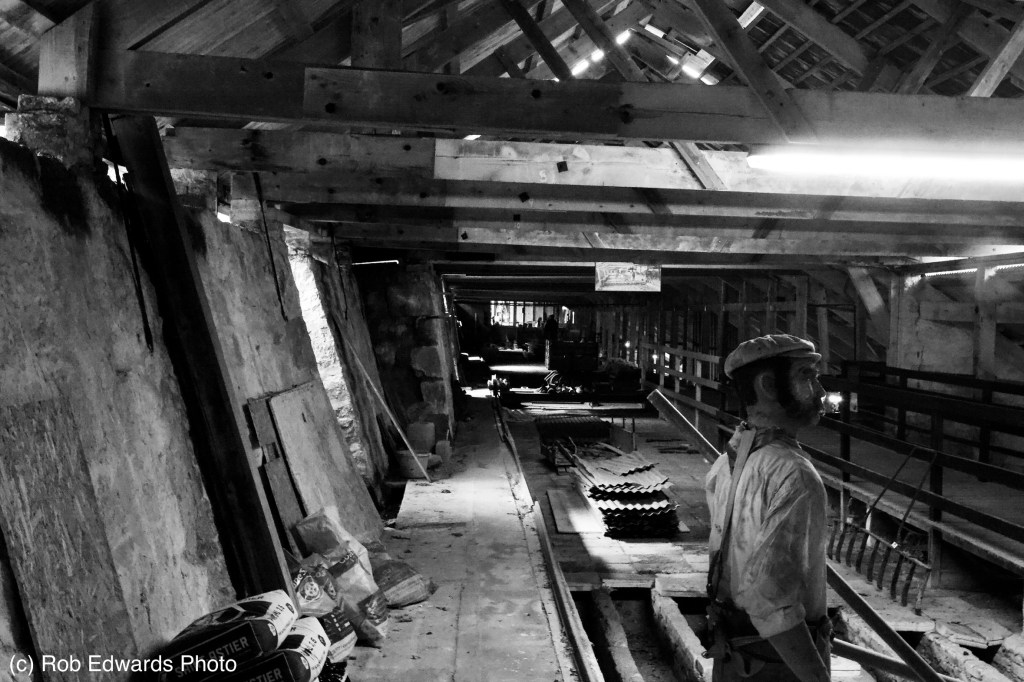
Each slate quarry in North Wales was an independent concern, and therefore required to be able to make or repair any of the machinery used in the quarry, from the engines working the levels in the quarry, to the tools used for the quarrying. Everything could be made or repaired in the workshops, and this required all sorts of machining machines, a foundry and a smithy. In many ways it had too – not only were they independent, but remote from so much else in Wales.
A good chunk of the museum is taken up by the old machinery of the workshop, the foundry, and the smithy, and over many visits over may years, this is my collection of pictures.
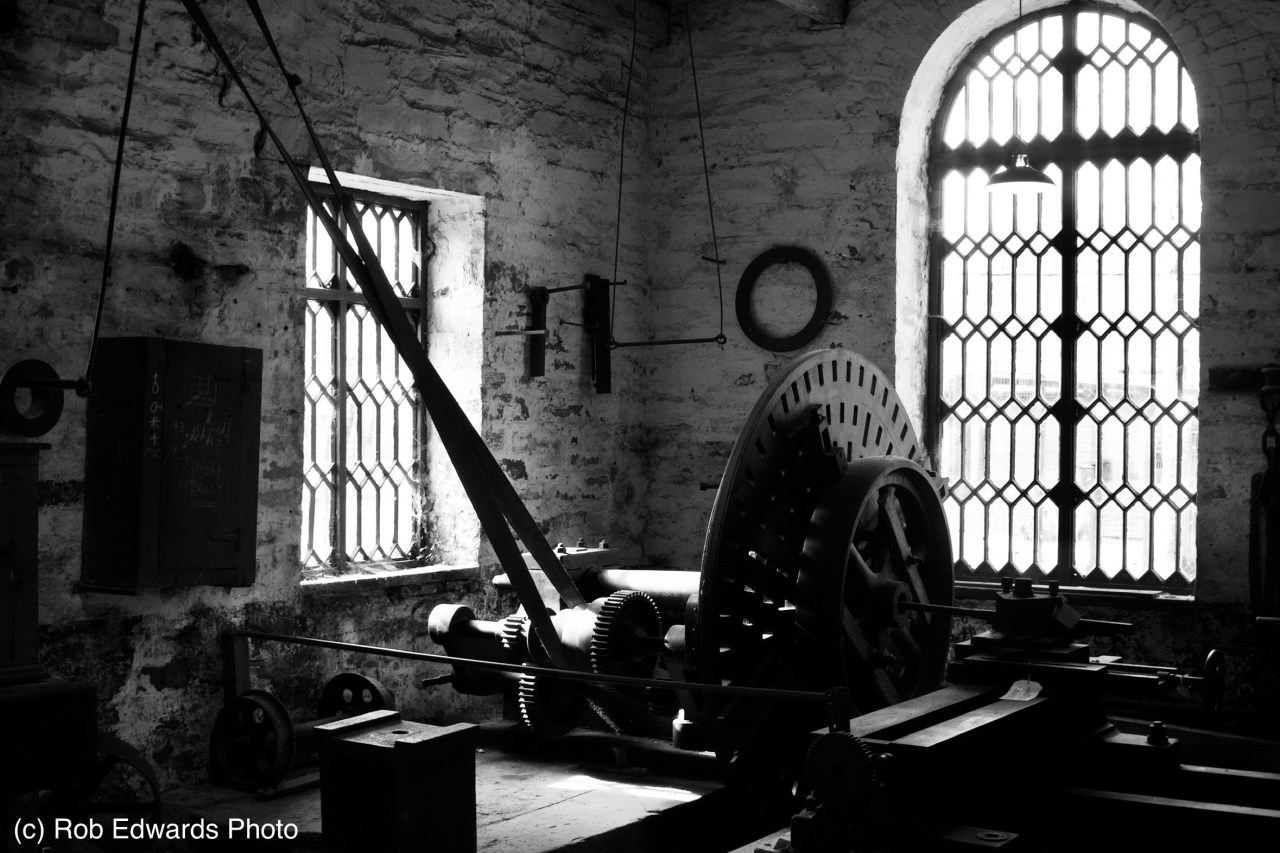
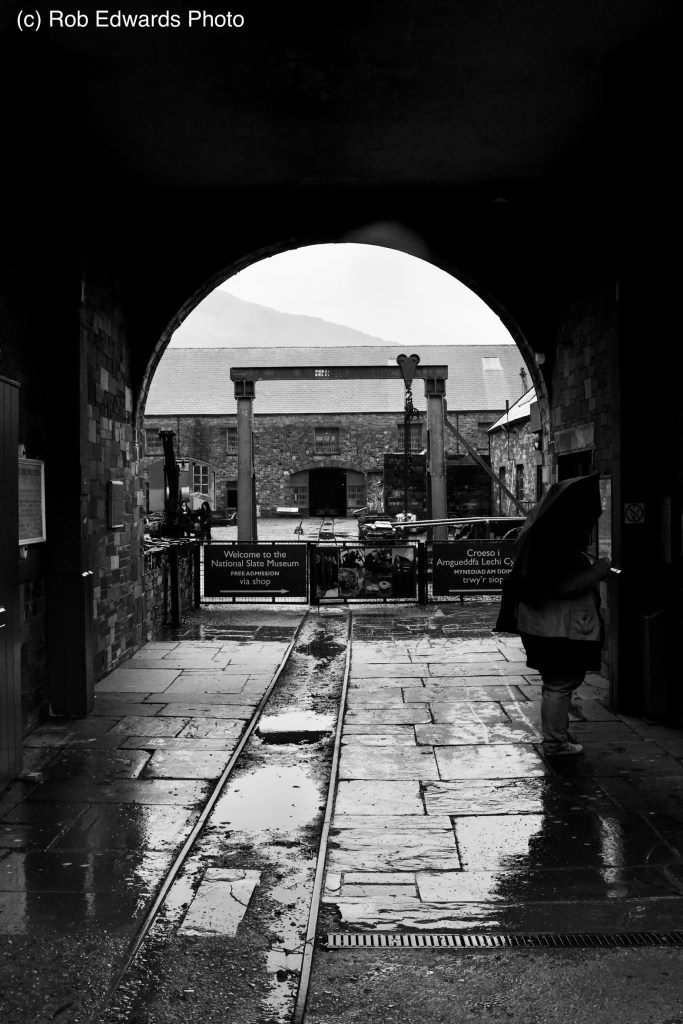
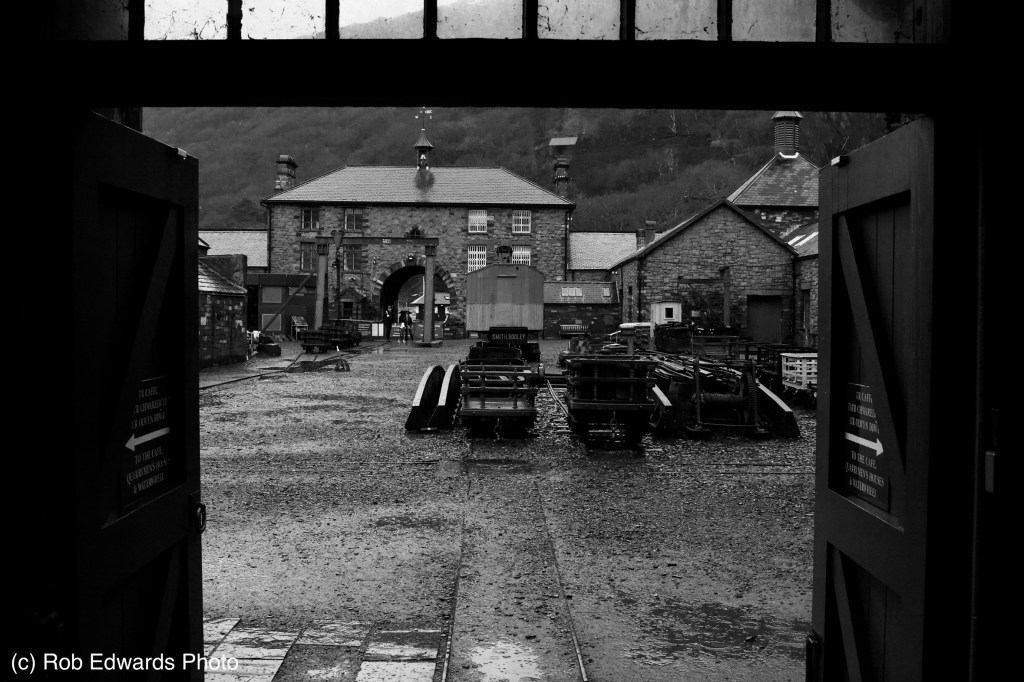
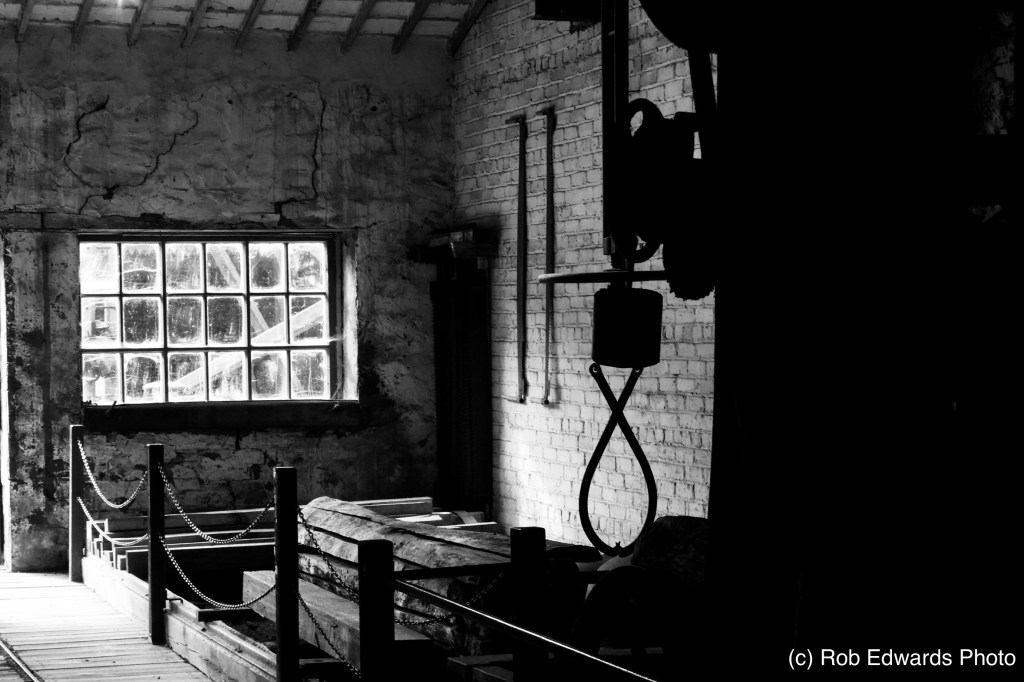
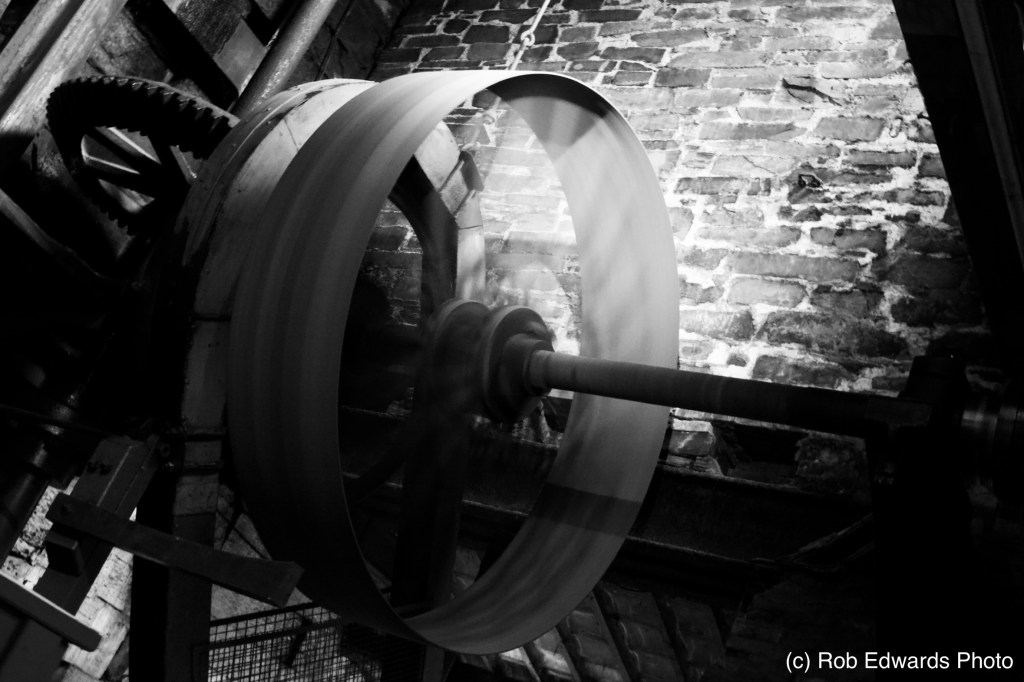
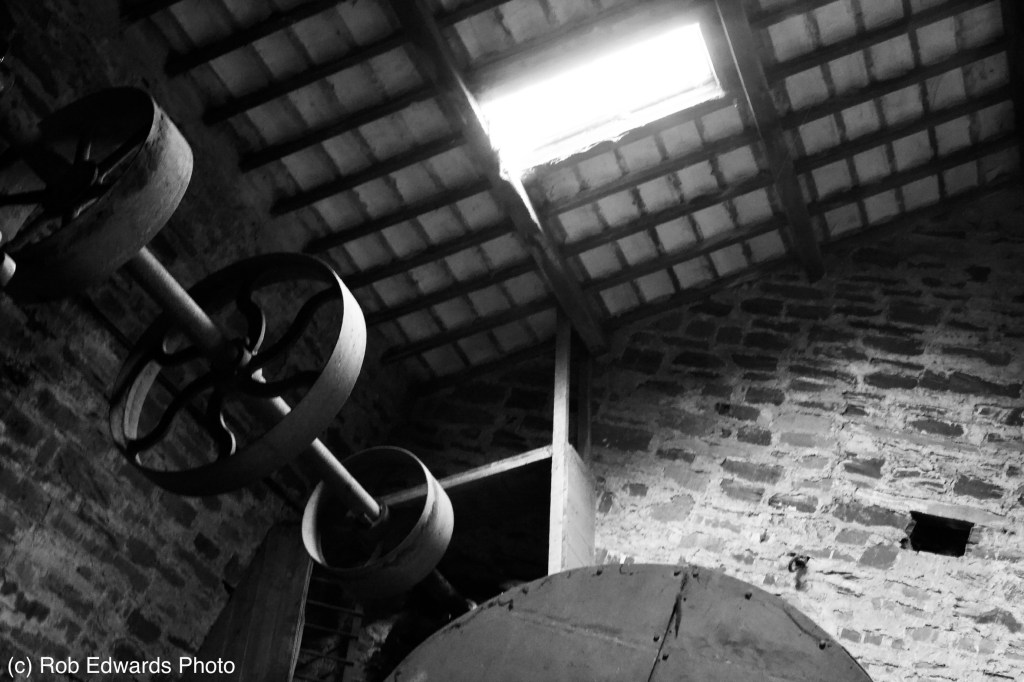
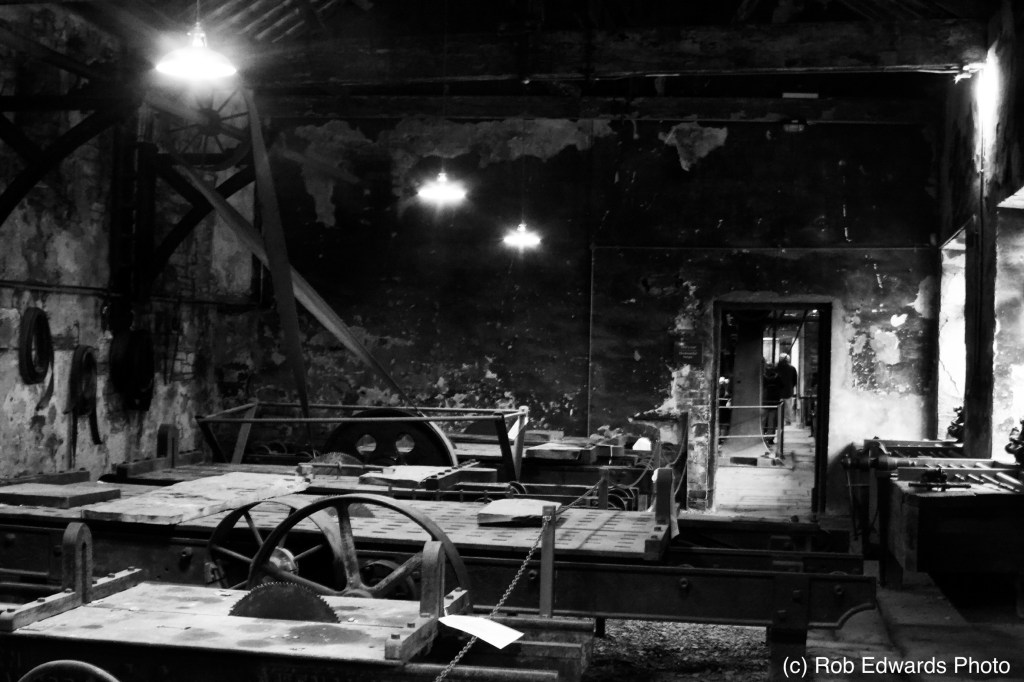
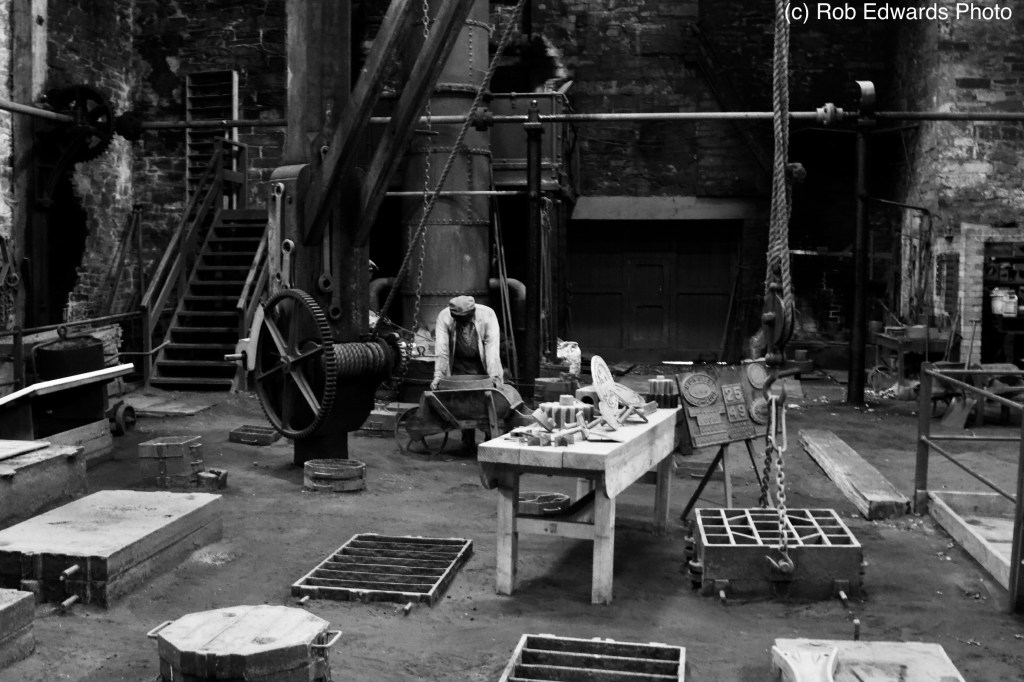
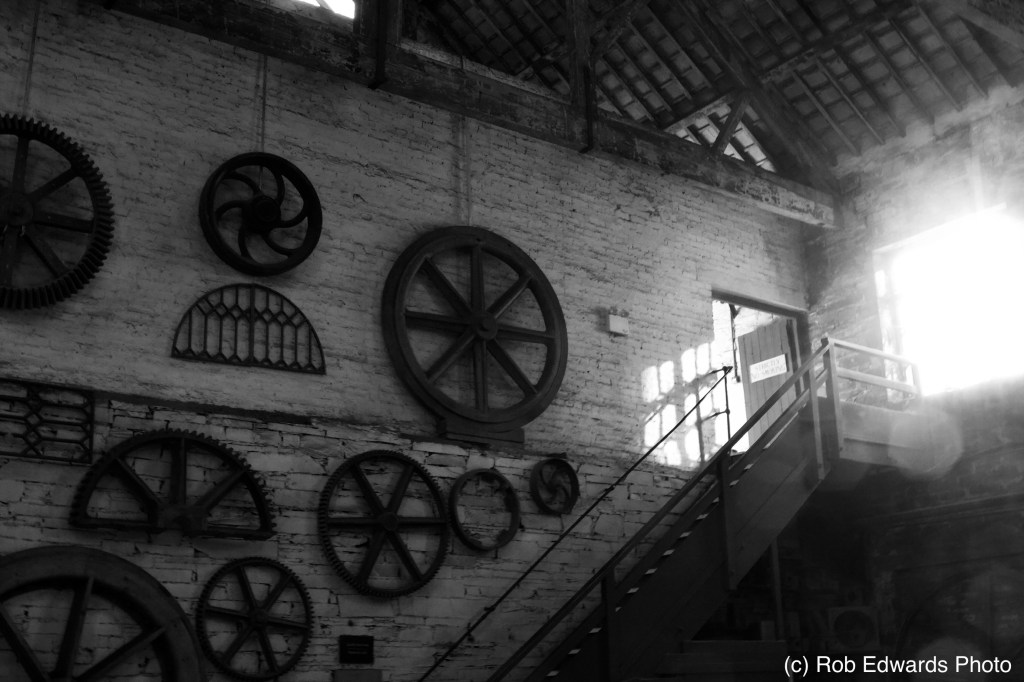
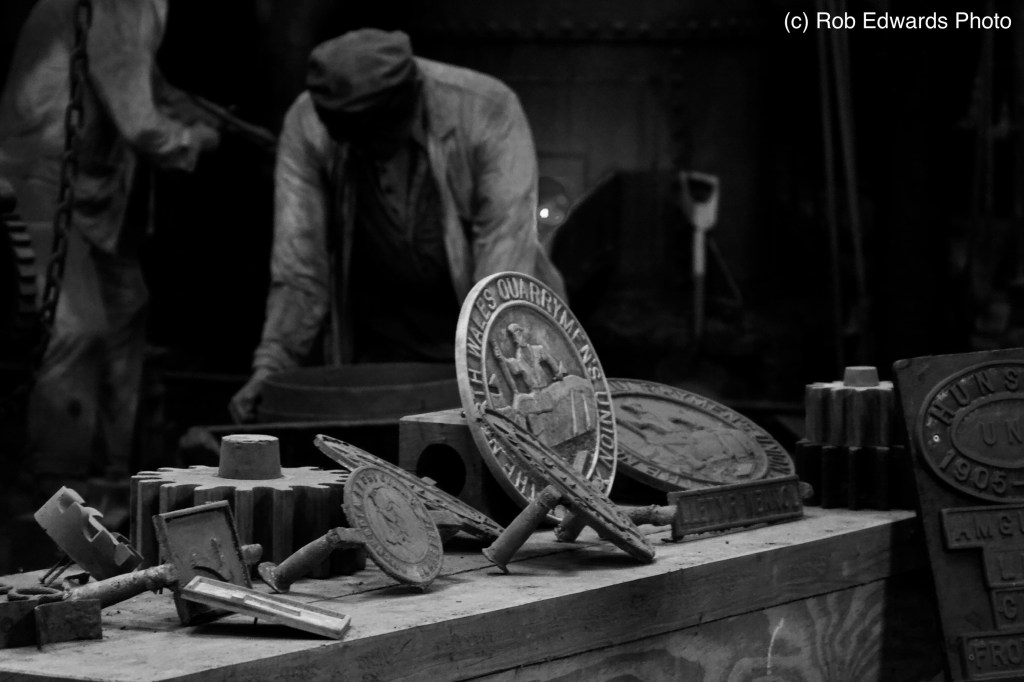
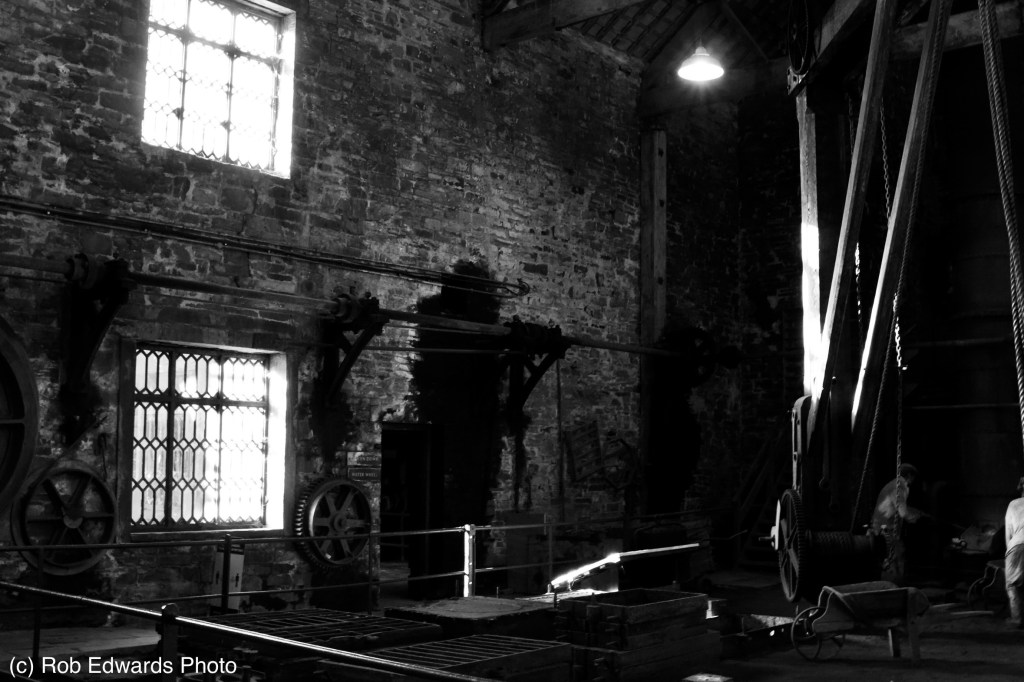
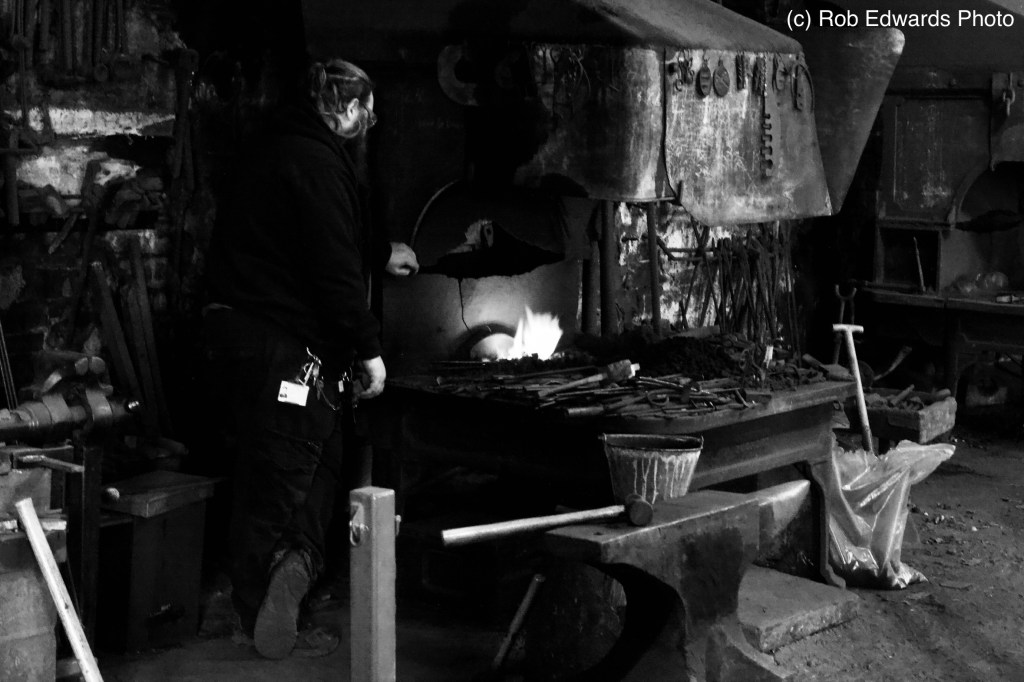
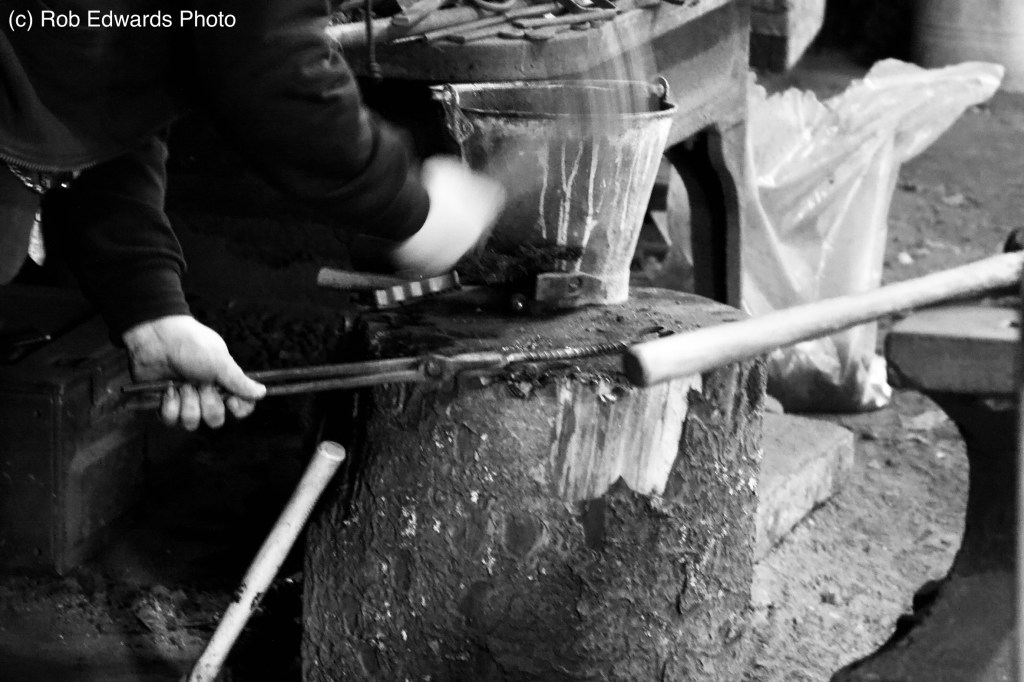
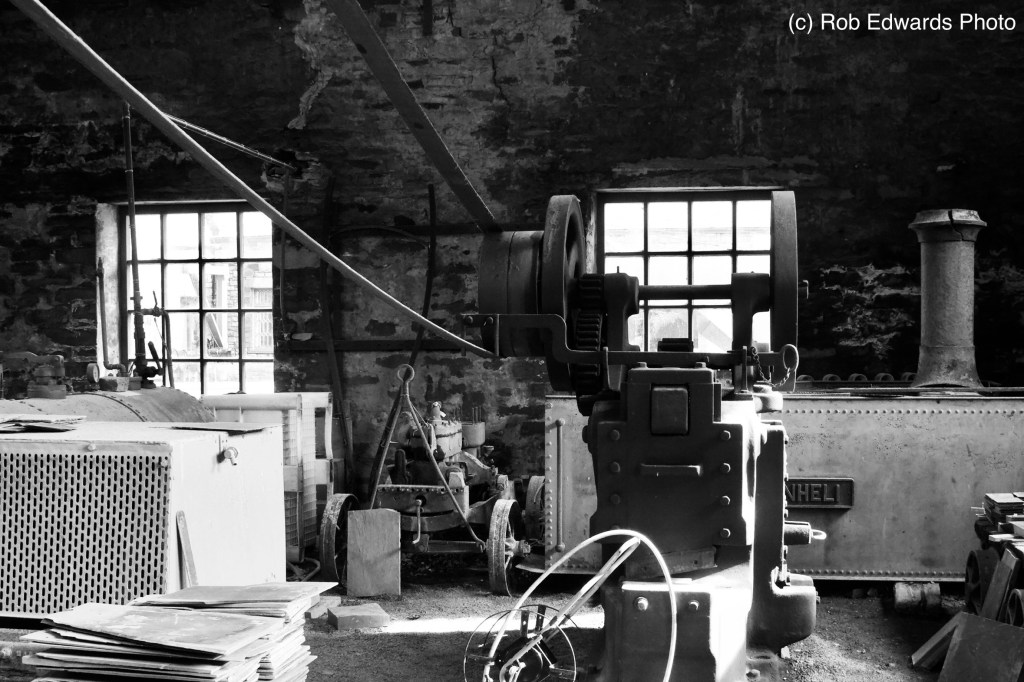
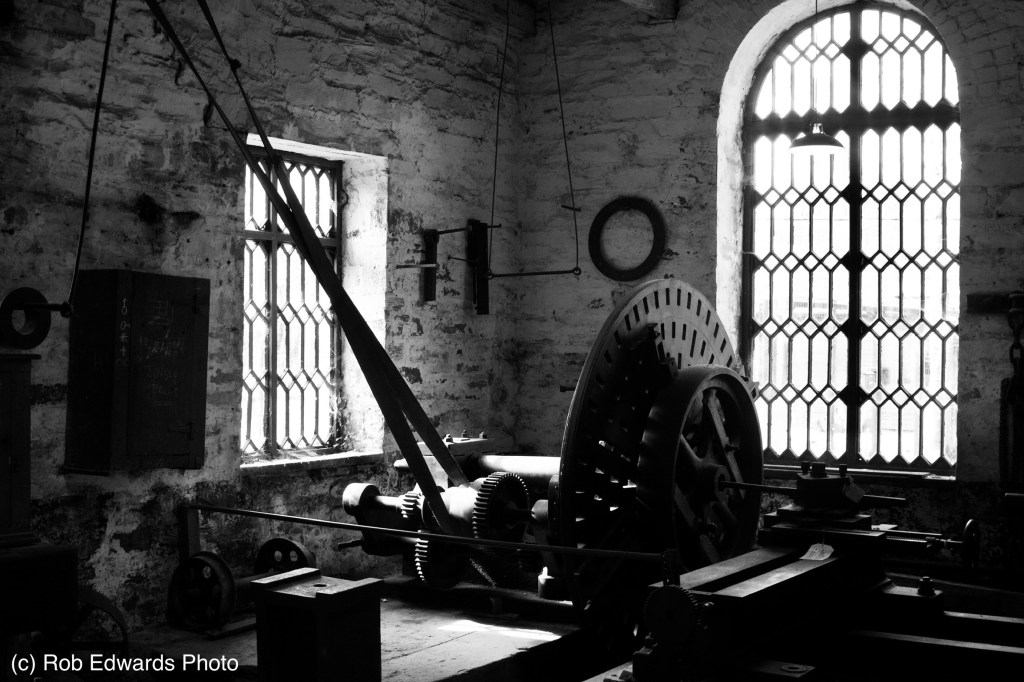
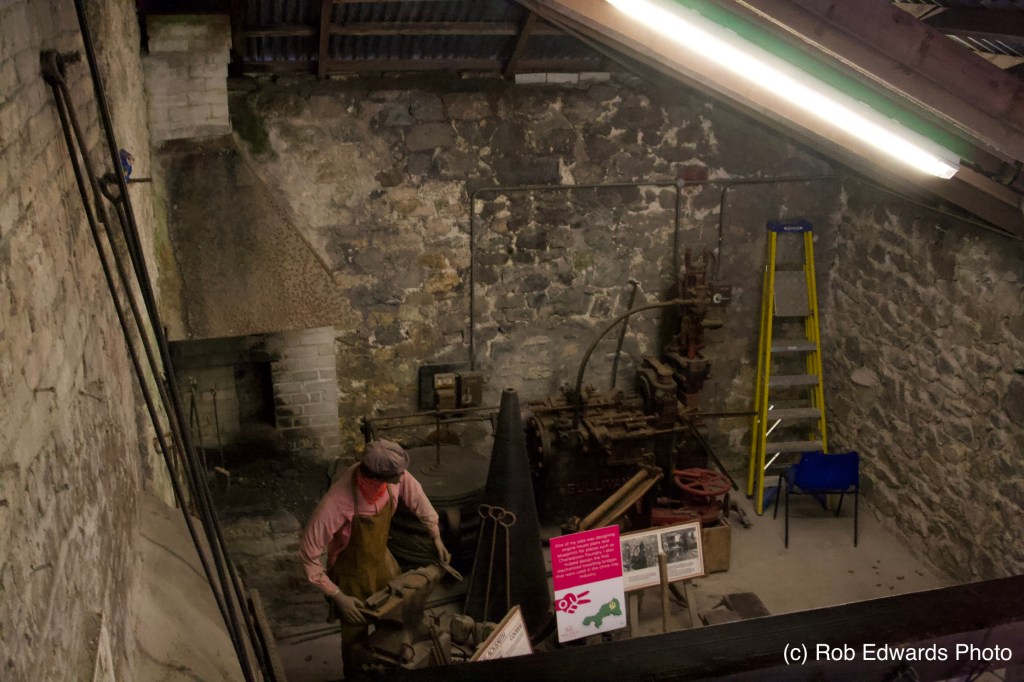
The entrance to the museum and the workshops, therefore, is through an impressive arched gateway. Ahead is the main courtyard of the workshops.View from the other side of the court yard, looking out of the sawing shed. The entrance archway was underneath the offices.Inside the saw shed, there is a belt driven set of saws that can saw a tree trunk into to planks of wood, which could be used for all sorts from sleepers for the various railway lines to decking for the inclined plains.The various machines in the workshop were driven by water wheel, which then powered a line shaft throughout the workshops. Drive was transferred from water and then to the line shaft through right angled bevel gears.The line shaft would continue pulley wheels to allow belts to be put on to drive the machinery in the various parts of the workshop. Skilled men could put a belt on with the line shaft moving, although this was frowned upon…This part of the workshop contained the large cutting benches, and like all the other machinery in the workshop, it was all belt driven. Note that to reverse the direction of the cutting saws, the belts were put on in a figure of 8.A cathedral like room contained the foundry. Patterns would be made in wood that are slightly larger than the item being made, the amount depended on the metal being cast. These would then be filled with air drying sand, and the molten metal then poured into the mould created through holes (if it is a closed casting) or into the top (if it is an open casting). There are still place in the UK that still do foundry work in this way.Many of the patterns created in the pattern shop were reused, eg, like here the gears and wheels, which were made and remade on a regular basisIt was not only large items that could be cast; intricate items like the plague shown could also be cast, showcasing the skills of the foundry men and pattern makersJust another picture of the foundry – included this because I liked the light in it.Compared to the foundry, the smithy is in a much smaller, darker space. There was space for up 4 blacksmiths to be working at once.The smithy is a fully functional smithy, but on the many visits to the welsh slate museum, I’ve never seen it working until October 2020, when one of the blacksmiths was making articles to sell in the shop. It’s skills like those off a blacksmith I admire; the ability to mould and shape metal into different objects by heating the metal and making it pliable is amazing.The workshop also contained machines for working on the various locomotives for the 2’ gauge (actually 1’ 11 3/4” gauge but referred to as 2’ gauge) system, but also the 4’ gauge Padarn railway to Port Dinorwic, where much of the slate was exported.The final part of the workshop is where the large lathes are kept. These lathes could turn anything up to the size of a locomotive wheel.
That’s all folks for this post. Don’t forget to like, subscribe and share!!
Before the railways came, the prime mover of goods around the UK was the canal system. Canals were built to connect major cities and major industrial sites around the country. Some of the early railways were built to connect canals.
In 1789, the act of parliament to construct the Cromford canal, and after construction and financial problems, it opened in 1794. 36 years later in 1830, the Comford and High Peak railway opened, connecting the Cromford canal at High Peak Junction to the Peak Forest canal at Whaley Bridge. One of the features of this railway is that it contained quite a few inclines to gain height over the Derbyshire dales, including the first incline between High Peak Junction and Middleton Top called Sheep Pasture incline.
Back in August 2020, we had a weekend visiting that part of Derbyshire, and here are the pictures of the canal wharf at Cromford, where goods would be loaded, and the top of the former sheep’s pasture incline at Middleton Top
Cromford Wharf
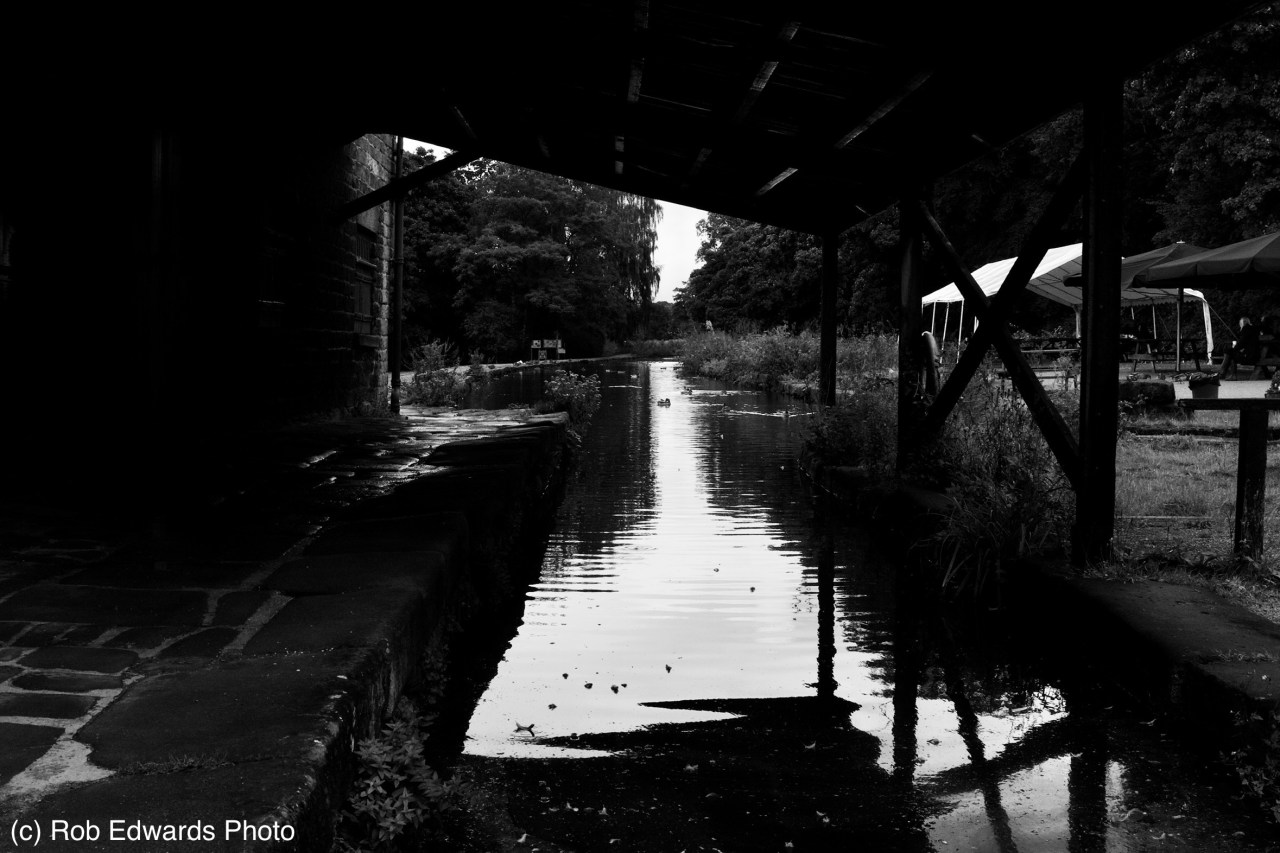
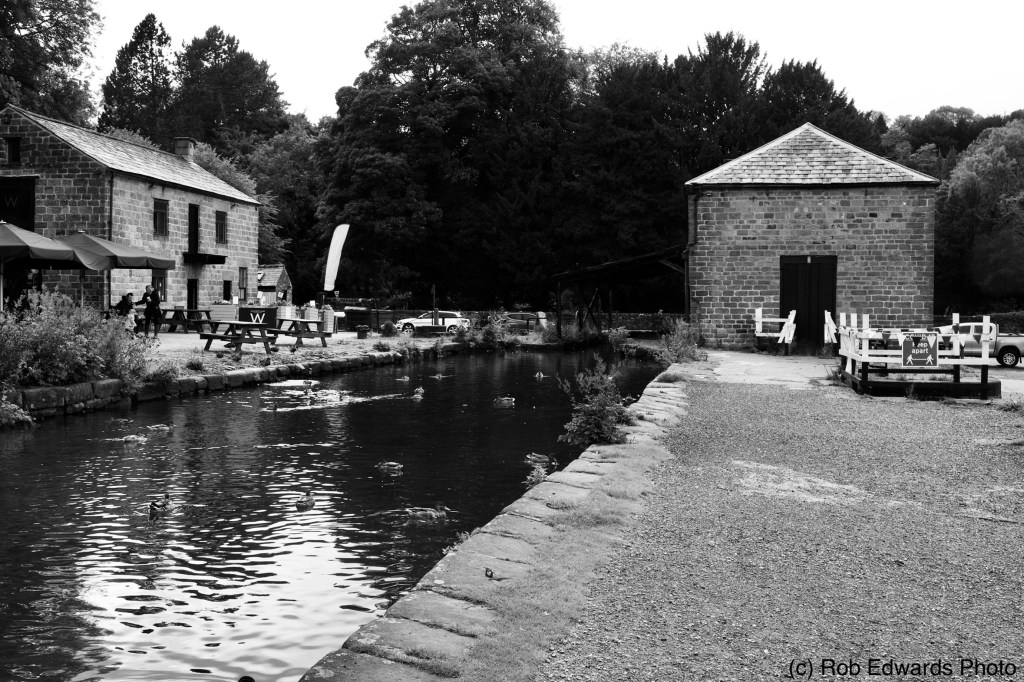
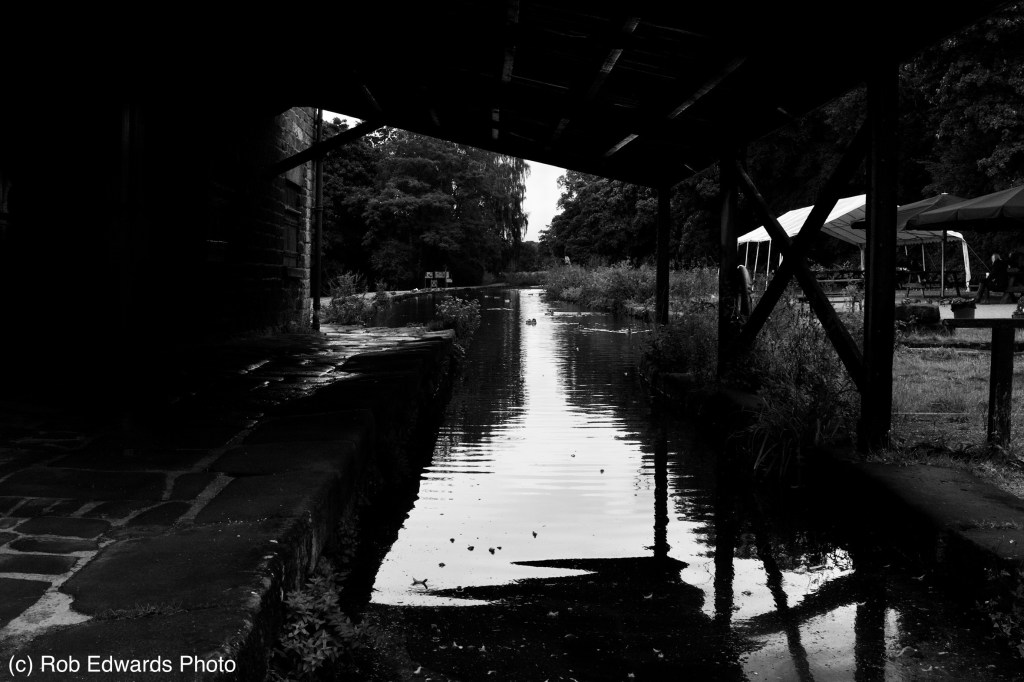
Cromford wharf still exists today, and (when COVID-19 restrictions allow), pleasure trips on canal boats are still run from here. But it is a place where the industry of the past can still be seen.
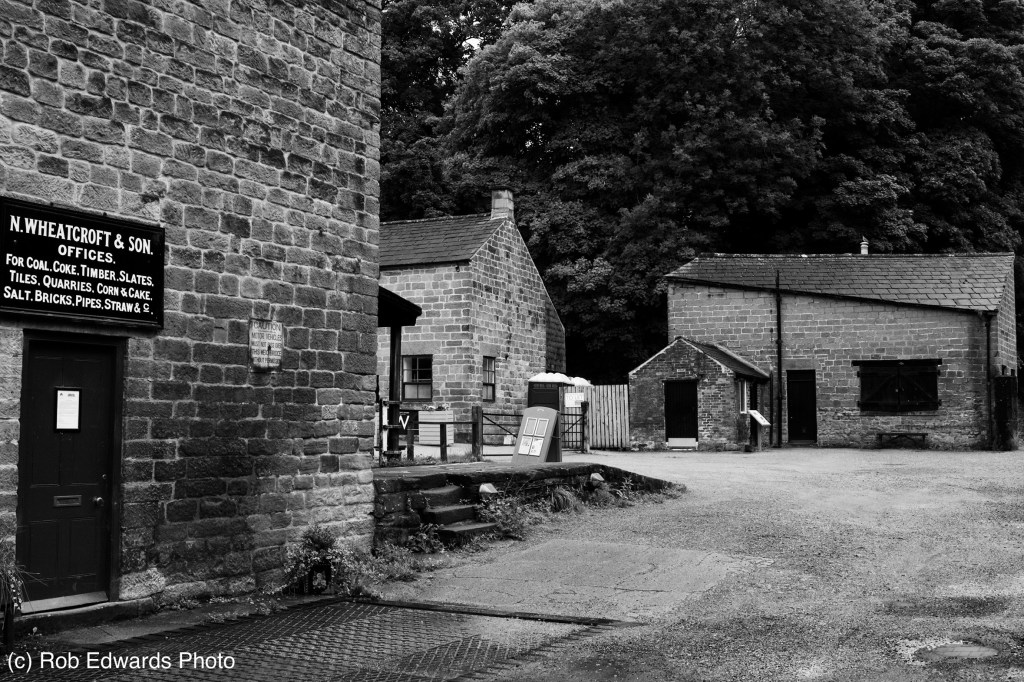
The canal wharf was a place for goods to be transferred from horse and cart to the waiting canal barges to transported, potentially, all round the country. Originally, the barges would have been horse drawn along the ‘towpath’, hence the name of the path alongside the canal itself.The remains of the loading shed at Cromford wharf. This side was the N Wheatcroft & Son wharf for all sorts of goods.The office at the wharf of N Wheatcroft & Son. The sign shows the variety of goods that were conveyed by this company from this wharf.
Middleton Top
Middleton top was the top of the former sheep pasture incline from the Cromford canal at High Peak Junction. Wagons would be hauled up the 1 in 9 incline by steal ropes, as the video below from the Huntley Archives shows – the incline in use in the 1930s by the then LMS railway company.
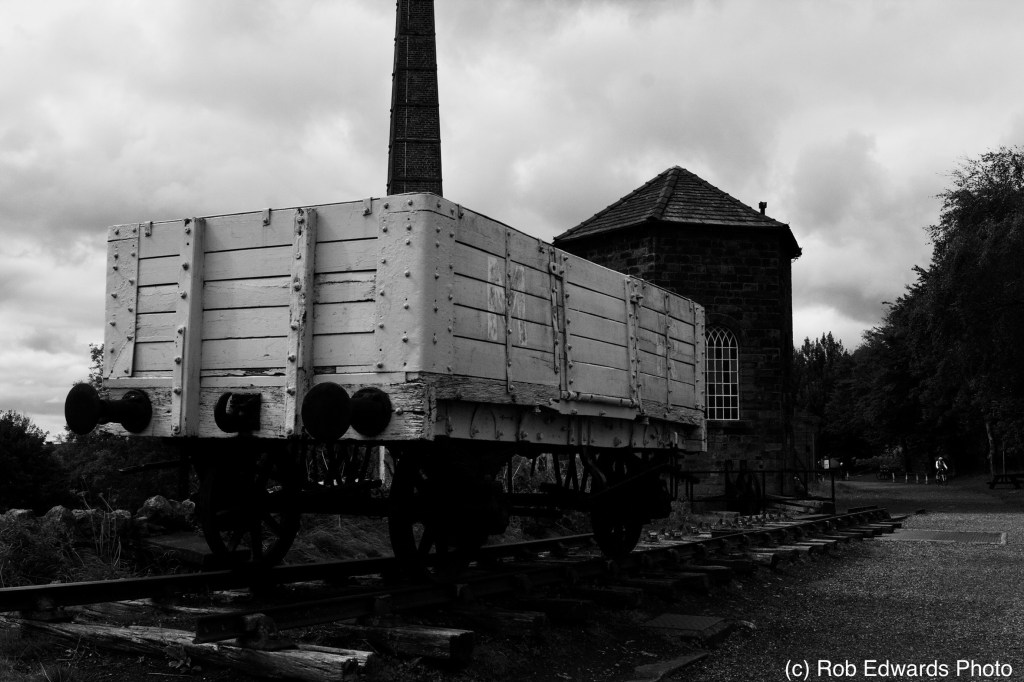
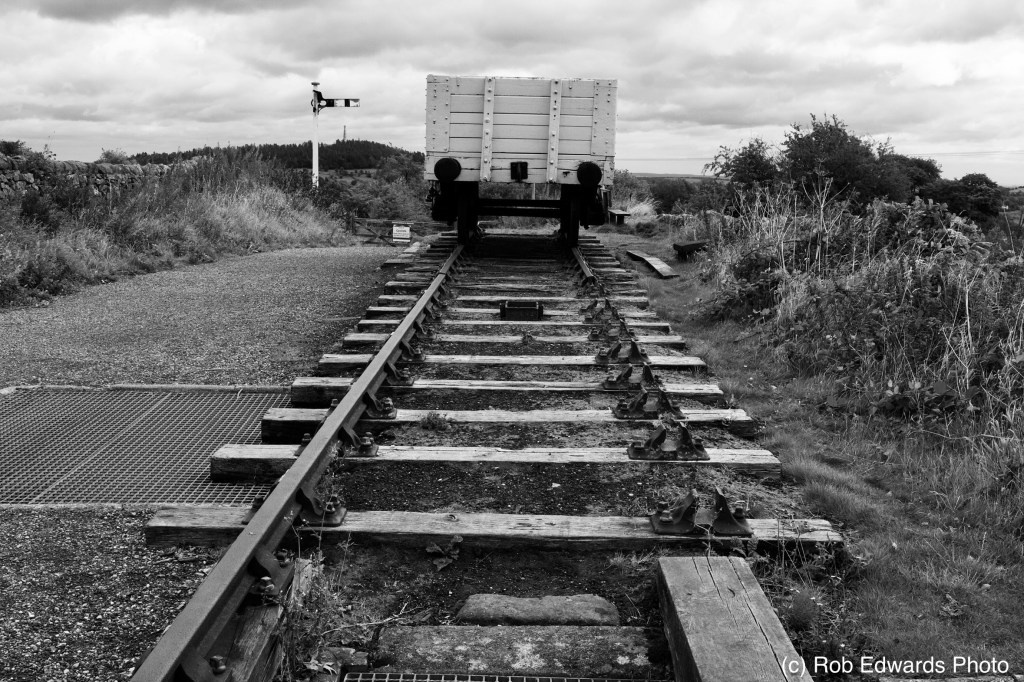
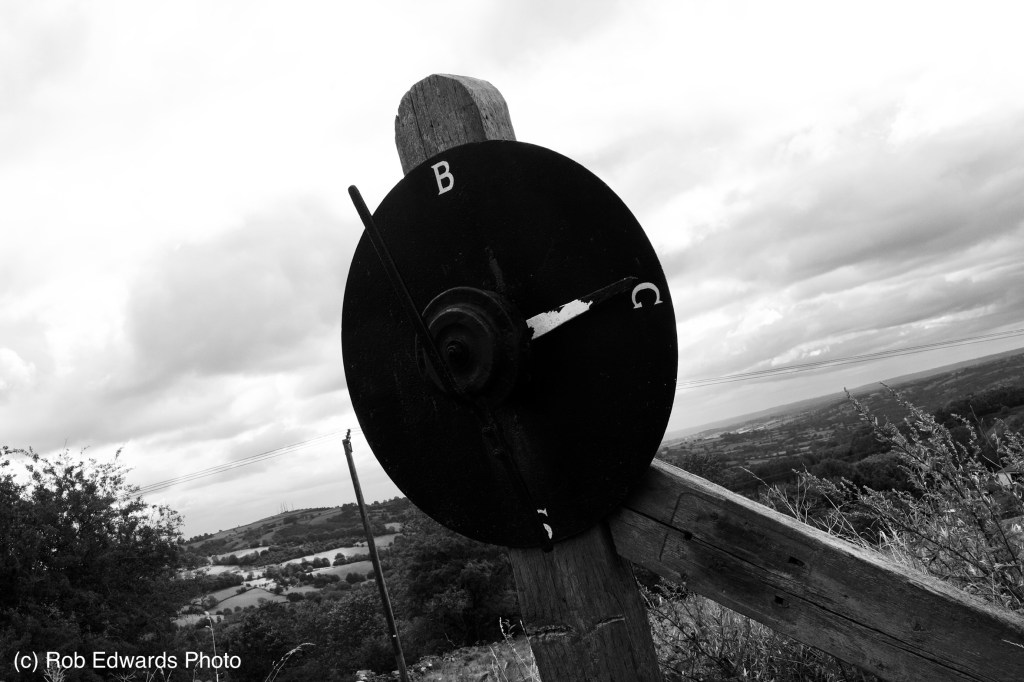
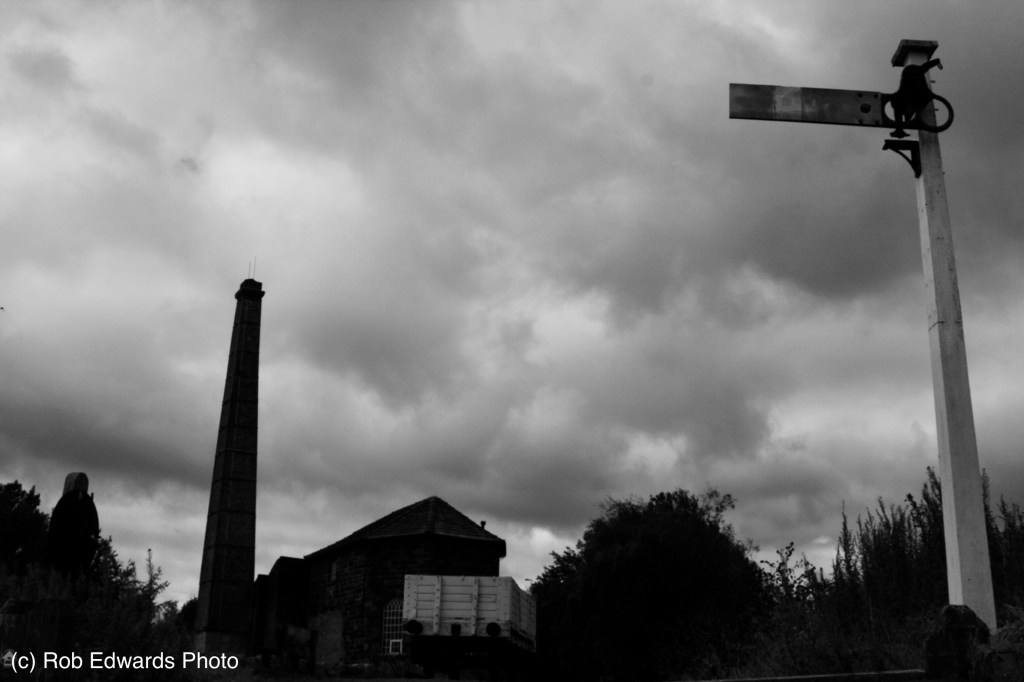
MIddleton Top is dominated by the the 1830 engine house, its imposing chimney, and an example of the wagons that used to work over the former railwayThe two Butterly Company 20 HP rotary beam engines in the engine house were driven by two Cornish boilers. The Cornish Boiler had a single flu tube to carry the heat through the length of the boiler. The Cornish boiler was first developed by Richard Trevithick in 1812. This pair here were probably built in the LNWR works in Crewe in the 1860s, following the original boilers being described as being in ‘poor shape’ in the 1850s. Because a number of the boiler fittings are missing, and the shed covering the front of the boilers was demolished, the engines are powered, today, by compressed air.Through the window – the beam engine can just be seen. Sadly, the day I was there, the engine was not in operation.At the top of the former incline, there is a section of track remaining (albeit with a rail missing), and the aforementioned wagon, showing something of what the incline used to beThe old telegraph indicator, used to signal to the engine house when to operate the winding engine, has been moved from the bottom to the top of the incline. The letters were ‘S’ for stop, ‘G’ for go, and I believe, ‘B’ for back or reverse. The incline operated on an endless wire rope, and therefore, to be in reverse was unusual.Although bereft of track, this picture gives an idea of the steepness of the incline, and why a traditional railway locomotive could never have worked up the incline.The final picture is taken at the top of the incline looking back towards the engine house ,and showing a signal, used to indicate if the line from the top of the incline on to the Cromford and High Peak Railway proper was clear.
That’s all for this time folks. Don’t forget to like comment and share.
All I can say is that it’s been a while since I last posted…so here we go with a promise to post more frequently
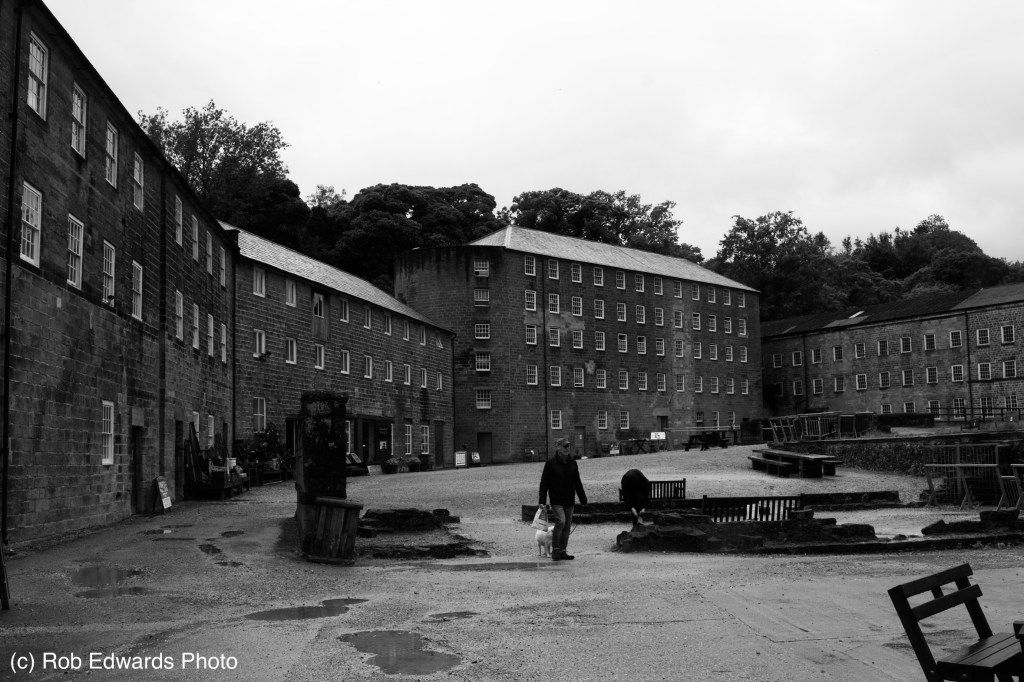
Cromford Mills, near Cromford in Derbyshire, is the site of Sir Richard Arkwright’s first successful water powered cotton spinning mill in 1771. Further developments were made to the site until 1790 when the buildings were seen here were all built.
This is what the industrial revolution was about – mechanising tasks to increase production, replacing the smaller, less efficient methods; and before the use of steam, Sir Richard Arkwright made use of water to drive his contribution to the industrial revolution.
The site is a UNESCO World Heritage site, and today contains various shops and cafes, but the old machinery for the driving of the mills is all preserved. These pictures are from a visit at the end of August 2020.
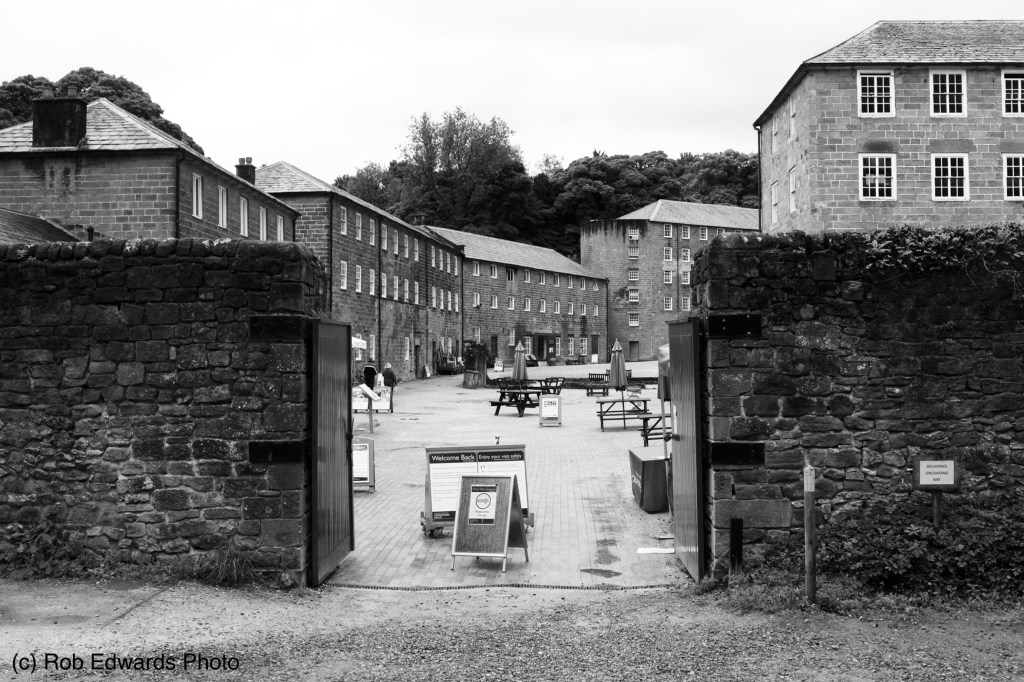
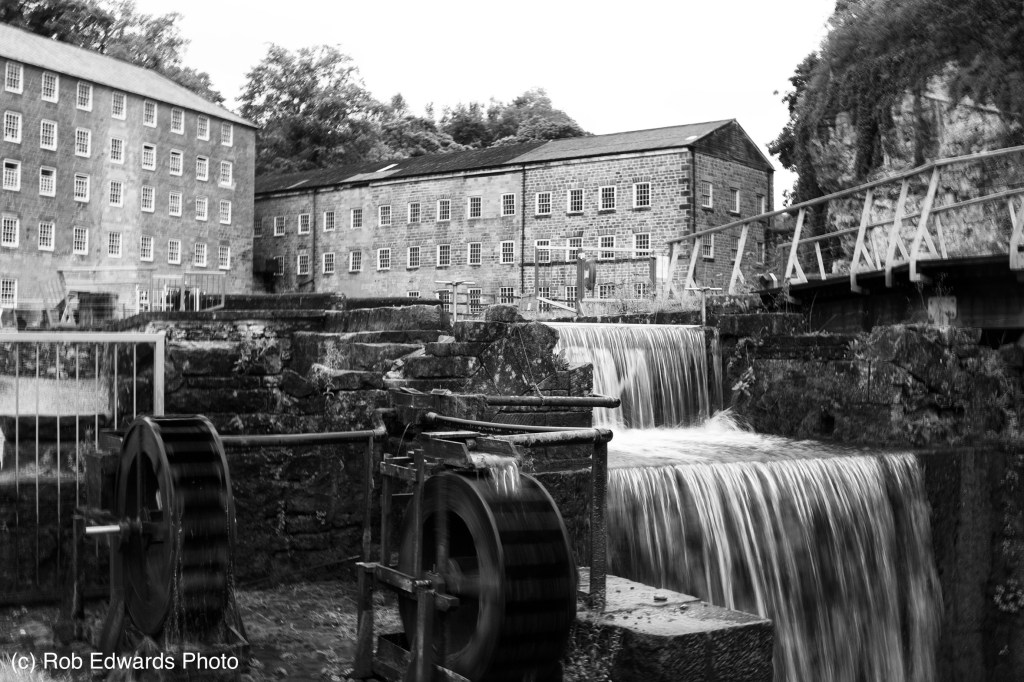
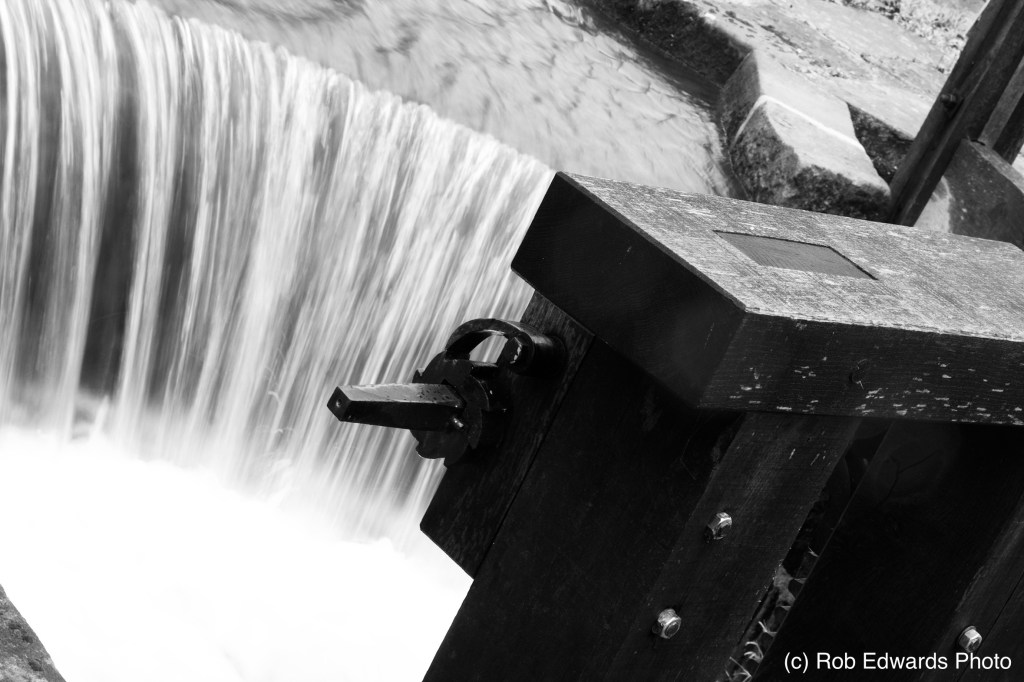
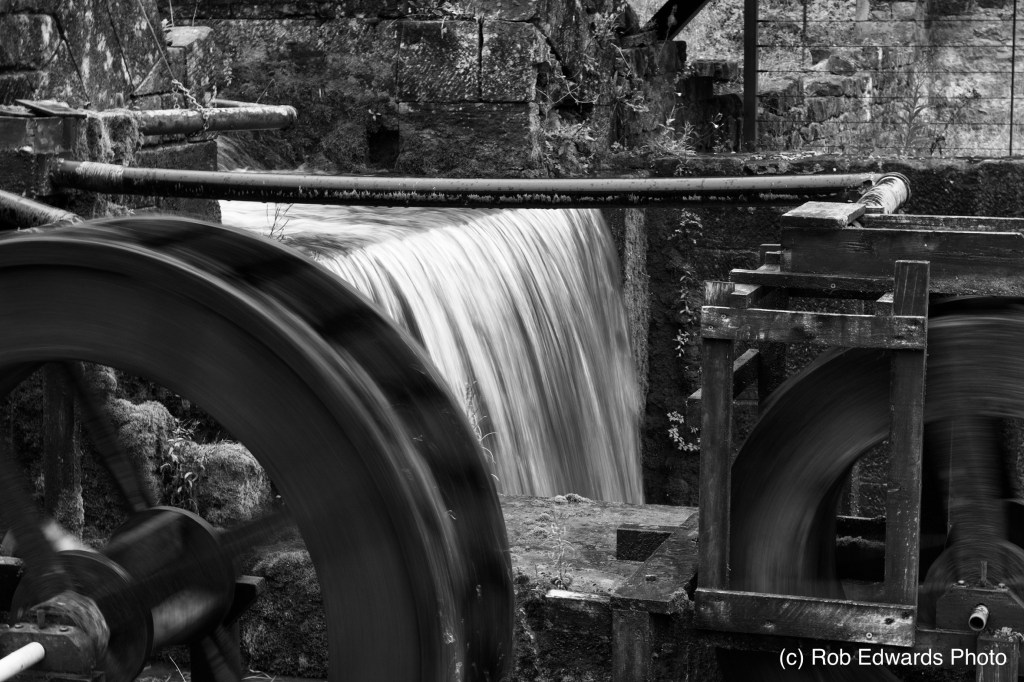
The entrance to the Comford Mills shows the buildings dating from the 18th CentruryAnother view of the various buildings on the site, that once contained spinning machines, clattering with may decibels, driving the early industrial revolution A few years before the discovery of steam power, water power was the only form of propulsion available for the spinning machinery.Water power was harnessed by the use of sluice gates to control the flow of the water. Water was a powerful driver and was used in the manufacture of all sorts from cotton to flour. We know the damage water can do with such power, and this power was harnessed to drive machinery. The ‘controlled’ water would then drive water wheels connected to the machinery The buildings now house various shops and cafes. What is nice is to see references to the past in some fo these shopsThere is also a museum that talks about this history of Cromford Mills, with exhibits like this……and this. Harking back to a time before large machines that replaced these methods of making cotton
That’s all folks this time – don’t forget to like, comment and share
One of the industries that doesn’t seem to get much attention is Cornwall’s China Clay industry, an industry that has put bread on the table of many families in central Cornwall for many years, either directly through the workers in the quarries, or for those railwaymen who have worked to transport the clay.
My interest in the China Clay came from many Easter holidays to west Cornwall, but spending time watching Class 37 diesels hauling long rakes of CDA hopper wagons around the county. So much so, that my N gauge model railway features a china clay works.
Anyway, the Wheal Martyn China Clay museum near St Austell, is the only museum in Cornwall showing the workings of China Clay, and is based in the old Wheal Martyn China Clay works. Here are some pictures from my last visit in October 2019.
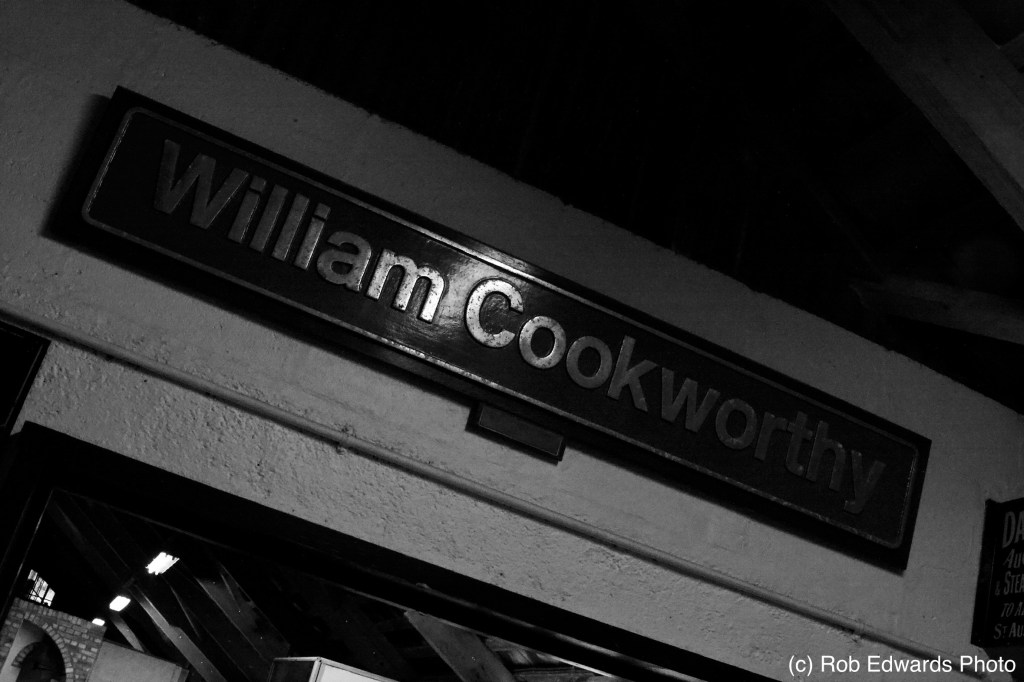
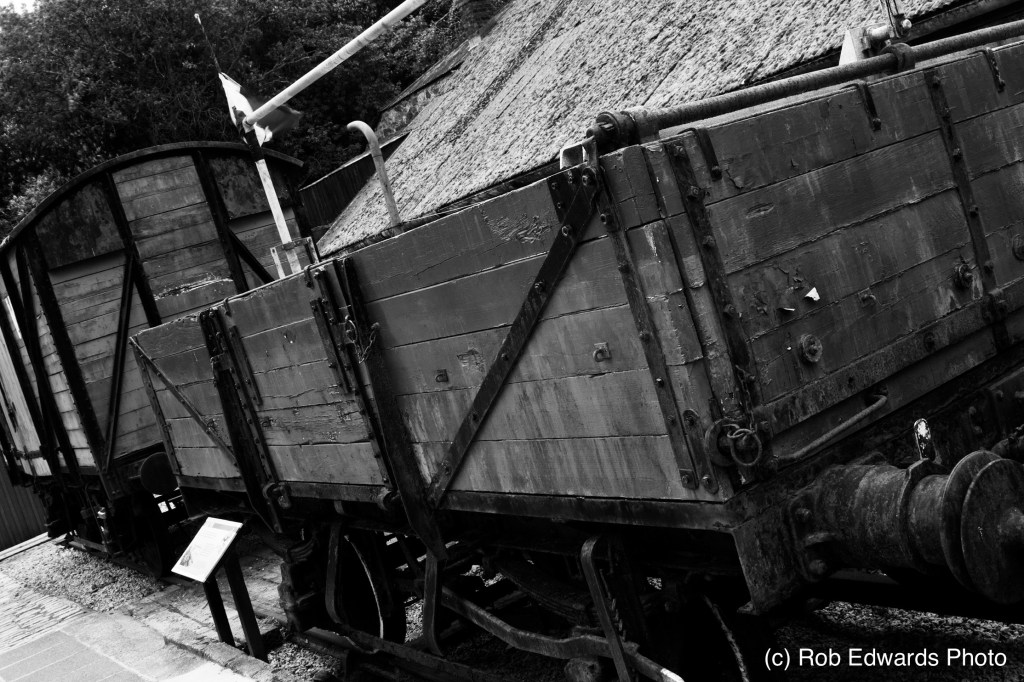
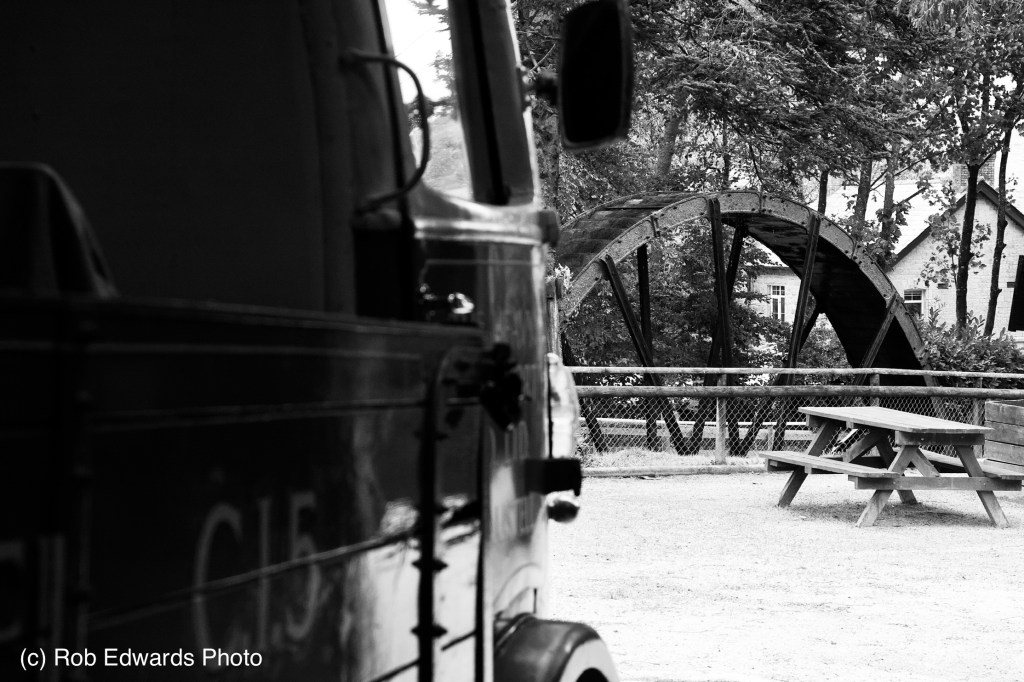
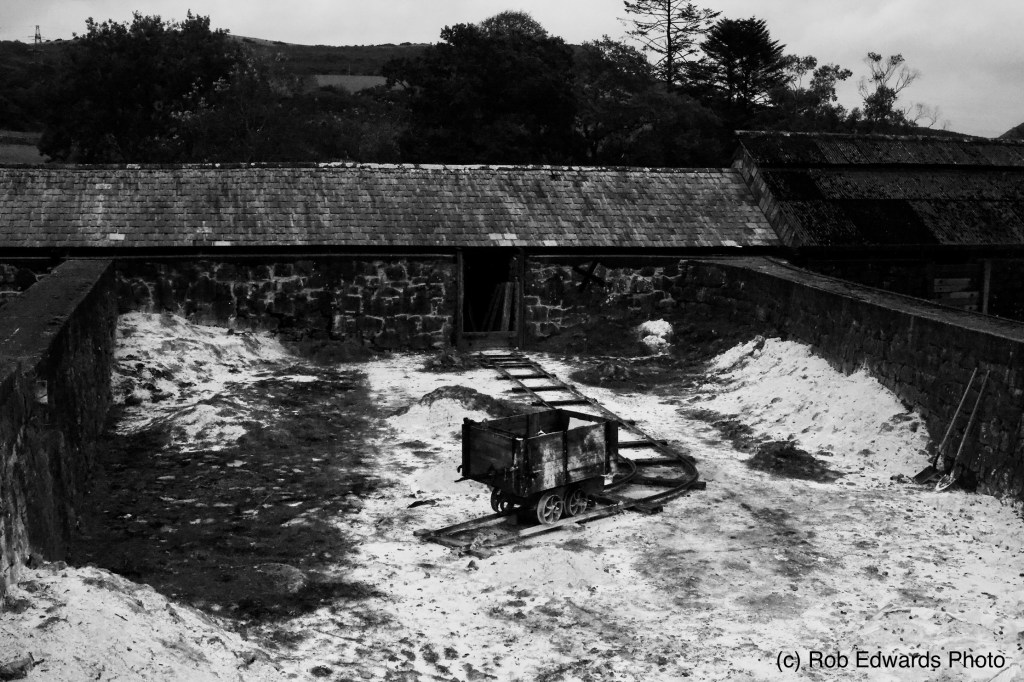
Why would a museum have a random locomotive nameplate on its wall? Well, William Cookworthy, a Pharmacist from Plymouth, was the man who discovered Kaolin (China Clay) in Cornwall in 1746, on Tregonning Hill, near Germoe in West Cornwall (between Helston and Penzance). Later he found richer deposits near St Austell, and patented the processing of Kaolin into Porcelain. The nameplate adorned two class 37 diesels; 37207 from 1980 to 1987, and 37675 from 1987 to c1994, both based at St Blazey Depot, the hub of rail operations for China Clay in Cornwall at different times.Although not at the museum, this is Tregonning Hill taken from the back of the Holiday Cottages that for the first 21 years of my life we spent every Easter, and at other times since (Many happy memories). This is the south side of the hill, and on the north side, you can see where William Cookworthy made some excavations to find the first Kaolin in Cornwall. Kaolin is decomposed granite, and is a soft white powered material. It was first found in China (hence the nickname China Clay), and used to make very fine porcelain. The discovery of the deposits in Cornwall would plug a gap in the market for those who wanted fine porcelain in the UK, who, up this point, largely had to make do with earthenware.ECC International is name, for me anyway, that is synonymous with China Clay in Cornwall. For many years, EEC, or English China Clays, ran the majority of China Clay operation in Cornwall from 1919, with the amalgamation of several of the biggest clay producers in Cornwall, until 1999, when the company was brought out by the French mining giant Imetal, and the name changed to Imerys Minerals. Goonvean Ltd was the only other producer fo clay in the County, and was too purchased by Imerys Minerals in 2013.At the museum, there are a couple of railway wagons, which people may just think, ‘well what are they there for?’ But these wagons are also synonymous with China Clay workings by rail; the vans took bagged clay from various locations, and the other wagon is a ‘Clay Hood’, or UCV wagon (UCV is the BR code for these wagons; ‘U’ stands for uncovered bulk wagon, ‘C’ is the type and ‘V’ stands for vacuum braked, and post 1983 classified as OOV wagons, Open, Type O, Vacuum braked wagons). Until 1988, Clay Hoods Would been seen in Cornwall and Devon transporting the clay from clay works to the ports of Fowey and Par, and in earlier days, on long distance workings to places such as my hometown of Stoke-on-Trent. The bar across the top would hold the hood above the clay, and were added in the late 1970s. These wagons were the last open bodied, wooden wagons to be used in large quantities by British RailOne of the interesting features of the museum, other than the old 1954 built ERF lorry in the foreground, is the working water wheel. Kaolin is extracted by a mixture of blasting (to loosen the rock) and water blasting to separate the Kaolin from the remaining granite, the slurry is then pumped into the settling tanks (see below). The water wheel was used to pump the very wet clay slurry from the pit down to the dries.I’ve said already that the museum at Wheal Martyn is built around the old Wheal Martyn clay works. To the right of the visitor centre, you can see the remains of one of the old pan kilns. Until 1948, this was the only way of drying the clay slurry to get the Kaolin ready for transport. A pan kiln literally just heats the clay slurry, evaporating the water, and leaving the Kaolin behind. The method was very labour intensive and not the most efficient. However, pan kilns survived until the early 2000s, the most notable being Wenford Dries in North Cornwall near Bodmin. In 1948 the new Buell driers started to be constructed, where the clay is ‘mechanically’ dried, the development having been started in the 1930s.The rear of the pan kiln had the settling tanks, where the slurry was pumped and most of the water drained off before the wet clay was shovelled into the pan kiln itself. Behind is another sight synonymous with mid-Cornwall: conical waste tips, which are formed mainly of quartz, one of the by-products of extracting Kaolin. The tips were white when they were first formed, and were nicknamed the Cornish Alps.A better view of a settling tank. Wagons would be used to get the wet clay into the Pan Kiln for drying.Inside the Pan Kiln, the wet clay would be dried out with the heat from coal fires lit in the boiler house. At the time of photographing, the Pan Kiln and the Linhay below at Wheal Martyn were under restoration. Once the clay had dried out, it would be shovelled down to the Linhay to be loaded on to trains or carts / road vehicles; in the case of Wheal Martyn, the clay would be transported originally by horse and cart to the docks at nearby Charlestown.Like so many similar industries, many tools, fastenings and similar objects had to be made on site, and like so many similar industries, many China Clay works would have originally had a black smithy on site. Here is the one recreated as Wheal Martyn.Behind the museum grounds, and up a not too steep path, China Clay is still worked in the pit behind. A number of times a week, this viewing point has to be closed off while they quarry blasts new sections into the rock to allow access to the Kaolin. Although not dried at the Wheal Martyn woks, the clay slurry from here is dried at other nearby clay works in more modern Buell driers.
One of my all time favourite museums is the National Slate Museum in Llanberis. The museum has been built in the old quarry workshops of the Dinorwic Quarry, once one of the largest slate quarries in the world, where all manner of parts and equipment for use in the quarry could be made, engines were serviced, and the men would gather for meal breaks.
The museum shows Not only how the workshops worked, but the social conditions of slate quarrymen, where they lived, how things like splitting and dressing slates were undertaken.
This post is about the skills still retained to split and dress slates in the traditional manner.
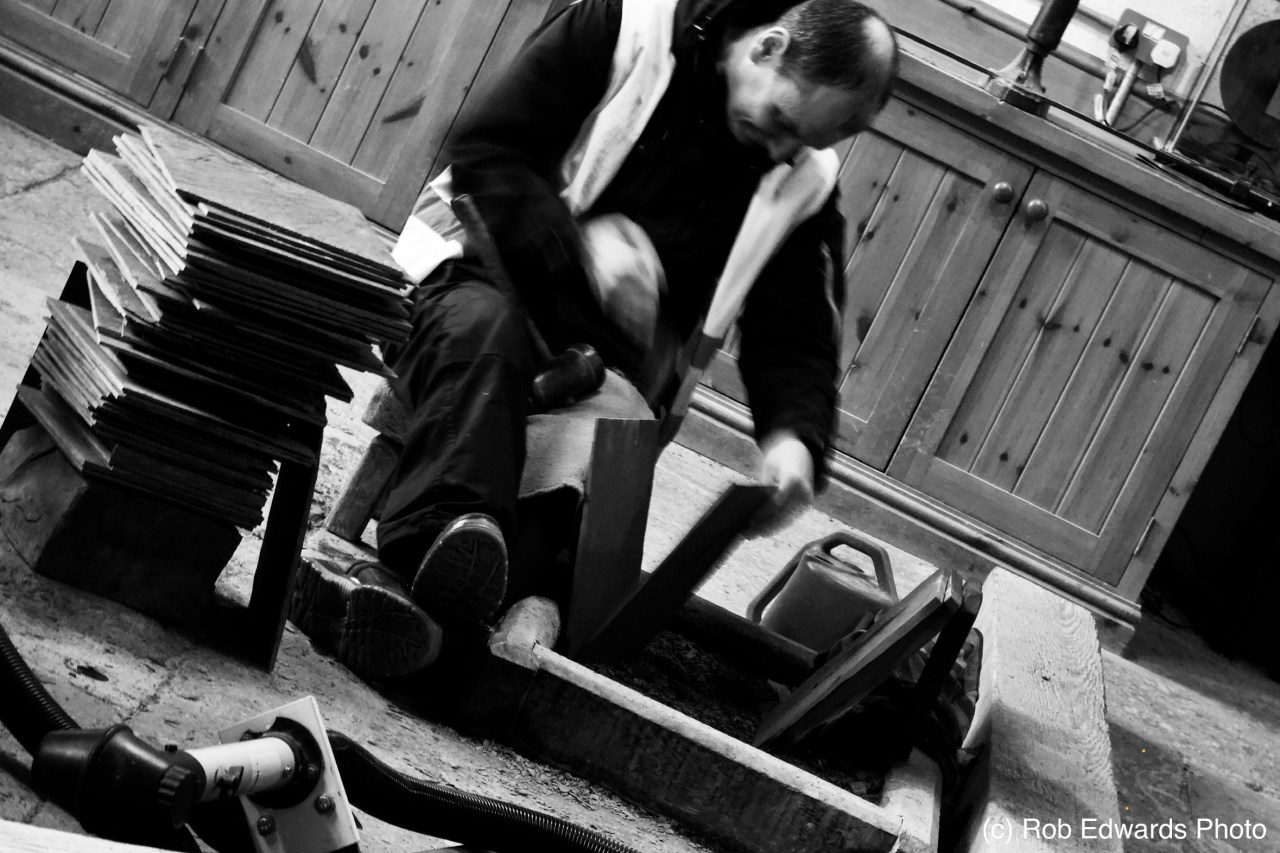
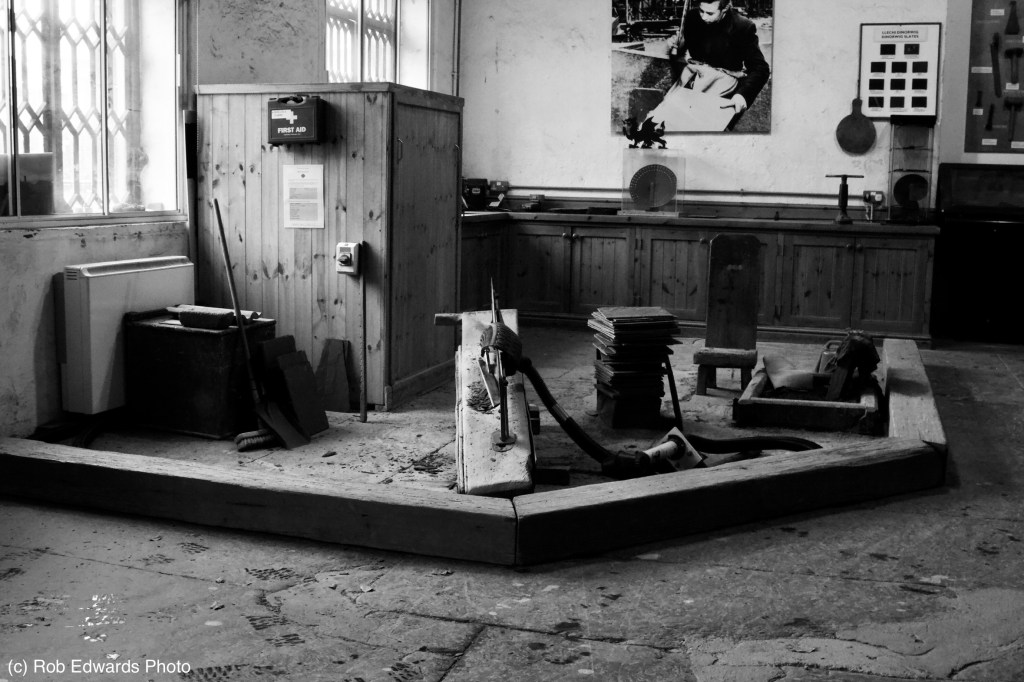
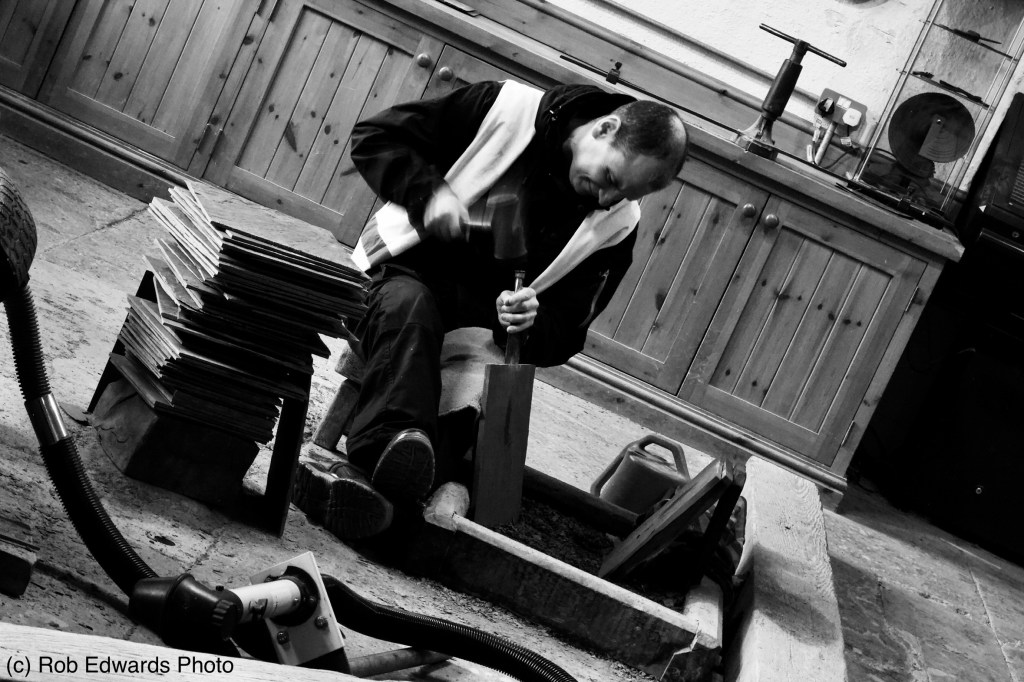
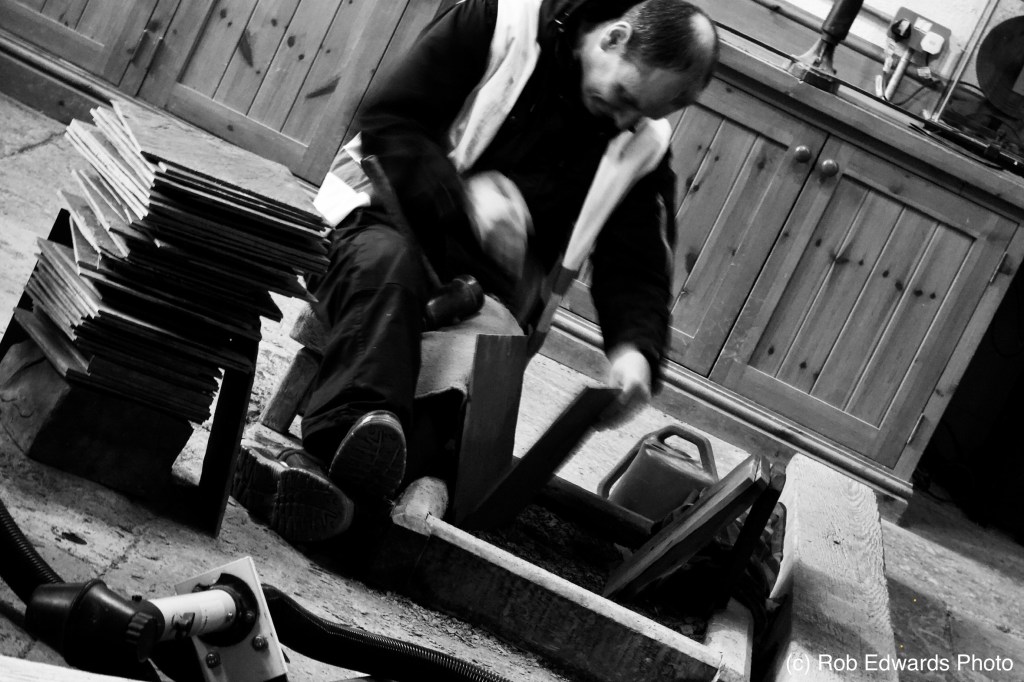
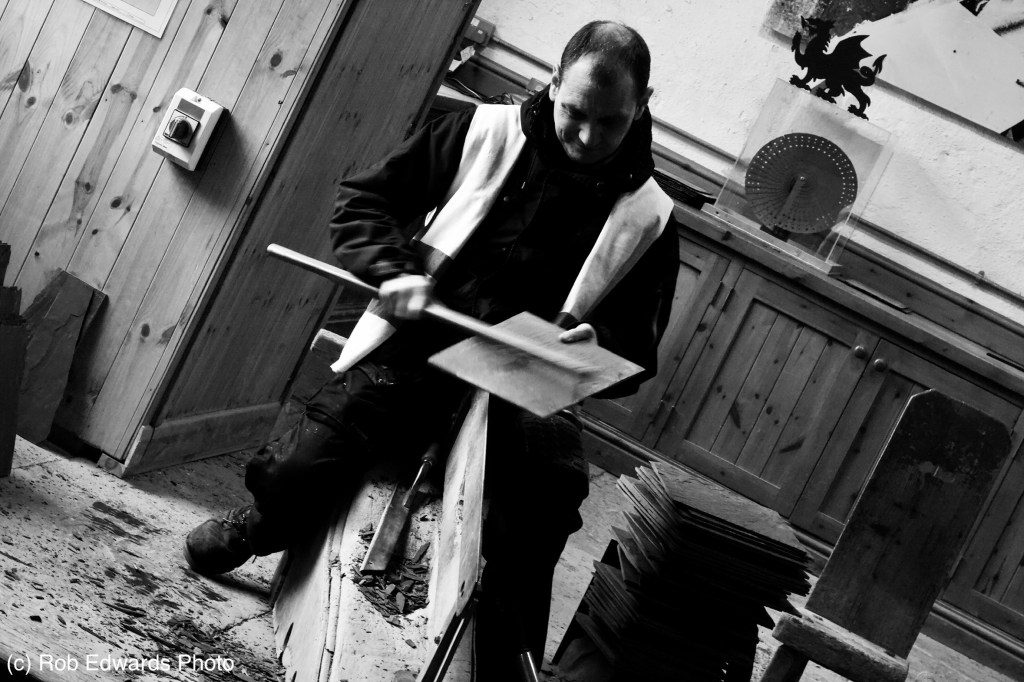
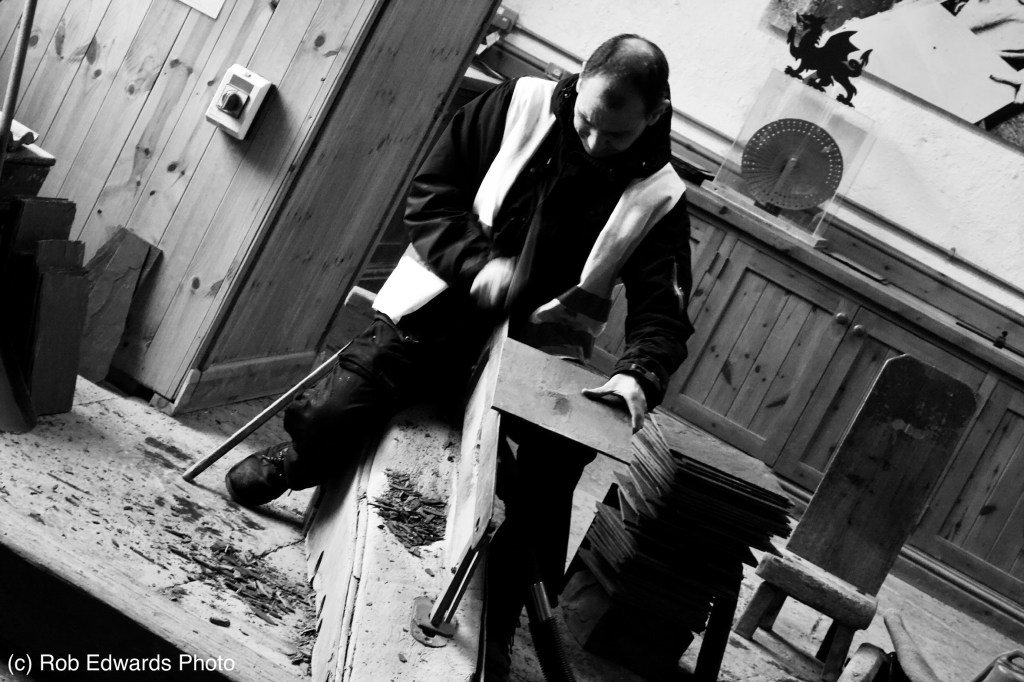
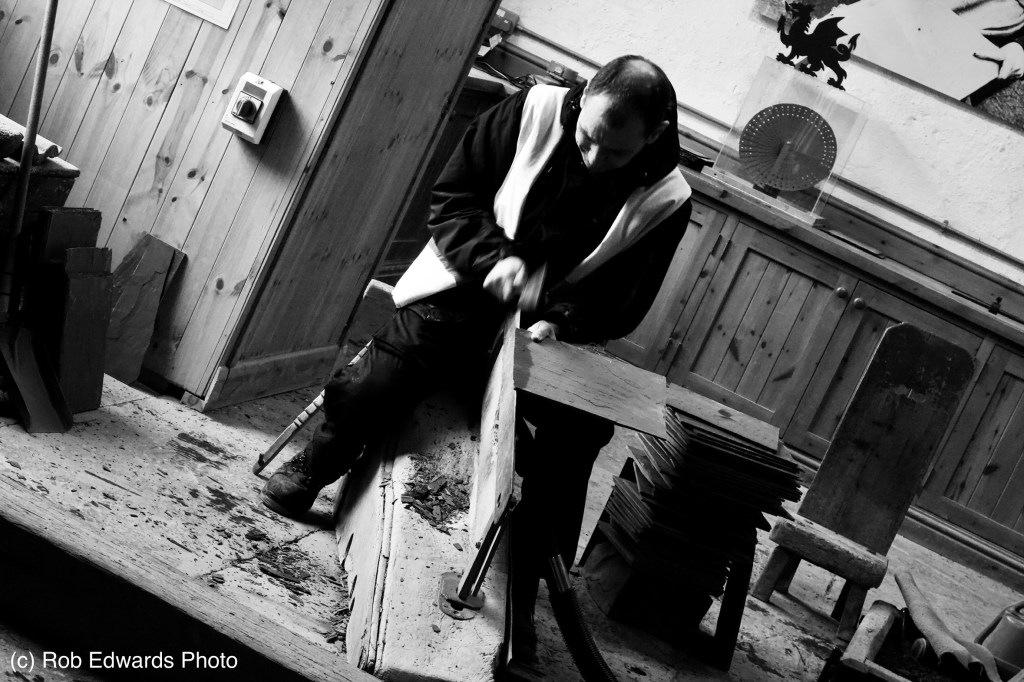
One of the joys of the National Slate Museum is the seeing to show skills that in some cases are long lost or now done by machine. The museum has people who have learned the skills of splitting and dressing slates, which for many years was undertaken in sheds in the quarry. Although the vacuum is a modern addition due to health and safety law, and the danger slate dust can be, the same tools are still used as would have been 50+ years ago.The first job was to split the blocks of slate into what would become the individual slates. Slate is formed in such a way that it has a natural grain that can be easily split. Slate is a also a ‘soft’ rock that means two long chisels can be driven into the top to then force the slate apart without it cracking.The nest stage is mark up the slates to be cut to the correct size. Roofing slates come in a number of standard sizes and these can be ‘chalked up’ on the slates.The slates are placed on a blunt metal edge, and similarly blunt knife is used to remove the excess slate A slate dresser could dress hundreds even thousands of slates in a single shift.
That’s it for this post – don’t forget to share, like and comment!!
One of my all time favourite museums is the National Slate Museum in Llanberis. The museum has been built in the old quarry workshops of the Dinorwic Quarry, once one of the largest slate quarries in the world, where all manner of parts and equipment for use in the quarry could be made, engines were serviced, and the men would gather for meal breaks.
The museum shows Not only how the workshops worked, but the social conditions of slate quarrymen, where they lived, how things like splitting and dressing slates were undertaken.
This post looks at the lives of the men working the slate
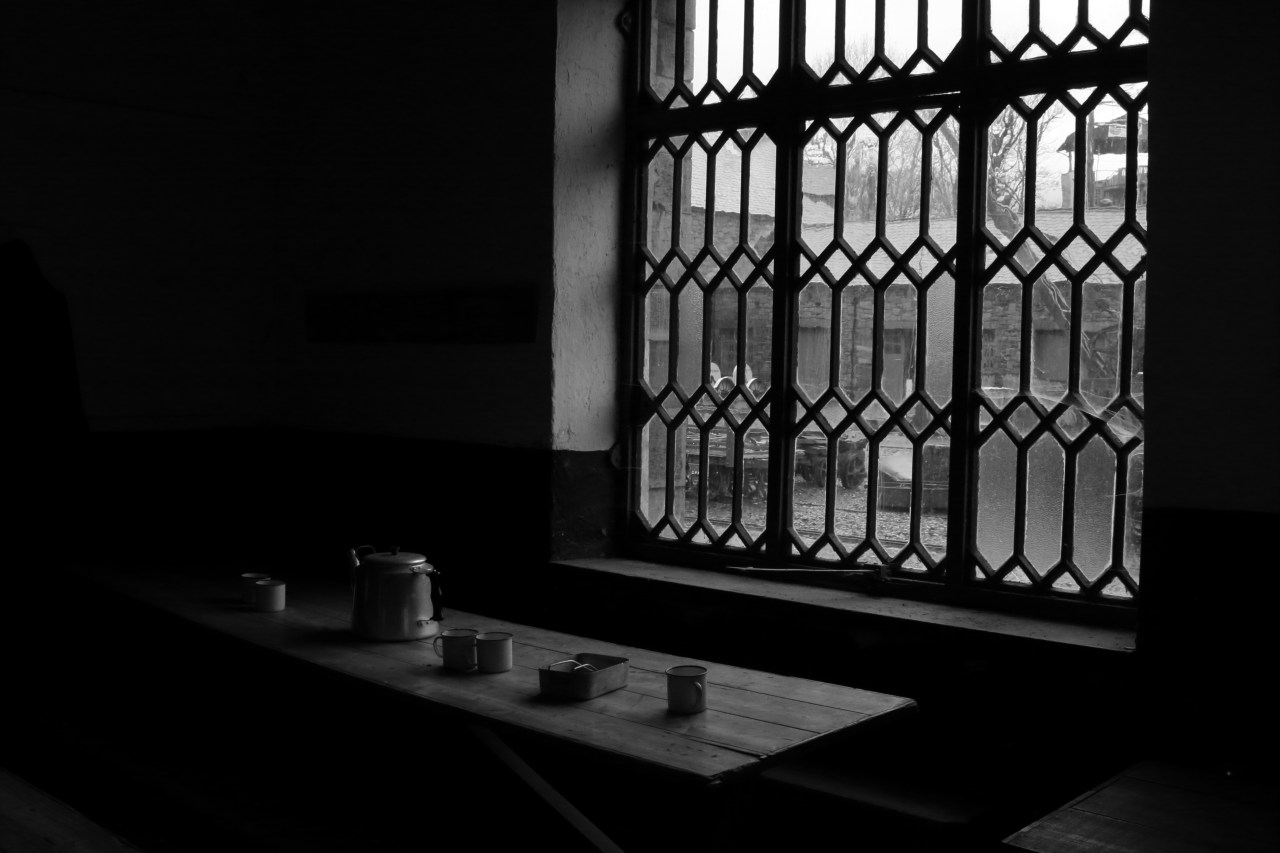
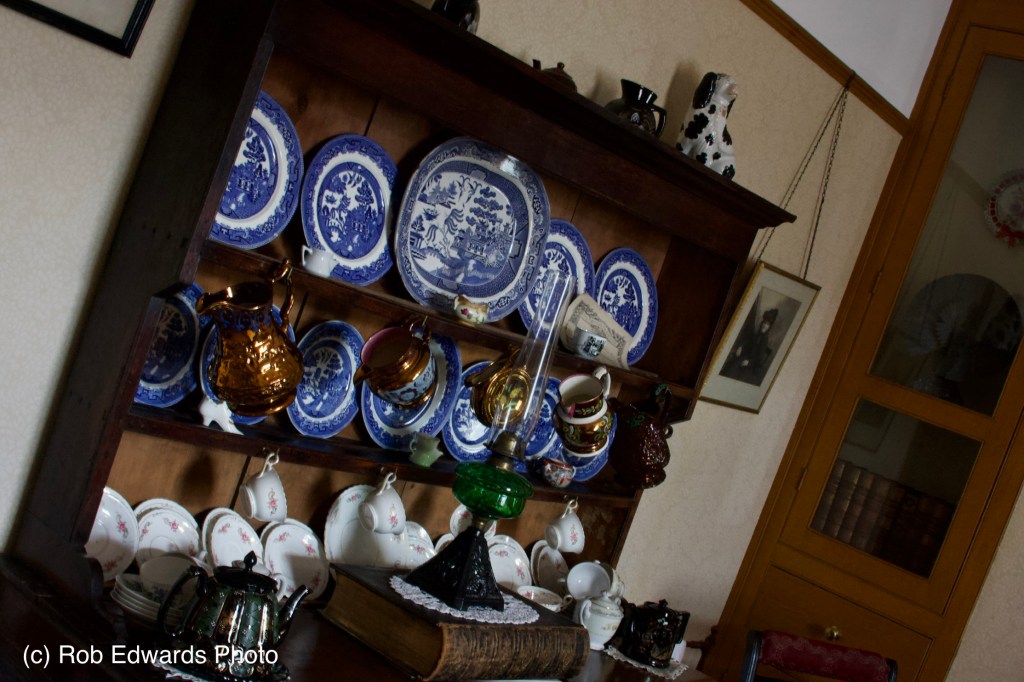
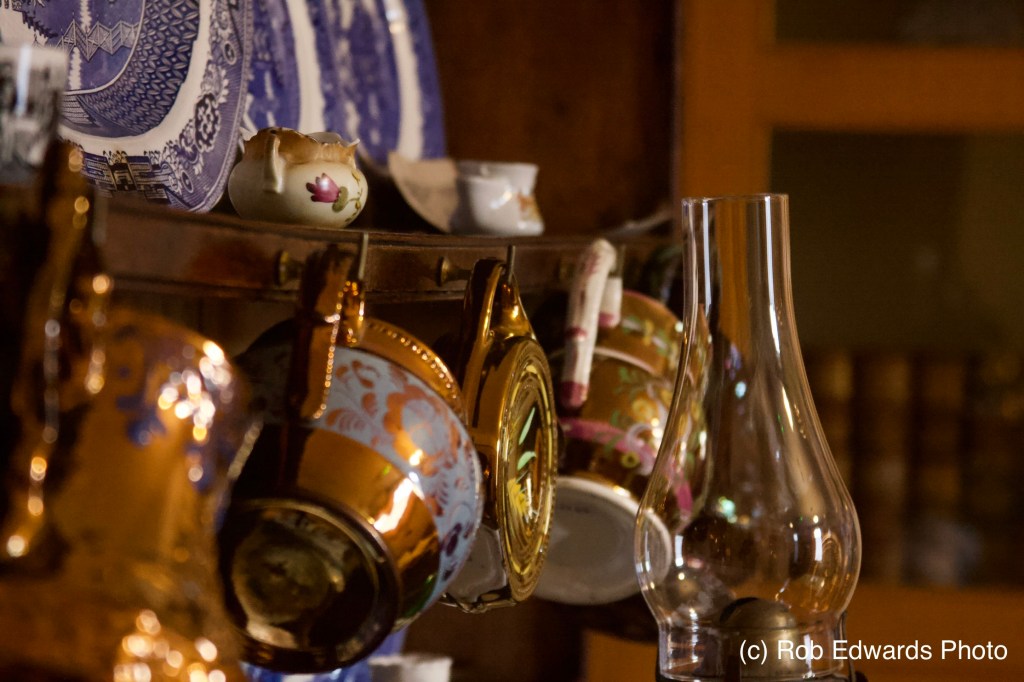
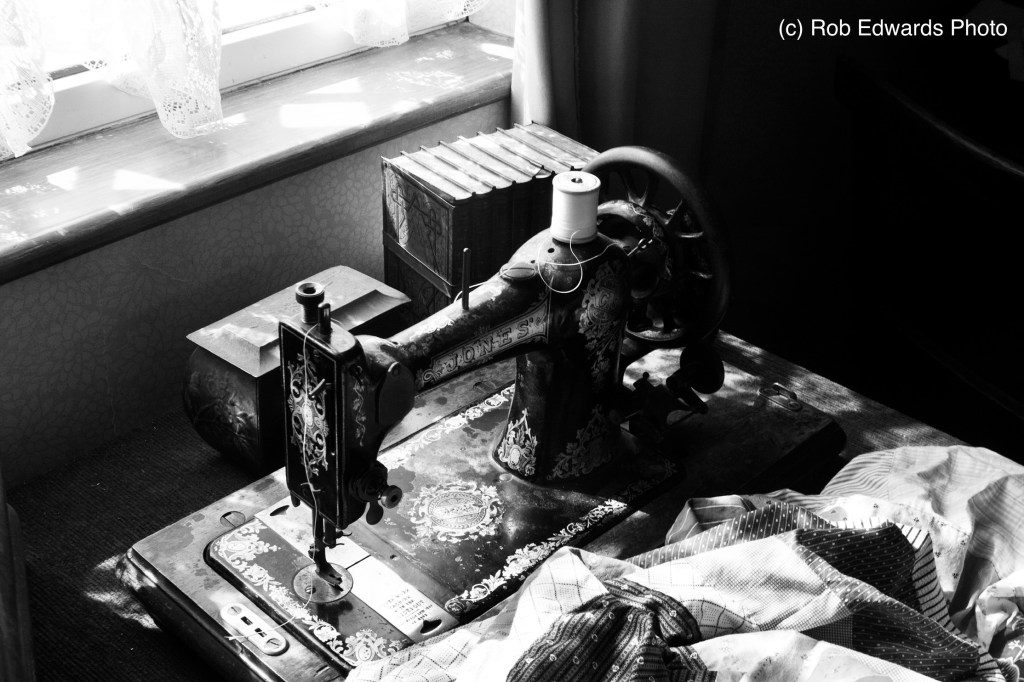
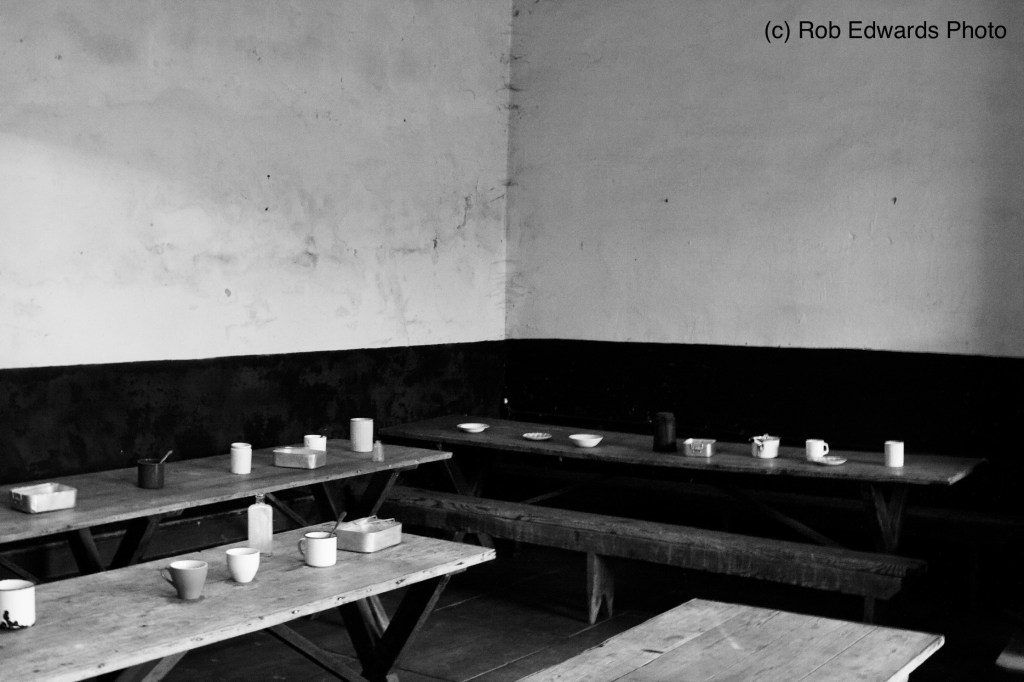
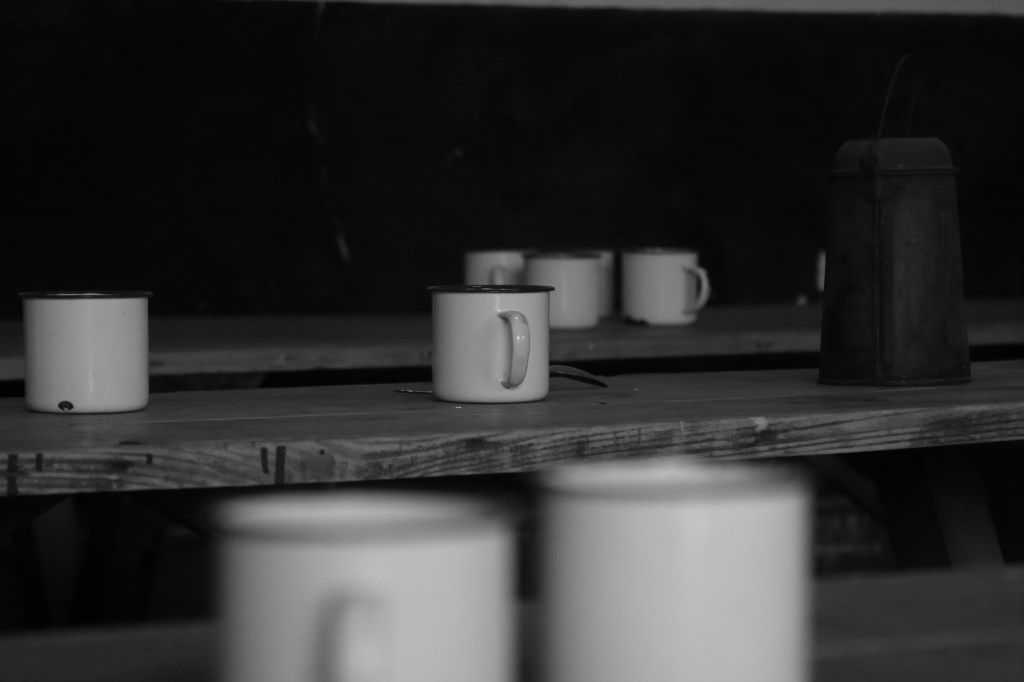
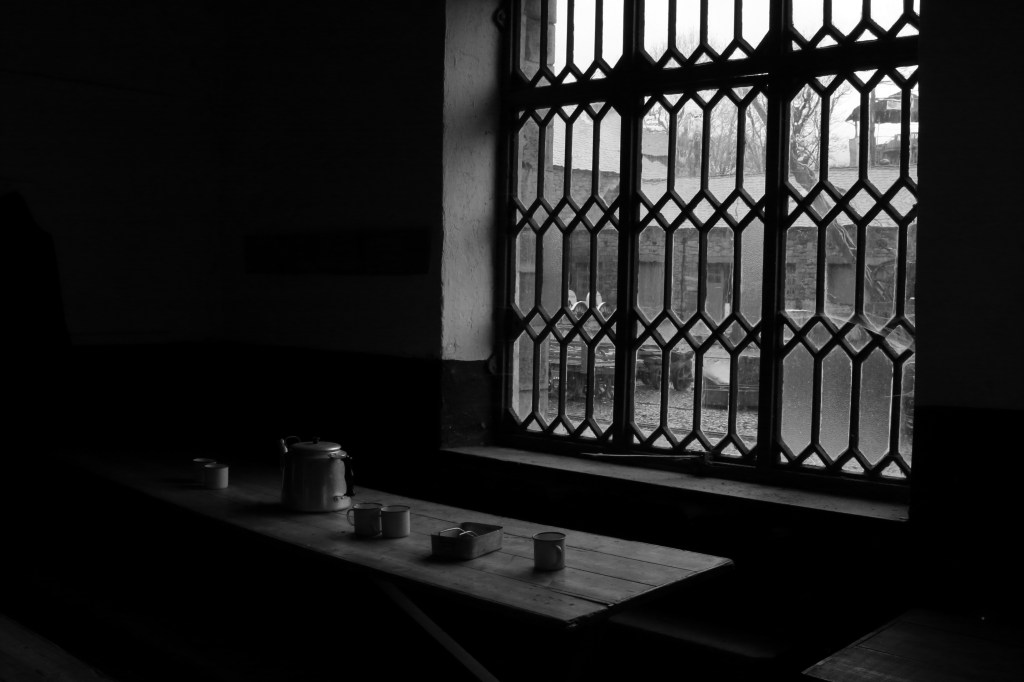
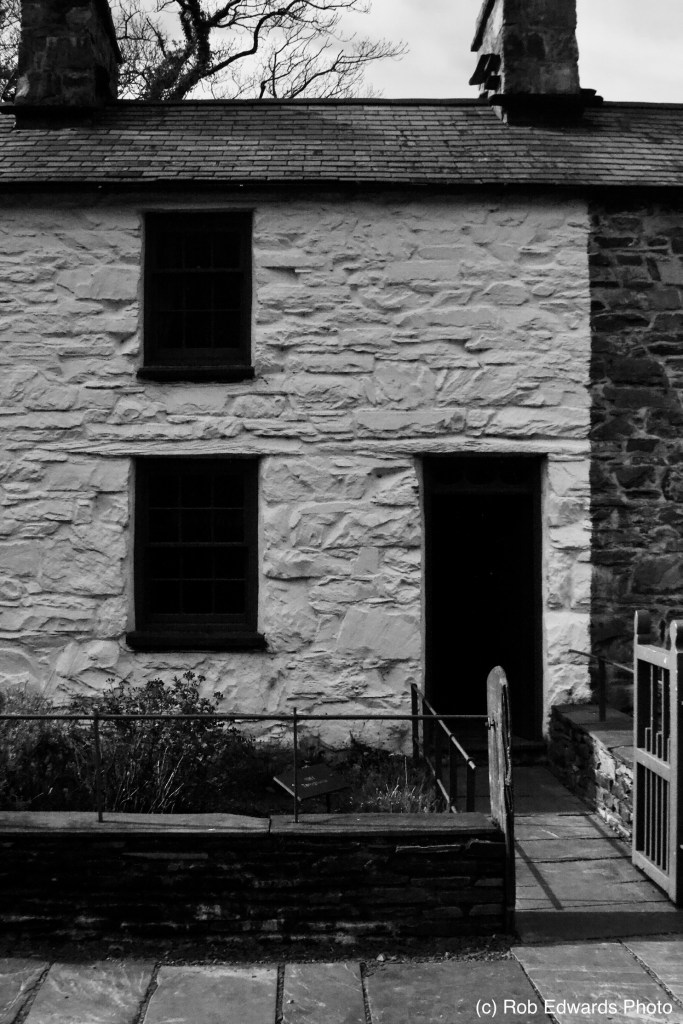
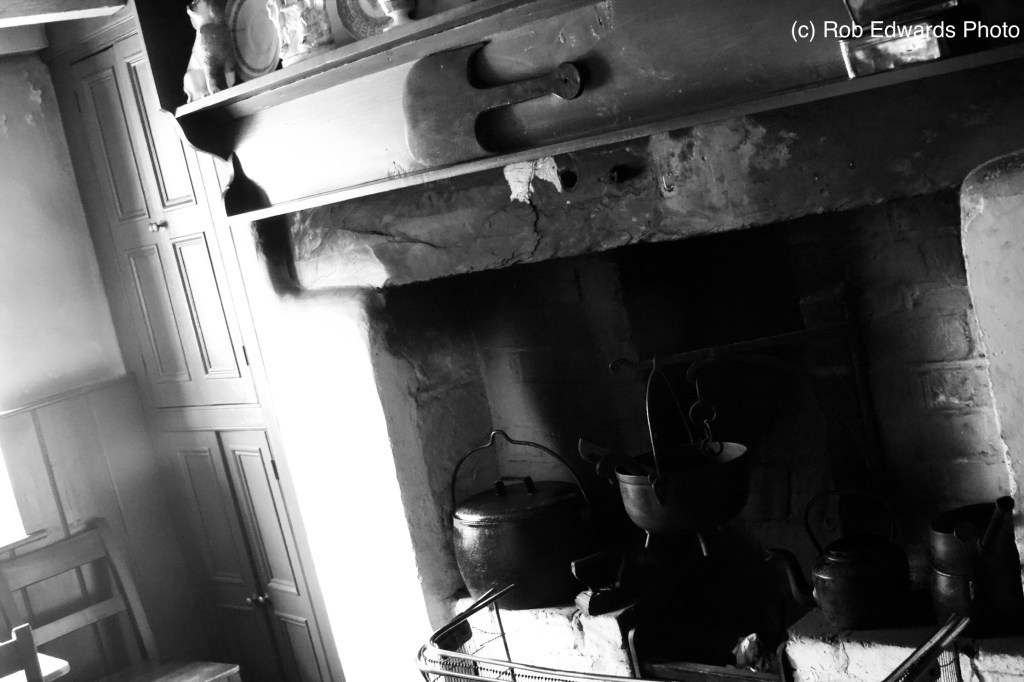
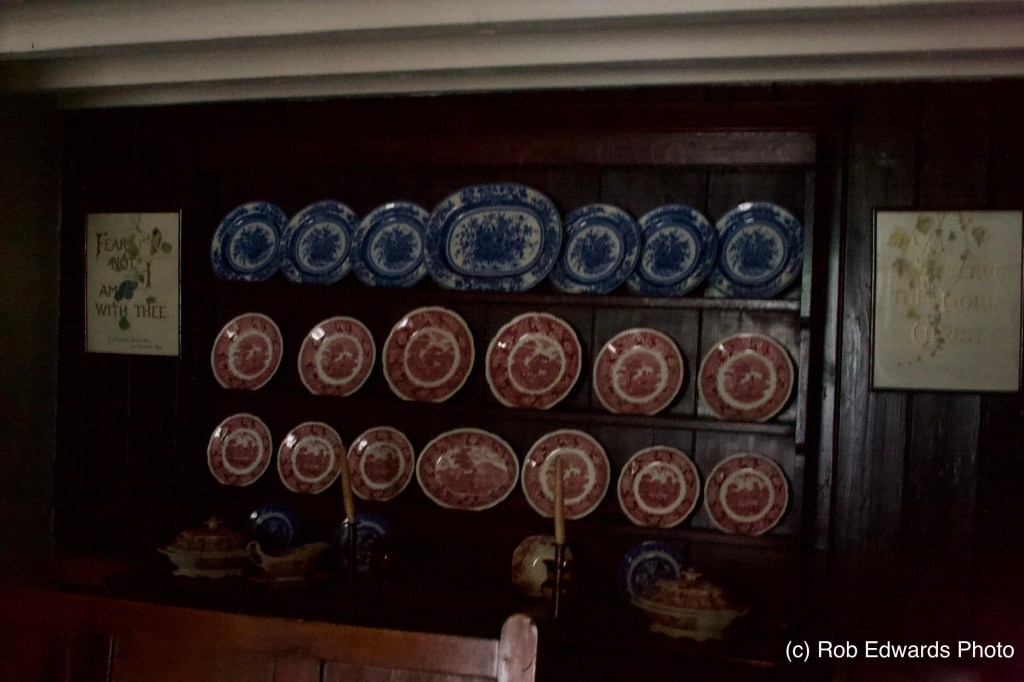
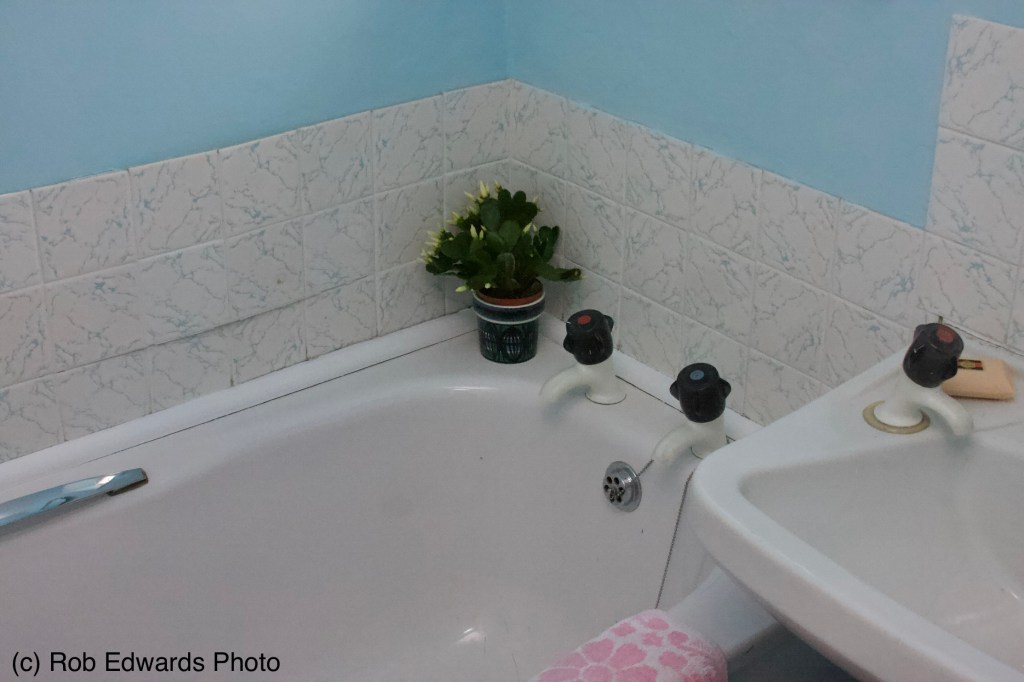
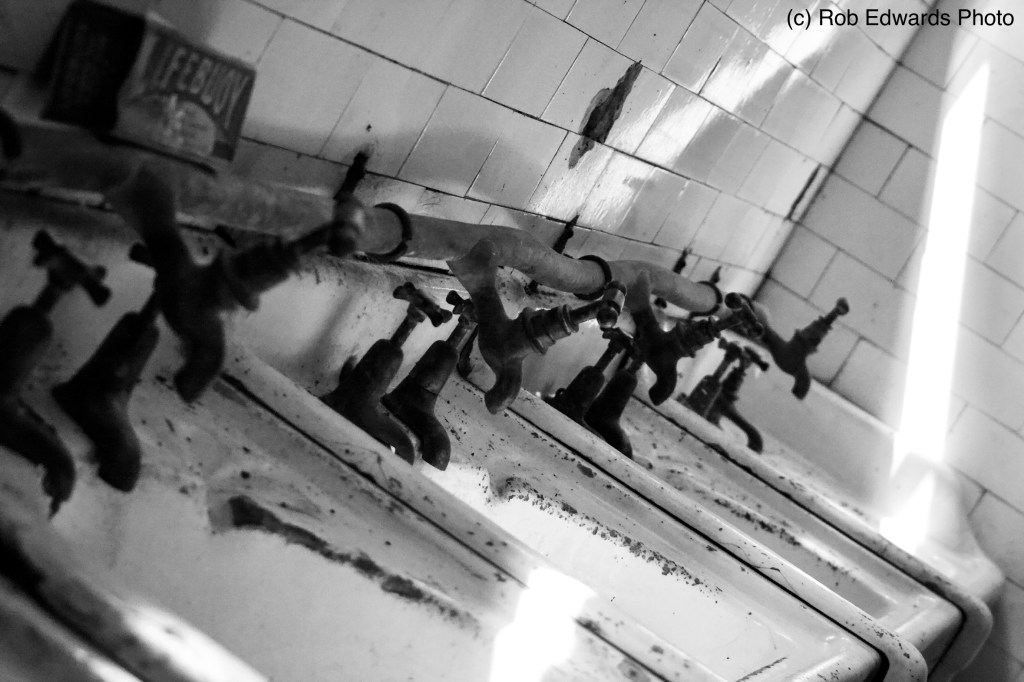
The museum has depicted a quarry manager’s house – a grand affair with a full Welsh dresser on showThe china on show and the other crockery shows they were not a poor family living here.An old singer sewing machine on show‘Y Caban’ was the mess room where the workers would meet and eat. It was an important centre for the quarrymen, and particularly in times such as the ‘lockout’ of the early 1900s, a place where the quarrymen met.Simple wooden tables, benches, enamel mugs and crockery – a far cry from the quarry manager’s house.Another view form inside ‘Y Caban’. You can imagine the men sitting in here, eating their food, drinking tea, and talking about anything and everything.The museum not only shows the working life of men, but also the home life of the quarrymen in 1-4 Fron Haul. These 4 cottages were moved from Tanygrisiau, near Blaenau Ffestiniog, stone by stone and erected on the museum site. 3 of the four cottages show typical quarryman’s houses in 3 different periods, in 3 different locations in North Wales.The cottages were fairly simple a simple 1 up one down cottages. This is 2 From Haul. In one house in the 1871 census for the Ffestiniog parish, 7 people were noted as living in One of these houses.2 From Haul depicts a typical quarryman’s cottage in the 1860s. In one house in the 1871 census for the Ffestiniog parish, 7 people were noted as living in a 1 up 1 down cottage!Even in a ‘poorer home’ in the 1860s, a full welsh dresser was already on display3 Fron Haul depicts a cottage from the 1900s, when the slate industry was nearly at its peak.Every detail of the houses has been attended to including the working ranges.Reminder of the primitive washing facilities contained in these cottagesThe scullery – everything down by hand laundry wise.4 Fron Haul shows a cottage in the Llanberis area in 1969. My mother remarked that she recognised so many of the features and fittings from her own house in Stoke growing up!By 1969, the cottages has been plumbed in, had baths, sinks and toilets indoors!
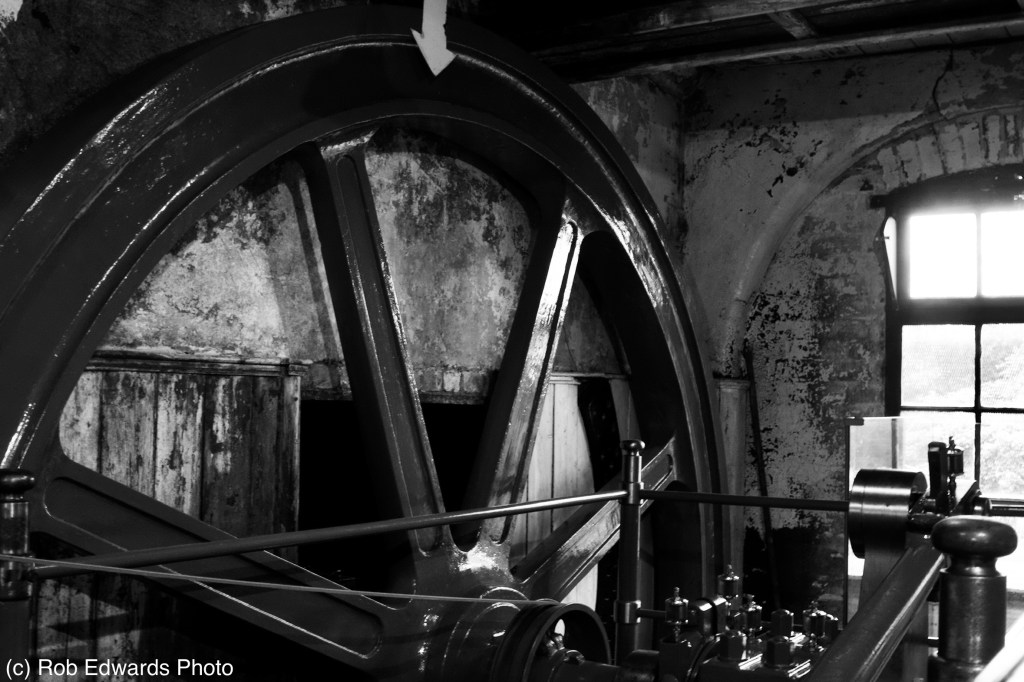
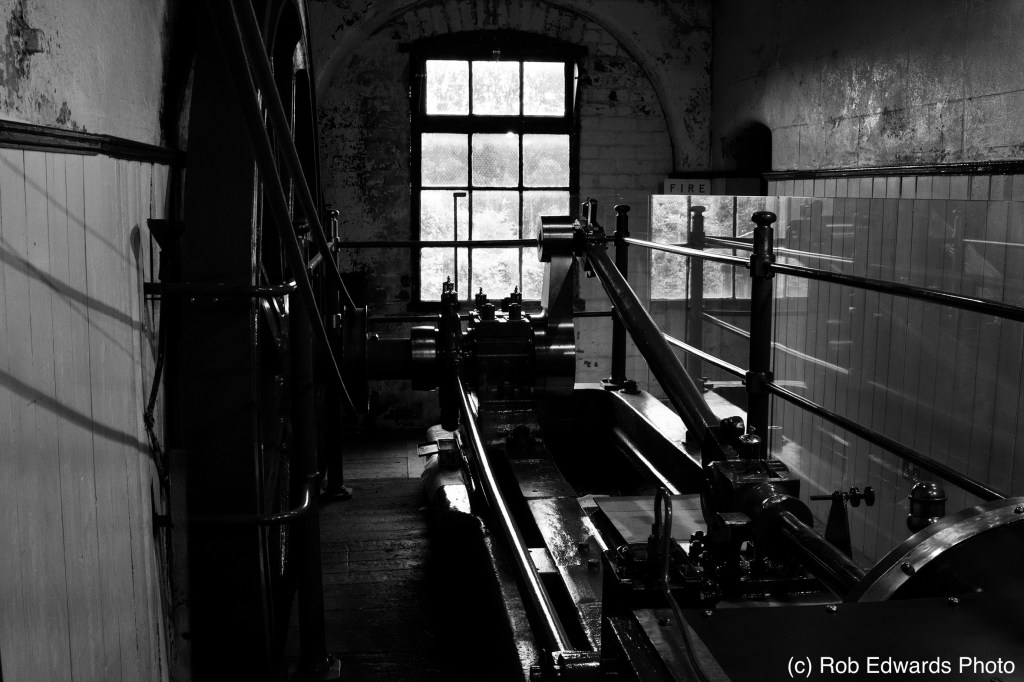
So after living in Stoke for all of my 36 years, I have never been to the Middleport Pottery near Burslem, the home of Burleigh Pottery. That is until today. The old bottle kiln, offices and steam engine have been preserved; the steam engine is believe to be the only surviving William Boulton designed engine, and comes with a very nice Lancashire boiler.
Stoke used to be the centre of the pottery industry with many other famous names based here: Wedgwood, Royal Doulton, Spode and Minton amongst others based in Stoke.
So here are the pictures…
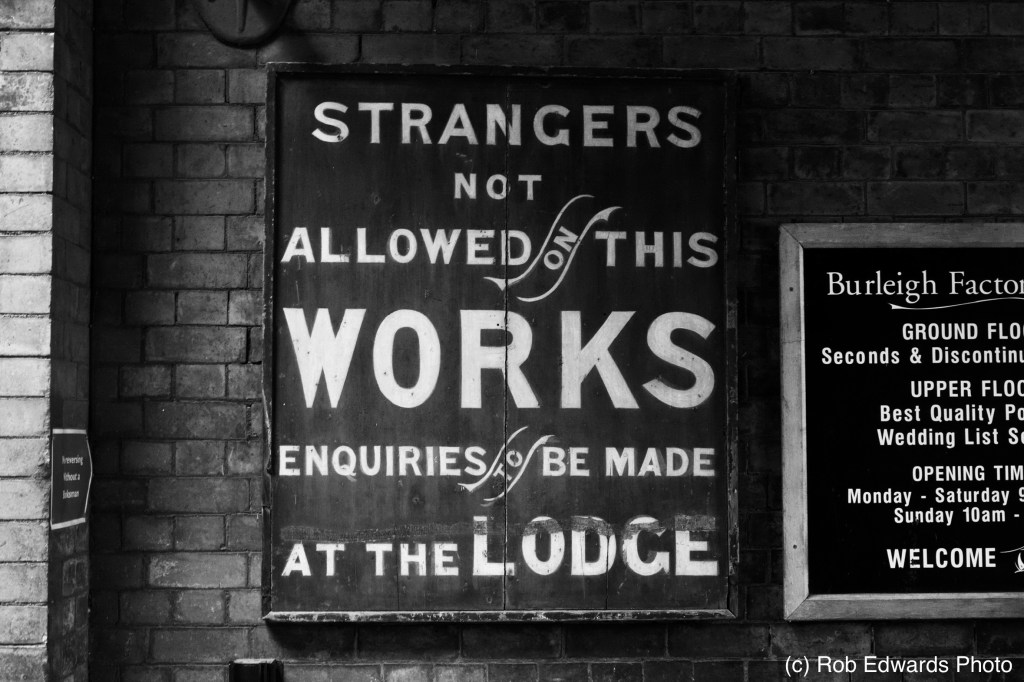
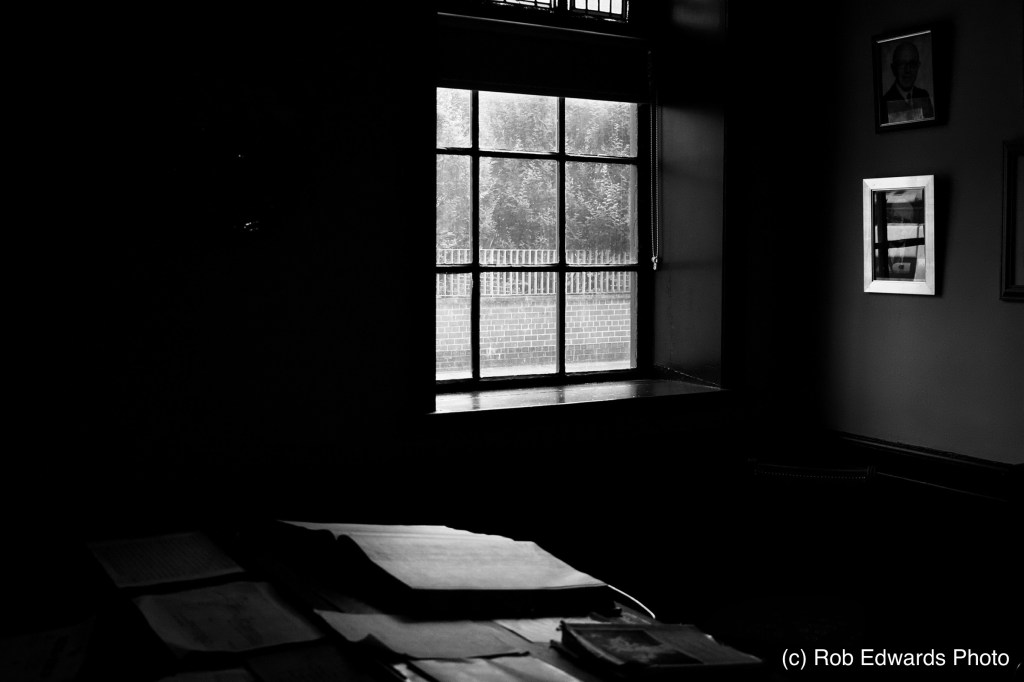
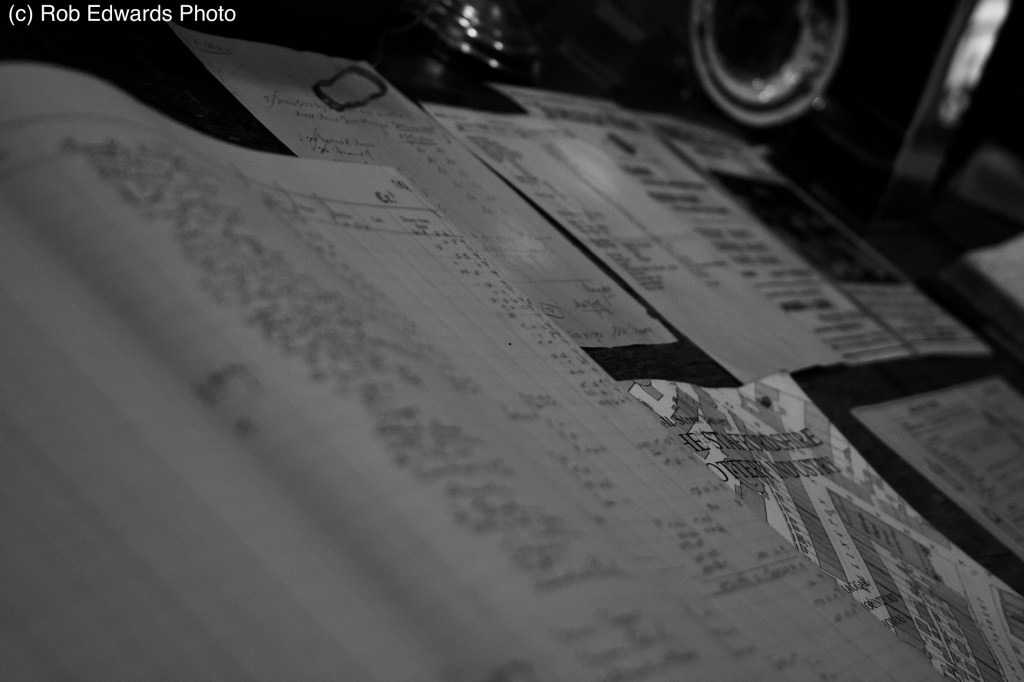
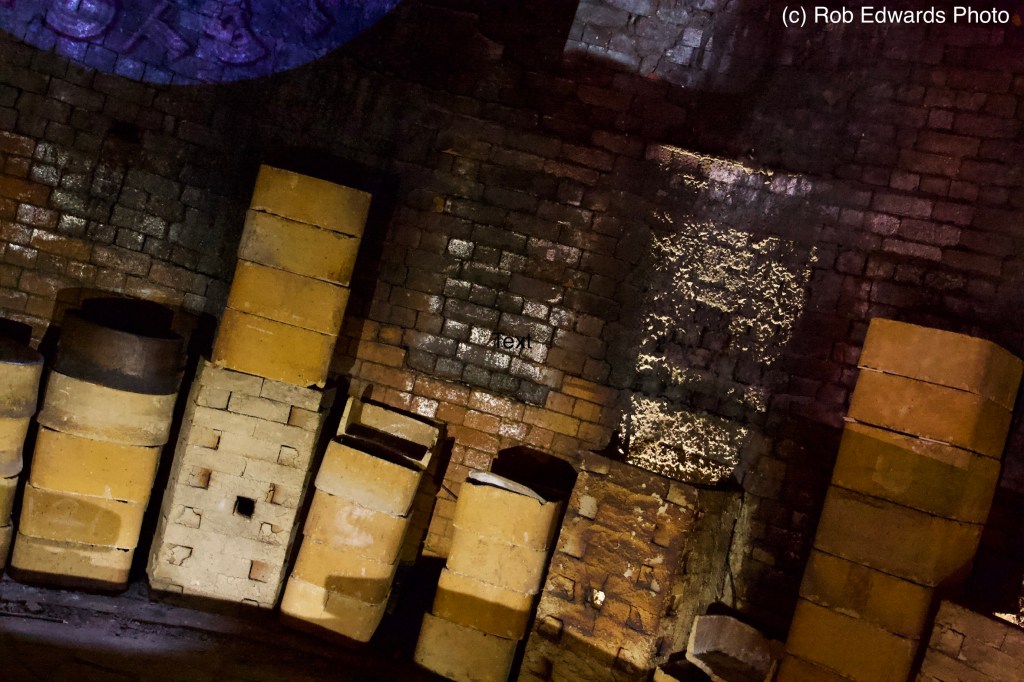
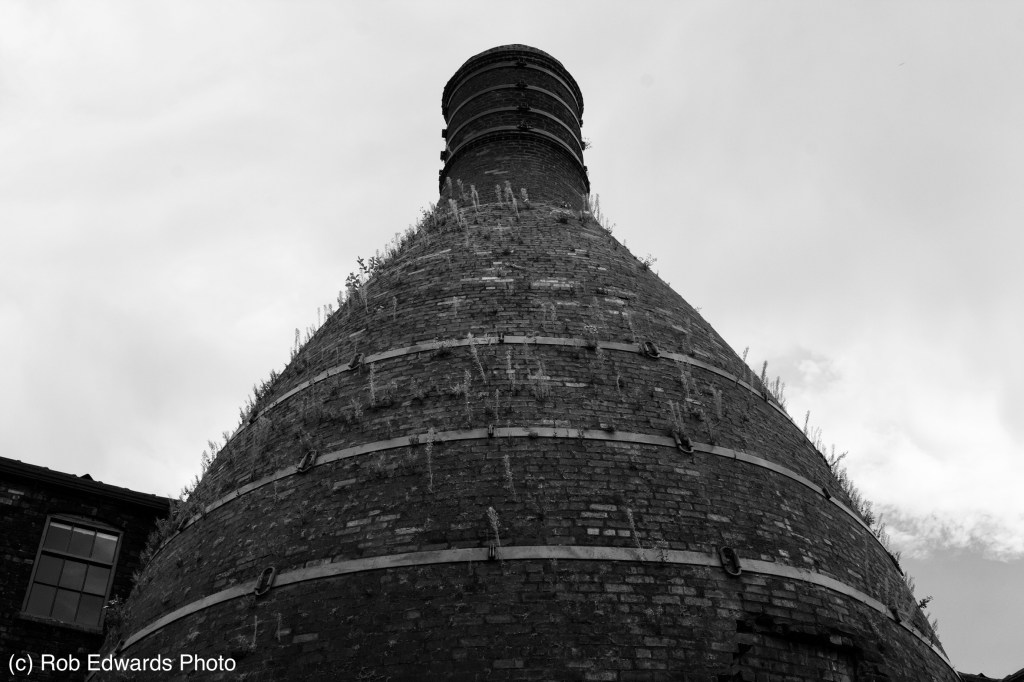
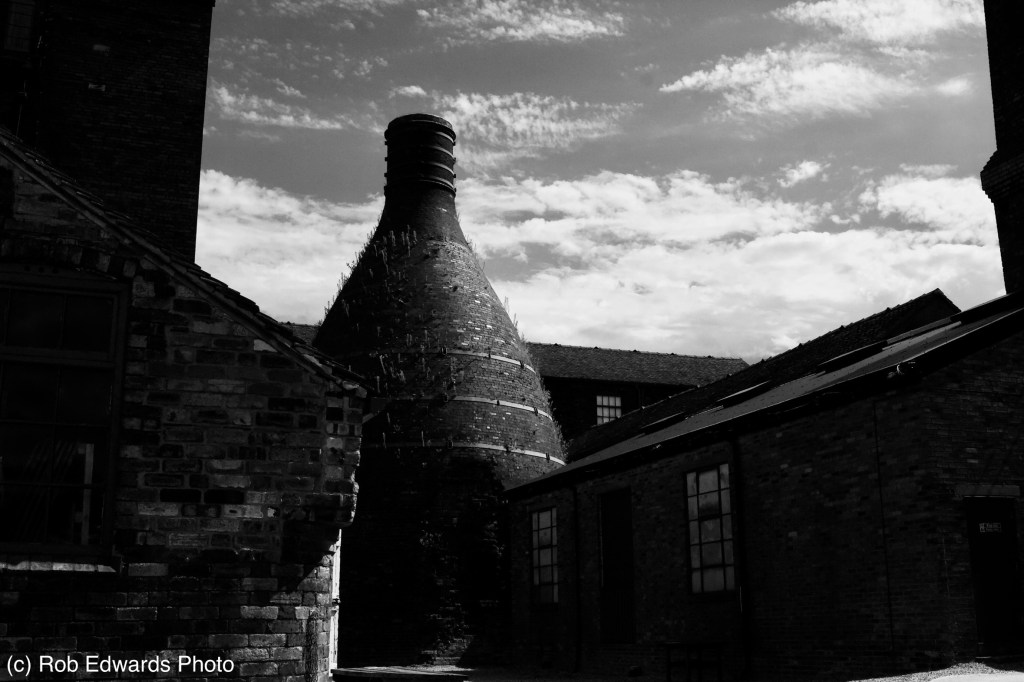
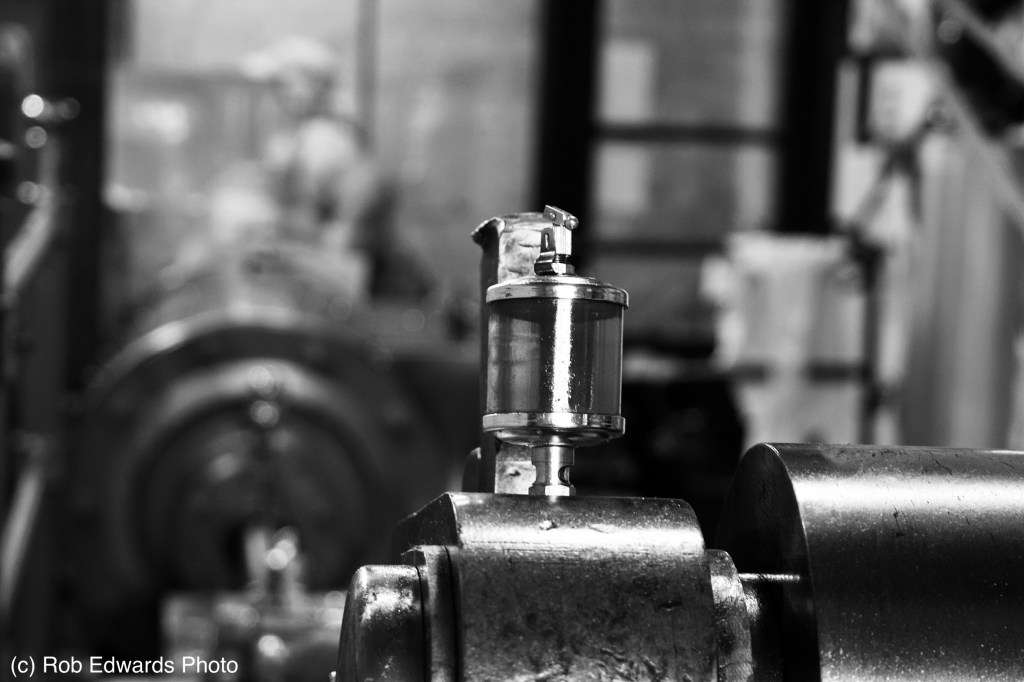
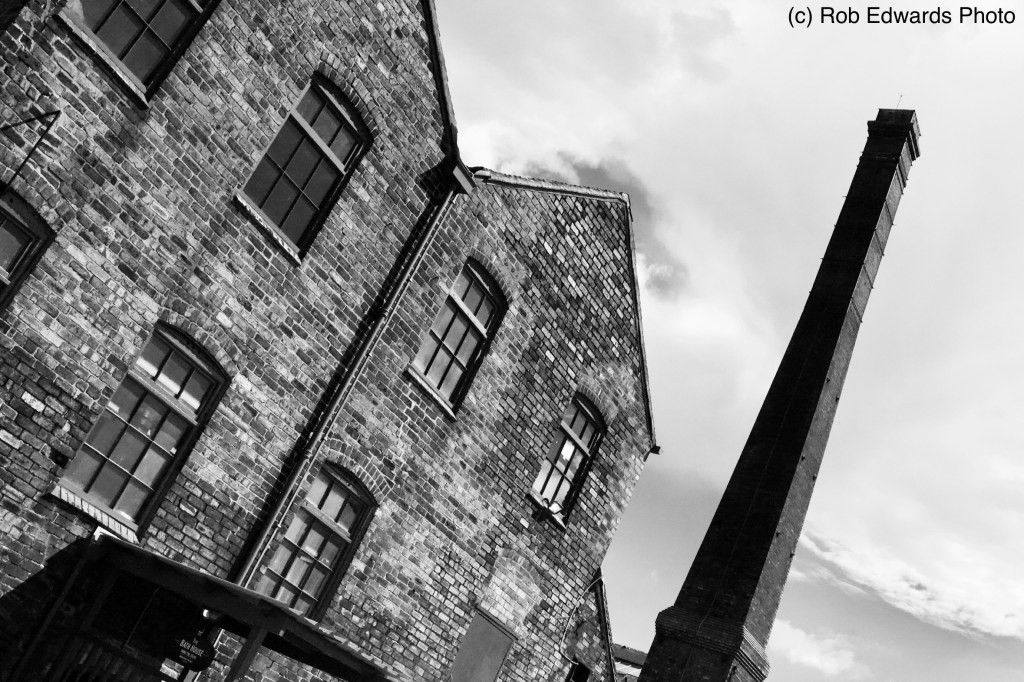
It’s always wonderful the way that signs are preservedThe old Victorian offices have been restored complete with accounts ledgersThe hand writing was so neat in the ledgers – I could never get my own handwriting that neat!The inside of a the sole remaining bottle kiln. The inner kiln is where the Saggs containing the pots for firing were placed. It was said that most of the coal used in a bottle kiln was used to actually heat the kilns up as opposed to firing the pots.Inside the inner kiln, with Saggs stacked ready for firing…or at least they would be if the kiln was still in useThe outside of the bottle kiln – the sky line of stoke was littered with these at one timeThere were once a further two bottle kilns towards the camera in this view that haves since gone.One of the big attractions at the museum is the fully working William Boulton steam engine, powered by a Lancashire boiler.The lubrication pot on the main eccentric crank The whole engine in viewThe engine retains its original chimney stack – Fred Dinah would be proud! One part of the museum that is interesting from a social history point of view is the wash house. It’s a reminder that it wasn’t until the middle of last century that all families had adequate washing facilities in their own homes, and wash houses, like this one, were a common sight at industrial workplaces












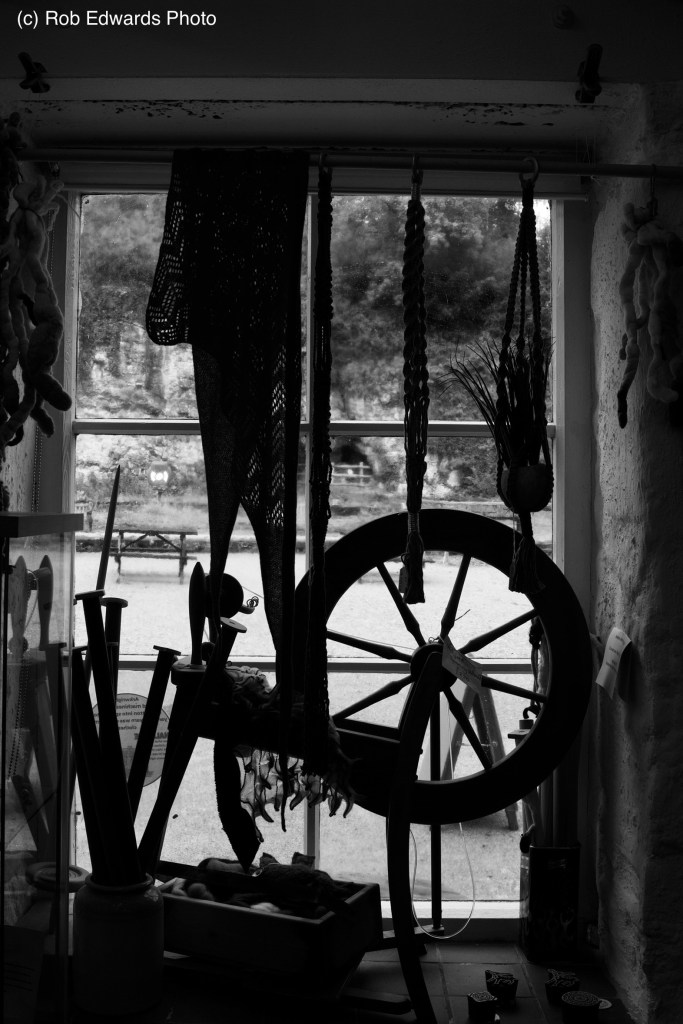
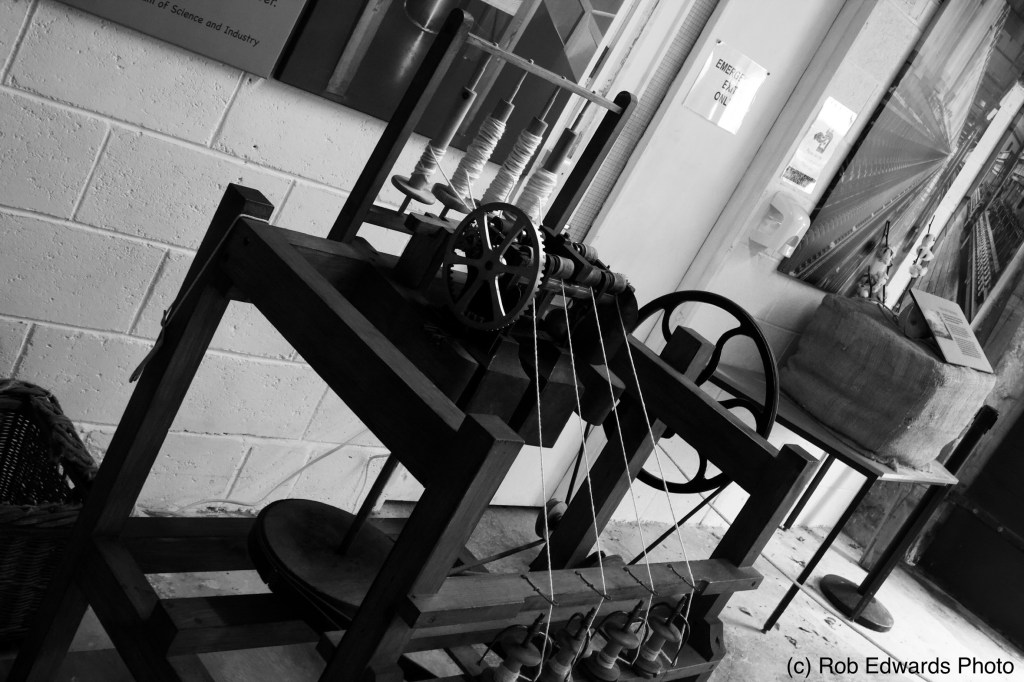
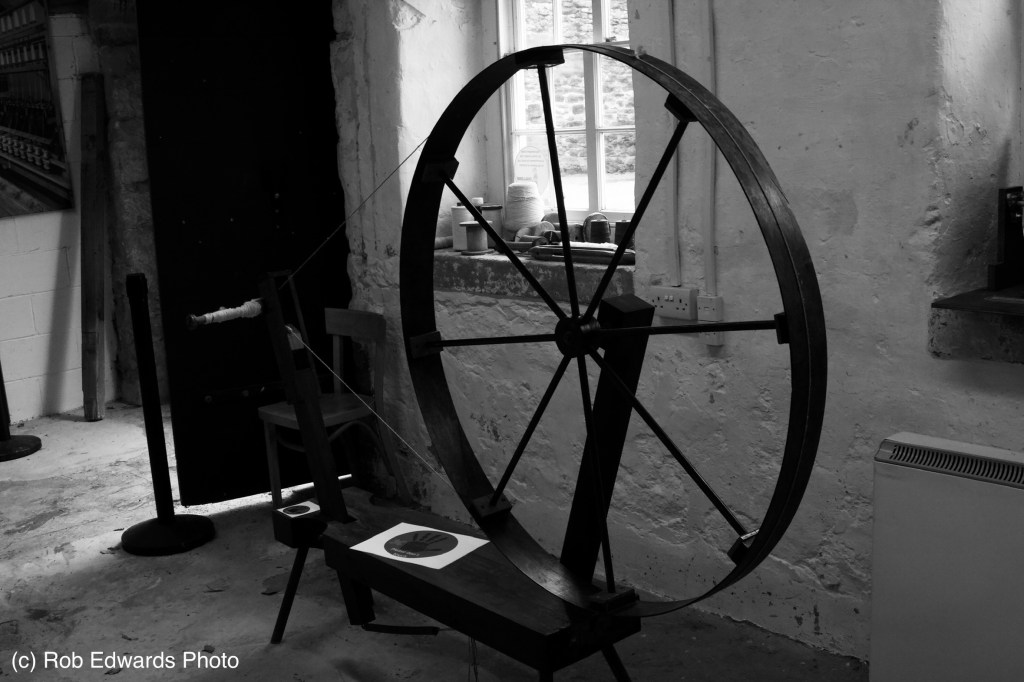
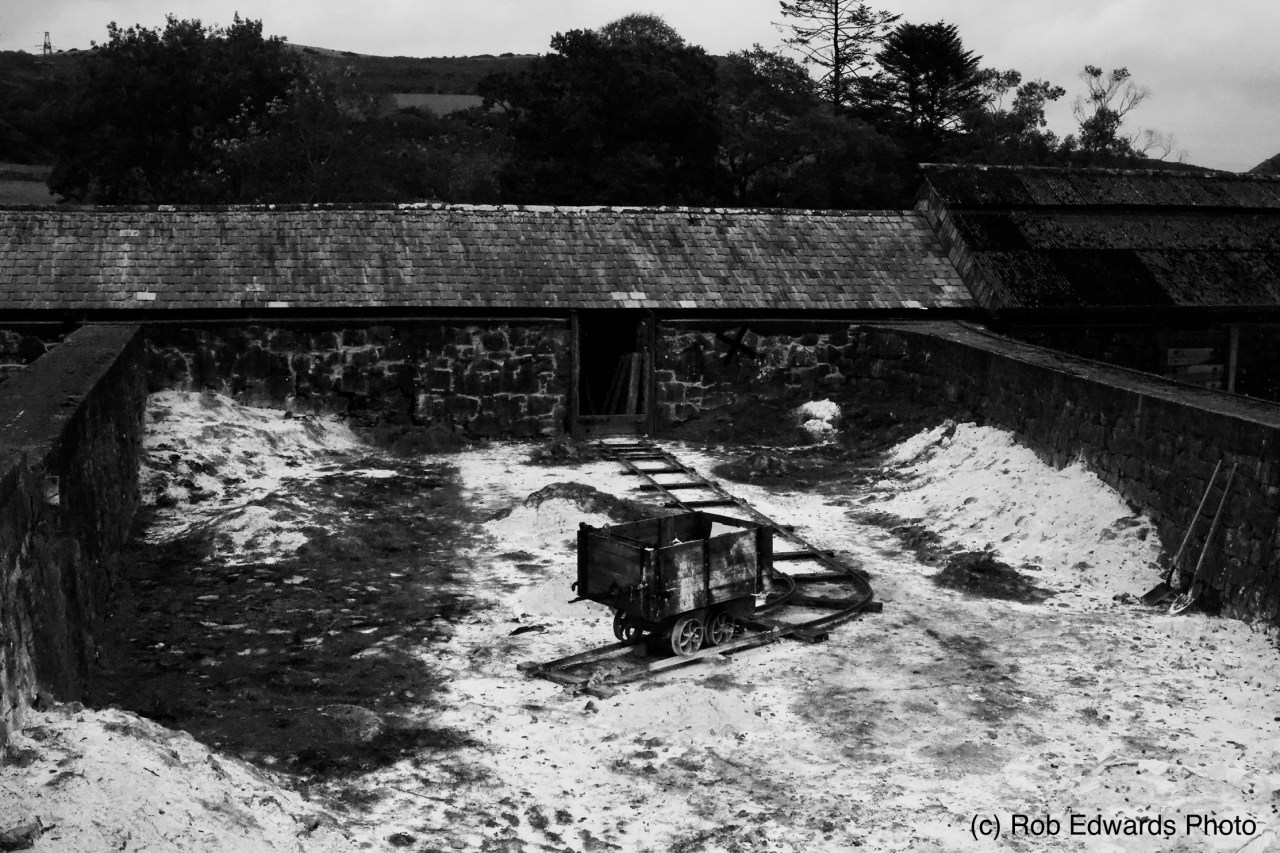





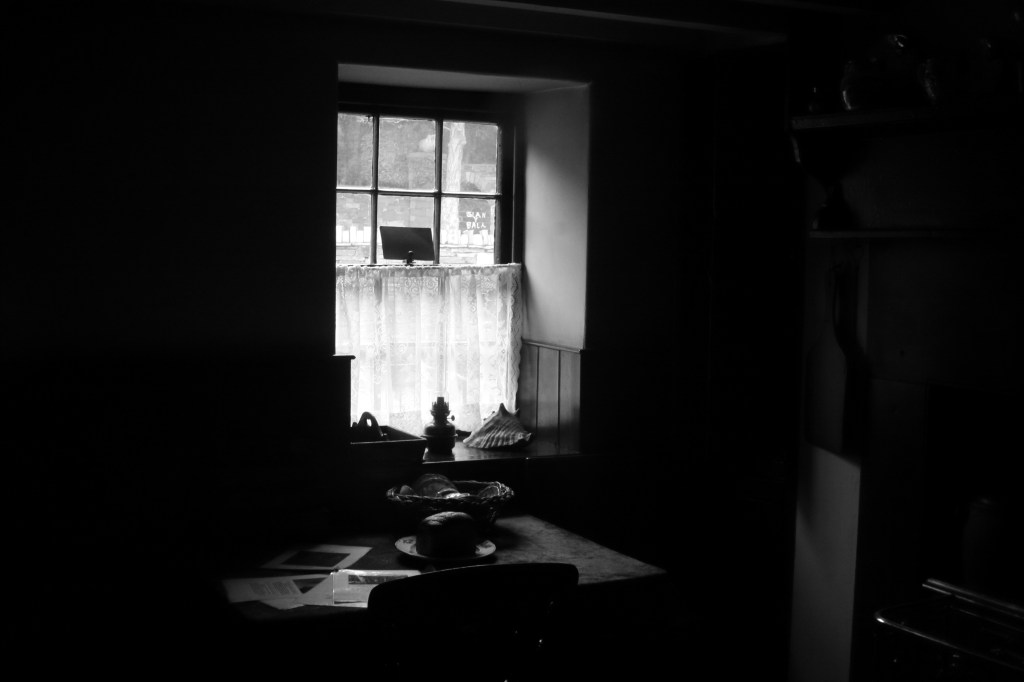
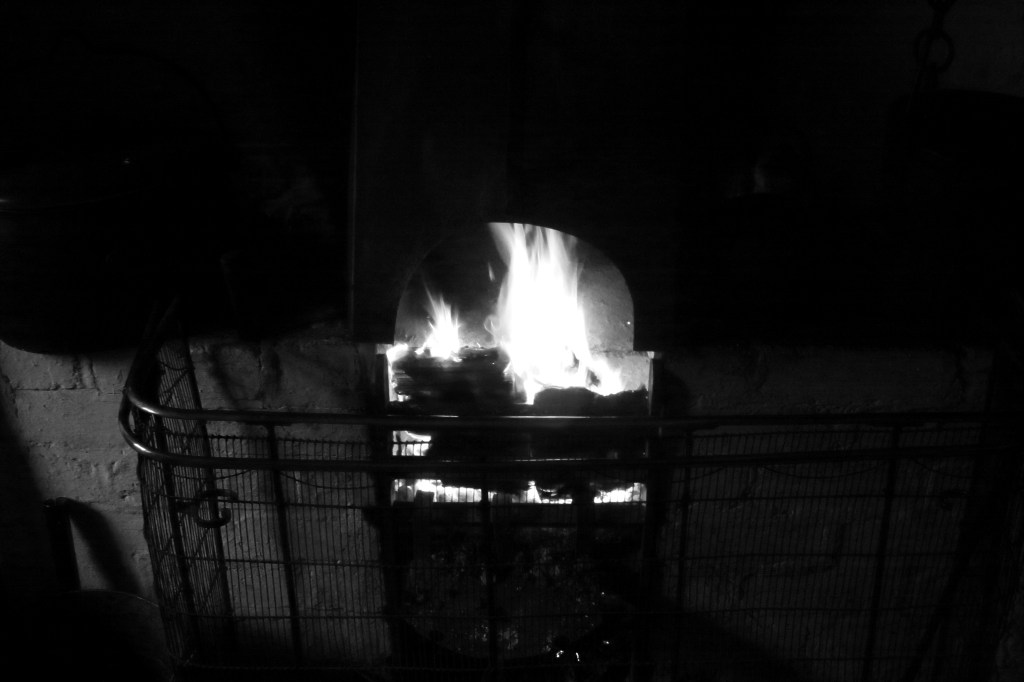
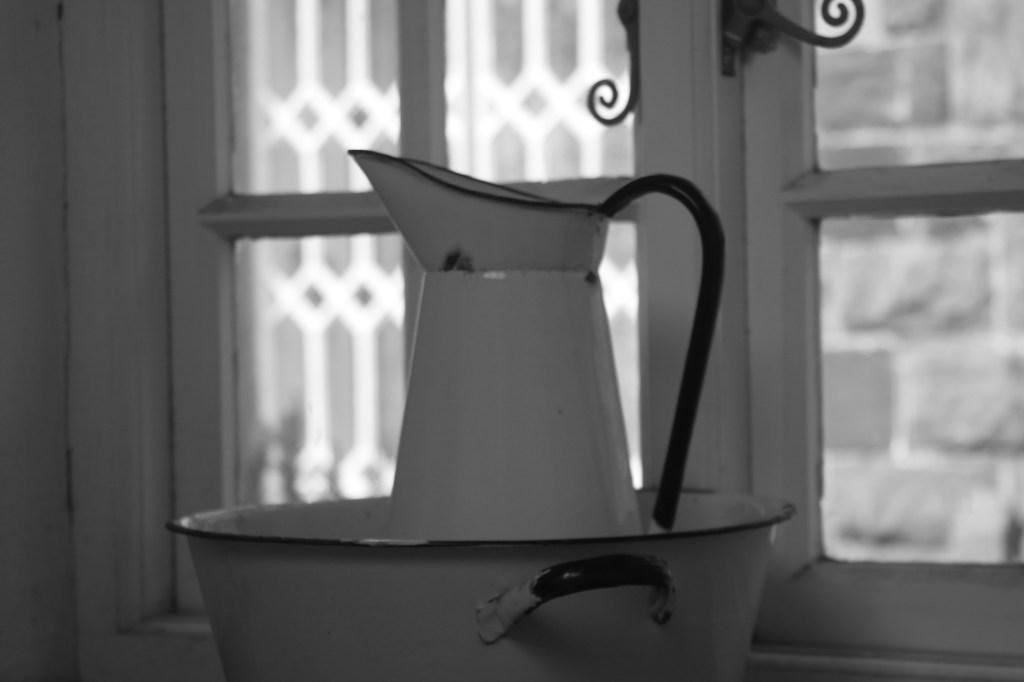
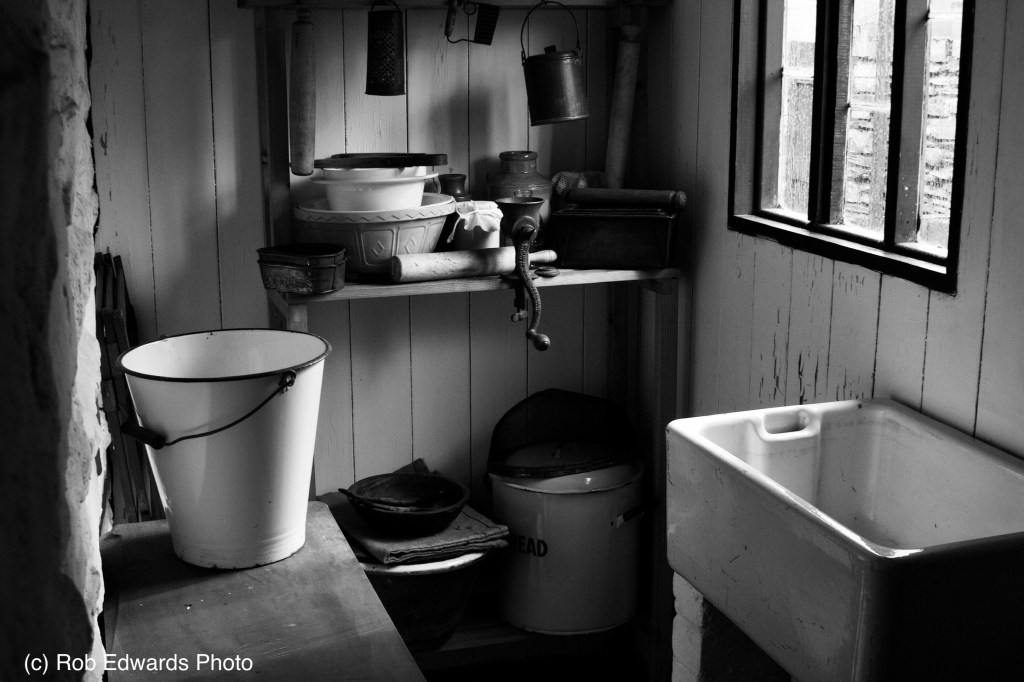

 Flat Cap and Camera